
Industrial Wastewater Treatment Solutions: Biogas Recovery from High-Strength Effluents
Food, beverage, brewery, dairy, and pulp industries discharge high-strength effluents with COD loads of 2,000–100,000 mg/L — and treating them aerobically can consume 20–50% of a plant’s total electricity bill. An industrial wastewater treatment solution built on anaerobic digestion flips that cost into energy: each kilogram of COD removed yields 0.35 m³ of methane.
The economics are dramatic: a mid-size brewery treating 2,000 m³/day of effluent at 3,000 mg/L COD can generate 700–900 kWh of electricity equivalent daily, cutting energy spend and often qualifying for carbon or renewable certificates. Anaerobic systems also cut sludge production by 70–90% versus aerobic treatment, eliminating a major disposal cost.
This guide covers industrial wastewater treatment with biogas recovery: technology options (UASB, EGSB, anaerobic lagoons), industry-specific design data, and the integration steps that turn an effluent treatment plant into a profit center.
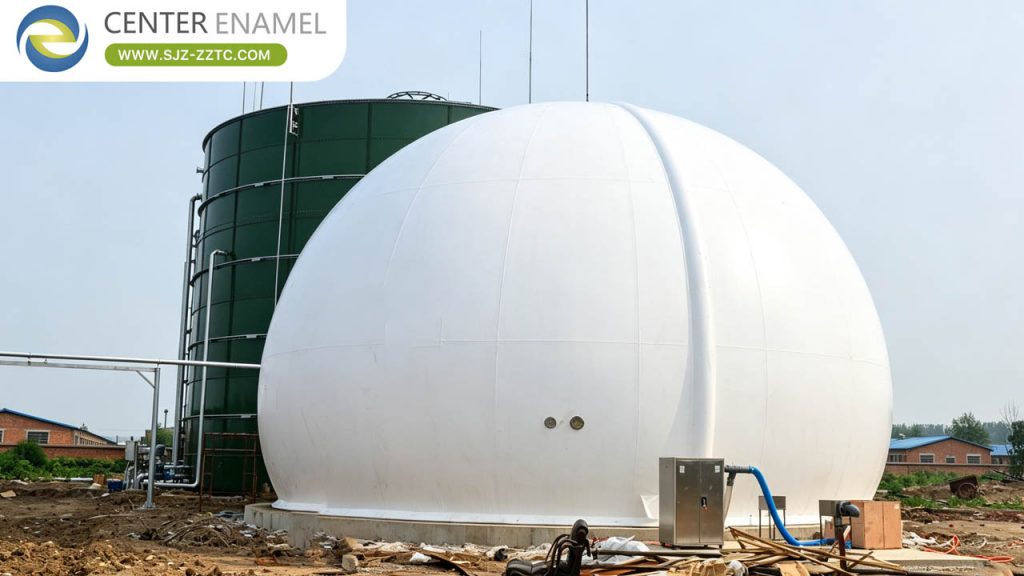
Anaerobic Technologies for High-Strength Industrial Effluents
Upflow Anaerobic Sludge Blanket (UASB) reactors are the workhorse for soluble organic wastewaters: effluent rises through a granular sludge bed, achieving organic loading rates of 5–15 kg COD/m³/day with 80–90% COD removal. Expanded Granular Sludge Bed (EGSB) reactors add recirculation for dilute or low-temperature streams, handling 15–30 kg COD/m³/day.
For very high solids or variable loads, covered anaerobic lagoons or CSTR digesters process whole streams, while two-stage systems separate hydrolysis from methanogenesis for complex substrates. Post-treatment — aerobic polishing, dissolved air flotation, or membranes — is normally required to meet discharge limits after anaerobic recovery.
Design parameters that decide performance: temperature (mesophilic 30–38°C), pH control (6.8–7.5), nutrient balance (COD:N:P ≈ 350:5:1), and toxicity screening (sulfate, salts, disinfectants). Wastewater composition varies hourly in food plants, so equalization tanks of 8–24 hours are standard practice.
Comparative Data Table: Anaerobic Systems for Industrial Effluents
| Technology | Organic Load (kg COD/m³/d) | COD Removal (%) | CAPEX Indicator | Footprint | Best Fit |
| UASB | 5–15 | 80–90 | Low–Medium | Small | Soluble food & beverage effluents |
| EGSB | 15–30 | 75–88 | Medium | Very Small | Dilute or cold streams, space-limited |
| Anaerobic CSTR / Digester | 2–6 | 70–85 | Medium–High | Large | High solids, mixed industrial streams |
| Covered Lagoon | 0.5–2 | 60–80 | Low | Very Large | Low-cost, land-abundant sites |
| Aerobic-only (baseline) | 0.5–2 (as BOD) | 90–95 | Medium–High | Large | Strict discharge limits, low COD waste |
The table positions anaerobic systems as the energy-recovery core with aerobic polishing as finishing — the standard two-stage configuration. UASB/EGSB dominate where COD is soluble; digesters handle solids; lagoons serve low-cost greenfield sites. Most industries combine two stages: anaerobic recovery first, aerobic polish second.
Biogas Utilization and Project Economics in Industry
Biogas from industrial effluent typically runs 65–80% methane (hydrogen sulfide 0.1–2%), suitable directly for boilers, CHP engines, or — with cleaning and upgrading — biomethane injection. On-site CHP displaces grid power at plant payback rates, while steam production replaces fuel boilers in heat-intensive industries.
Financial benchmarks: anaerobic treatment systems cost $150–400 per m³ of reactor for UASB/EGSB, with payback of 3–6 years when biogas energy offsets purchased fuel and electricity. Carbon finance (methane avoidance, renewable certificates) adds $50,000–200,000 annually at mid-scale — increasingly part of the base case.
Regulatory pressure is accelerating adoption: stricter discharge limits, carbon pricing, and corporate net-zero commitments push food and beverage majors to mandate biogas recovery in new plants. Vendors now offer performance-guaranteed packages (COD removal %, biogas yield, effluent quality) that de-risk industrial investment.
Frequently Asked Questions (FAQ)
Q1: What is high-strength industrial wastewater?
A: High-strength wastewater carries COD loads above roughly 2,000 mg/L — common in food, beverage, brewery, dairy, and pulp industries, where levels reach 10,000–100,000 mg/L. Its organic content is an energy resource: each kilogram of COD converted yields 0.35 m³ of methane.
Q2: How does a UASB reactor work?
A: Effluent flows upward through a dense granular sludge bed where anaerobic microbes convert organics to biogas. Gas bubbles and settling separate solids, allowing high organic loading (5–15 kg COD/m³/day) with 80–90% COD removal in a compact footprint. A polish stage follows to meet discharge limits.
Q3: Which industries recover biogas from wastewater?
A: Food processing, breweries, distilleries, dairies, beverage, pulp and paper, and starch plants lead adoption. Any industry with soluble, high-COD effluent above ~2,000 mg/L can justify anaerobic recovery; a 2,000 m³/day brewery at 3,000 mg/L COD generates 700–900 kWh of electricity equivalent daily.
Q4: Is anaerobic treatment cheaper than aerobic?
A: Capital costs are comparable, but anaerobic systems cut energy use 80–90%, sludge production 70–90%, and generate biogas revenue — giving paybacks of 3–6 years versus aerobic-only operating costs. Aerobic polish is still needed for strict discharge limits, so most plants run a hybrid.