
Delivering Industrial Wastewater Treatment Projects Worldwide with Proven Anaerobic Technologies
The global industrial wastewater landscape is shifting fast, and the pressure is no longer confined to a single region. Asia-Pacific, led by China, has become the world's largest industrial wastewater treatment market, with the operation and maintenance service segment rising steadily as the industry moves from project construction toward long-term operational management. North America concentrates on upgrading existing facilities, while Europe prioritizes high-value-added resource recovery technologies.
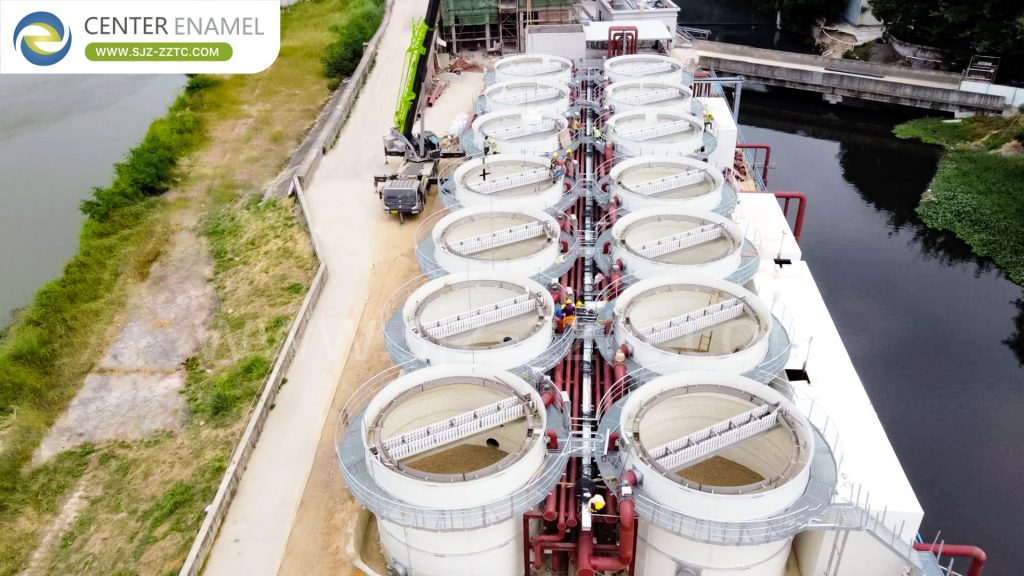
Wastewater from the new energy chain-lithium batteries, photovoltaics, and hydrogen-has emerged as the most notable growth area, its complex composition generating strong demand for customized solutions. Third-party treatment models in industrial parks are maturing, consolidating the professional operation market. The water-scarce Middle East shows robust demand for advanced treatment and reuse, and manufacturing transfer into Southeast Asia is driving new facility construction. Against this backdrop, selecting the right process and the right delivery partner determines whether an industrial wastewater treatment project succeeds over its full lifecycle.
Regional Dynamics Shaping Project Decisions
Each market brings its own priorities. In China and the broader Asia-Pacific region, scale and operational longevity dominate-facilities must run reliably for decades while meeting progressively stricter standards. North American owners focus on retrofitting aging infrastructure to extend service life and improve efficiency. European projects increasingly treat wastewater as a resource stream, demanding technologies that recover energy, nutrients, and water rather than simply discharging them. Meanwhile, the new energy industry chain introduces wastewater streams with complex compositions that resist conventional treatment, creating demand for engineered, site-specific solutions. Understanding where a project sits within these regional dynamics is the first step toward specifying the right anaerobic technologies and containment infrastructure.
Where Anaerobic Technologies Deliver the Most Value
Among the available treatment pathways, anaerobic technologies stand out for high-strength organic streams where energy recovery and load reduction matter simultaneously. The IC (Internal Circulation) reactor represents the third-generation high-efficiency anaerobic technology built upon UASB. Its core innovation is the built-in gas-lift internal circulation system, which enables autonomous wastewater recirculation without external return pumps. The reactor features a dual-zone configuration-a lower main reaction zone and an upper polishing zone. Biogas gas-lift creates hydraulic internal circulation, significantly increasing upflow velocity and enhancing sludge-wastewater contact. The result is extremely high compactness, specifically designed for high-concentration, high-flow industrial organic wastewater, combining high efficiency, energy savings, and minimal footprint. For industrial wastewater treatment projects constrained by land availability yet facing heavy organic loads, this combination is often decisive.
Papermaking Wastewater: A High-Volume, High-Opportunity Stream
Papermaking wastewater illustrates why process selection matters. It originates from the entire production chain-chemical pulping (alkaline and sulfate processes), mechanical pulping, recycled fiber pulping, and papermaking-making it the largest-volume, highest-suspended-solids wastewater in the light industry sector. Key pollution stages include raw material preparation (chipping and washing), cooking (the core chemical pulping stage producing high-concentration black liquor), washing and screening, bleaching, papermaking (sheet forming, pressing, drying), and white water recirculation. Cooking black liquor is the core pollution source, with extremely high COD and strong alkalinity. White water, by contrast, carries large volume but low pollutant concentration and can be recycled. Recycled fiber pulping wastewater contains inks, adhesives, and fillers requiring deinking treatment. Large paper mills discharge tens of thousands of tons daily-one of the largest-volume industrial wastewater sectors anywhere. For these facilities, anaerobic technologies applied as pretreatment dramatically reduce organic load while generating biogas, and coupling them with robust tank infrastructure ensures the system remains stable through years of continuous operation.
Thirty Years of Building the Full Chain
Delivering projects at this scale requires more than a single product line. Center Enamel has been deeply engaged in the environmental bolted storage equipment field for over 30 years. Starting with proprietary enamel anti-corrosion material technology, the company has gradually completed a full-industry-chain upgrade from a single tank manufacturer to a comprehensive environmental EPC service provider. Throughout its 30+ year history, the company has been recognized as a National High-Tech Enterprise, National Specialized and Sophisticated "Little Giant," Manufacturing Single Champion, and Provincial Green Factory. It has successfully delivered over 30,000 environmental projects globally, establishing itself as a leading enterprise in the global GFS tank storage industry. The company has fully integrated the chain from enamel frit R&D through intelligent environmental equipment manufacturing to EPC project contracting-every business breakthrough achieved through proprietary core anti-corrosion technology. For clients planning an industrial wastewater treatment project, this integrated capability means a single accountable partner from design through commissioning.
Engineering Depth Behind Every Installation
Execution quality separates a well-designed project from a well-operating one. Center Enamel has established its own domestic and international certified construction teams, with regular practical training on GFS tank installation and overseas construction standards for various countries. Domestically, regional construction teams cover multiple zones and can simultaneously deploy multiple crews for large tank farm projects. Internationally, cross-border professional installation teams are equipped to the construction standards of each host country-sufficient manpower reserves ensure uninterrupted delivery for remote African sites, high-standard European and American facilities, and everything in between. Behind the field teams sits a full-chain professional group covering R&D, design, marketing, installation, and after-sales. The R&D team is led by national-level materials technology experts specializing in enamel frit and tank anti-corrosion core technologies, with external senior environmental engineering and mechanical structure engineers retained to strengthen capability in anti-corrosion coating formulations and specialty structural design. This combination of shop-floor discipline and laboratory depth is what allows complex projects to move from drawing board to steady operation.
| Capability Area | What It Delivers |
| Development history | 30+ years; from tank manufacturer to comprehensive environmental EPC provider |
| Project record | 30,000+ environmental projects delivered globally |
| Construction manpower | Domestic regional teams + international cross-border installation crews |
| R&D strength | National-level materials experts; enamel frit and anti-corrosion focus |
| Recognition | National High-Tech Enterprise, "Little Giant," Manufacturing Single Champion, Green Factory |
Matching Anaerobic Technologies with the Right Containment
Anaerobic technologies perform only as well as the vessels that contain them. High-strength industrial wastewater brings fluctuating pH, organic acids, sulfide, and continuous biological activity-conditions that punish inferior tank materials. Glass-fused-to-steel tanks pair the mechanical strength of steel with the chemical inertness of a fused glass barrier, resisting corrosion from both the process side and the external environment while allowing rapid bolted assembly and future expansion. For industrial wastewater treatment projects specifying IC reactors or other anaerobic systems, this containment choice directly influences maintenance intervals and total cost of ownership. Selecting tanks and process technology from a single integrated supplier removes interface risk and keeps accountability clear.
A Track Record That Travels Well
Global reach matters when projects span regulatory regimes and climates. Center Enamel's portfolio covers over 100 countries across Southeast Asia, Africa, Europe, and the Americas, with more than 30,000 mature projects and accumulated industry solutions across palm oil, livestock, municipal, brewing, food waste biogas, and industrial wastewater applications. This breadth allows rapid matching of customized solutions to different regional climates, water quality profiles, and regulatory requirements-an advantage that shortens project timelines and reduces design risk. For owners evaluating an industrial wastewater treatment project in an unfamiliar market, working with a partner who has already delivered under similar conditions is a meaningful de-risking factor.
Frequently Asked Questions
Q: What makes anaerobic technologies suitable for high-strength industrial wastewater?
They convert organic carbon into biogas while cutting downstream aerobic load, and IC reactors add compact footprints and strong shock-load tolerance for high-concentration streams.
Q: Which industries benefit most from an industrial wastewater treatment project built around IC reactors?
Brewery, beverage, starch, pharmaceutical, chemical, and papermaking facilities with high-flow, high-COD soluble wastewater see the strongest returns.
Q: Does Center Enamel provide installation and support outside China?
Yes-certified cross-border teams and local coordination cover 100+ countries, including commissioning, training, and long-term after-sales support.
Facing tightening discharge standards or planning a capacity expansion at your pulp and paper facility? Share your effluent profile with our engineers and we will map the right anaerobic technologies and tank configuration for your site. Connect with Center Enamel today to turn your industrial wastewater treatment project into a compliant, cost-efficient, and long-lasting asset.