
Driving Industrial Wastewater Success with Anaerobic Digestion and Expert EPC Delivery
The industrial wastewater treatment market is undergoing a profound shift. No longer is the goal simply to meet discharge limits; facilities are now expected to recover resources, minimize carbon footprints, and operate with absolute reliability. This transition demands not only advanced biological processes but also robust infrastructure and a delivery model that guarantees performance. In this landscape, Anaerobic Digestion stands out as a highly efficient method for treating high-concentration organic wastewater, while choosing the right EPC Contractor for Industrial Wastewater Treatment is critical to transforming design intent into operational reality.
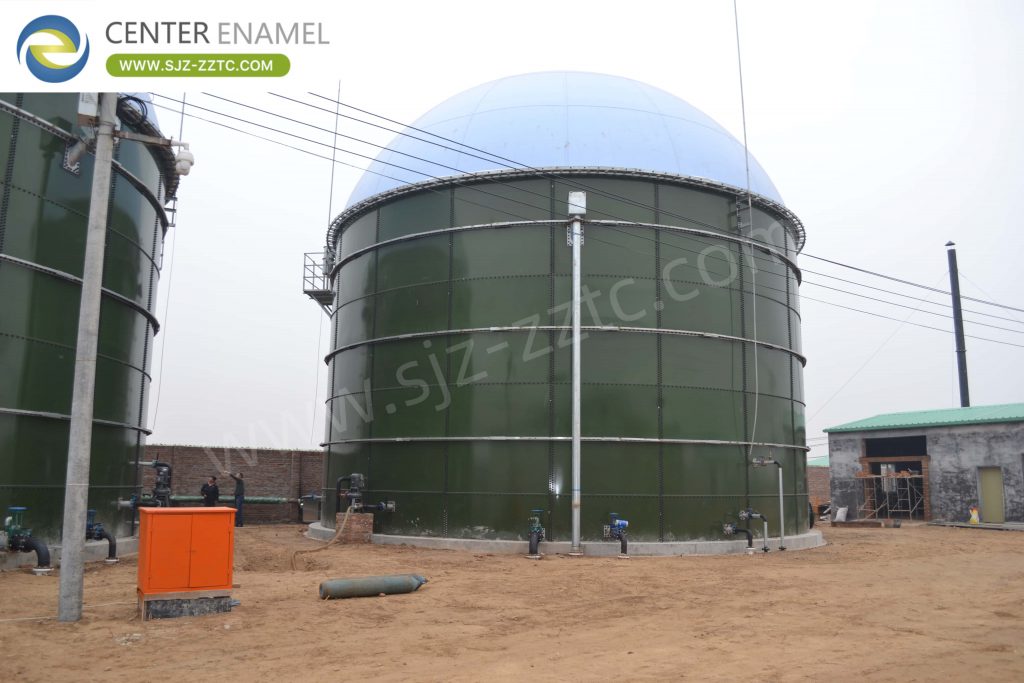
The Evolving Industrial Wastewater Landscape
The competitive landscape shows divergence, with leading companies building integrated service capabilities through technical integration and capital operations, and industry concentration gradually increasing. Chinese companies continue to consolidate their advantages in mid-tier equipment exports. International giants target high-end customers and complex industrial wastewater markets, while local players occupy the mid-to-low-end and industrial park centralized treatment markets with service responsiveness and cost advantages.
Within the anaerobic process segment, UASB, EGSB, and IC anaerobic reactors are widely used in high-concentration organic wastewater pretreatment across food processing, pharmaceutical fermentation, alcohol brewing, and chemical industries. These reactors offer high loading rates, small footprints, and stable operation. However, they all rely on steel tank shells whose corrosion resistance and gas-tightness directly determine long-term operational stability. This dependency is why the application value of glass-fused-to-steel (GFS) tanks in such scenarios is increasingly prominent.
Engineering for Extreme Climates and Conditions
GFS tanks are engineered to withstand conditions that frequently challenge traditional concrete structures. Concrete tanks are cast-in-place monolithic structures, with seismic and wind resistance entirely dependent on on-site construction quality. In remote areas, typhoon-prone zones, and earthquake belts, construction quality is difficult to control. Under strong earthquakes or typhoons, concrete tanks are prone to cracking and base settlement damage, with subsequent reinforcement costs equivalent to rebuilding.
GFS tanks undergo collection of local seismic intensity, maximum wind pressure, and foundation bearing capacity data before construction. They are then customized with thickened steel panels, stiffening ribs, and anchored base components-all factory-prefabricated to standardized specifications. The bolted panel structure has excellent stress distribution capability, making it less prone to overall fracture under seismic and typhoon impacts. Minor foundation settlement will not cause through-cracking. Structural parameters can be flexibly adjusted for mountainous, coastal typhoon-zone, and high-seismic-zone projects, providing long-term protection against extreme natural climate damage.
Inside the High-Performance Anaerobic System
The success of Anaerobic Digestion relies heavily on the precision and integration of its supporting equipment. The core equipment is the GFS tank, equipped with a built-in gas-lift internal circulation system and upper/lower three-phase separators. These are the key components for autonomous circulation and sludge-water separation, eliminating the need for external return pumps.
Supporting this core is a suite of precision instruments. Bottom precision distribution systems and pressure-regulating feed devices ensure uniform, stable influent. Influent lift pumps, equalization tanks, and flow meters provide precise control over the incoming flow. At the top, high-efficiency biogas collection, desulfurization, dehydration, and storage integrated equipment capture the renewable energy. High-precision online monitoring equipment allows for real-time tracking of temperature, pH, COD, and levels. The complete system is highly integrated, compact, and highly automated, ensuring reliable performance with minimal manual intervention.
Proven Application: Standardized Beverage Wastewater Treatment
A prime example of this technology in action is the treatment of high-sugar, easily biodegradable organic wastewater from the beverage industry. A mature treatment train of "pretreatment + anaerobic digestion + aerobic treatment + advanced treatment" is highly effective.
Pretreatment uses screens and sieves to remove fruit pulp, tea residues, and other suspended impurities to prevent pipeline and equipment clogging. Equalization tanks balance high-concentration CIP and low-concentration wastewater to stabilize influent load, while alkali addition neutralizes acidic wastewater as needed. The main stage uses UASB or IC anaerobic processes for high-efficiency degradation of high-concentration sugars. Because sugars are readily anaerobically degraded, the process achieves high biogas production and COD removal exceeding 80%, offering outstanding energy recovery benefits. Subsequent A/O or SBR aerobic processes deeply degrade residual organics and remove nitrogen and phosphorus. Final sedimentation, filtration, and disinfection ensure compliance.
For the anaerobic digesters, Center Enamel utilizes GFS tanks resistant to organic acid and sugar fermentation corrosion. The entire process is simple, stable, and highly automated, making it perfectly suited for the beverage industry's intermittent and seasonal discharge patterns.
Global Case Study: Sweden Organic Waste Biogas Project
The practical application of these systems is demonstrated by a 2024 installation in Northern Europe. The Sweden project uses UASB anaerobic process with Center Enamel GFS tanks as the main reaction equipment. The tank's ability to resist acid, alkali, and low-temperature corrosion makes it suited to Nordic organic waste fermentation conditions. The UASB process efficiently retains granular sludge and degrades organic pollutants, producing stable biogas. GFS tank assembly is convenient, with 30-year corrosion protection suited to Nordic cold climates, achieving both organic waste harmless treatment and biogas clean energy recovery-a European biomass environmental demonstration project.
| Sweden Project Parameter | Specification |
| Location and Year | Sweden, 2024 |
| Core Process | UASB Anaerobic Digestion |
| Containment | Center Enamel GFS Tanks |
| Single Tank Dimensions | Ø 19.11 m × 19.2 m height |
| Conditions Addressed | Acid/alkali corrosion; low-temperature Nordic climate |
| Project Outcome | Organic waste treatment + biogas energy recovery |
The Complete Product Matrix and Global Service
Delivering such complex projects requires a comprehensive portfolio. Center Enamel has built a complete product matrix of "core storage tanks + supporting covers + specialty pressure vessels + complete environmental engineering services"-the only company globally to achieve integrated enamel frit R&D, self-manufacturing, and GFS tank application.
The core consists of Proprietary GFS Tanks using double-sided hot-rolled double-layer enamel anti-corrosion technology, resistant to strong acids, alkalis, high salinity, and microbial corrosion. Supporting these are Fusion Bonded Epoxy Tanks, produced on China's first intelligent standardized production line, primarily for drinking water, fire water, and neutral medium storage. Sealing is handled by Aluminum Dome Covers featuring high-strength aluminum alloy self-supporting structures that meet international waterproof and load-bearing standards. Other tanks include Carbon Steel, Stainless Steel, Composting Tanks, and various Non-Standard Pressure Vessels. Finally, engineering services include Environmental EPC General Contracting and Anaerobic Process Subcontracting.
| Product Matrix Category | Key Offerings & Features |
| Core Storage | GFS Tanks (Double-sided enamel, highly corrosion-resistant) |
| Supporting | Fusion Bonded Epoxy Tanks (Drinking/fire water) |
| Sealing | Aluminum Dome Covers (Self-supporting, biogas collection) |
| Other Tanks | Carbon Steel, Stainless Steel, Composting Tanks |
| Engineering | Environmental EPC, Anaerobic Subcontracting (One-stop coverage) |
To support these global deployments, Center Enamel leverages regional sales centers in China and overseas local agent networks to establish a complete after-sales service loop covering all markets. The system provides four core service pillars: a 24/7 rapid response mechanism, on-site domestic/overseas installation services, full-project-cycle after-sales support, and long-term warranty protection. This forms a complete service chain from preliminary site survey, mid-term construction management, to long-term inspection and maintenance. The entire system is uniformly adapted to both domestic and international project service standards, coordinating personnel scheduling, material support, and on-site coordination for simultaneous projects across multiple regions-significantly reducing customer multi-party coordination costs and ensuring efficient domestic and overseas project delivery.
Frequently Asked Questions
Q: How does Anaerobic Digestion handle high-strength industrial wastewater?
Anaerobic Digestion uses microorganisms to break down organic pollutants in the absence of oxygen, converting them into biogas. It is highly effective for high-concentration organic streams, offering high COD removal rates while significantly reducing sludge production and energy costs.
Q: What makes GFS tanks suitable for extreme climates?
GFS tanks are factory-prefabricated with thickened steel panels and anchored bases based on local seismic and wind data. Their bolted structure distributes stress evenly, resisting cracking from typhoons and earthquakes better than concrete tanks.
Q: What services does an EPC Contractor for Industrial Wastewater Treatment provide?
A qualified EPC contractor provides single-point accountability, covering process design, equipment manufacturing (like GFS tanks), construction, and commissioning. This ensures the final effluent meets compliance standards and project performance is guaranteed.
Ready to elevate your industrial wastewater facility? Share your effluent data with our engineers for a customized treatment proposal and cost estimate.
Let Center Enamel guide your next project-reach out today to discover how our Anaerobic Digestion solutions and EPC expertise can turn your waste challenges into operational value.