
Innovative Applications of Municipal Sewage Treatment Technology
The urbanization trend sweeping the globe places immense pressure on municipal infrastructure. Modern cities require not only robust sanitation but also guaranteed water resilience and environmental protection. Today, Municipal Sewage Treatment Technology must transcend the traditional role of pollutant removal to become a source of energy, fertilizer, and, critically, reusable water. The next generation of urban sustainability hinges on integrated, durable, and highly efficient wastewater infrastructure.
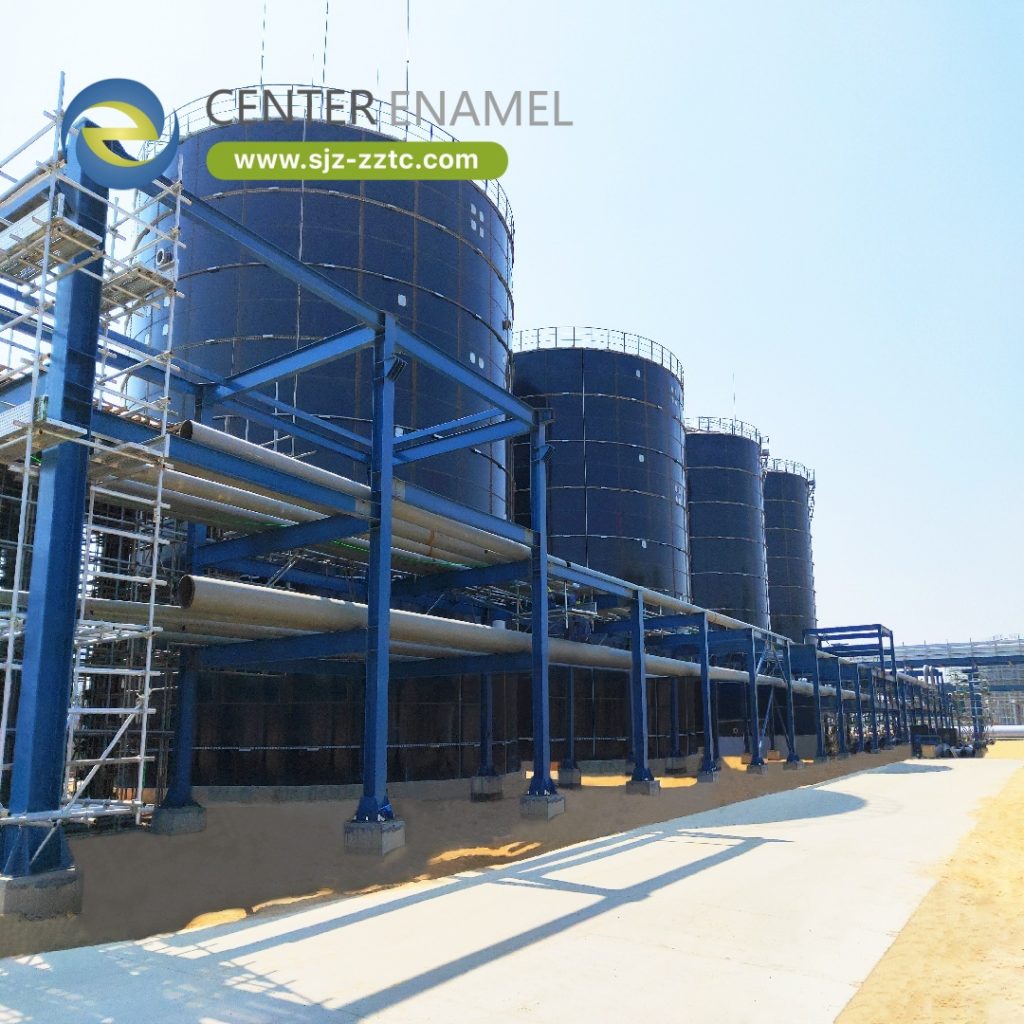
Shijiazhuang Zhengzhong Technology Co., Ltd (Center Enamel) is at the forefront of this evolution, providing the foundational containment and integrated solutions necessary for state-of-the-art Municipal Sewage Treatment Technology. We partner with cities and utilities worldwide to implement comprehensive treatment systems that are designed for maximum asset longevity, minimal operational footprint, and superior environmental performance.
Our proven solution lies in the deployment of Glass-Fused-to-Steel (GFS) tanks. These structures form the durable core of large-scale municipal reactors, sludge digesters, and tertiary treatment basins, ensuring that massive urban infrastructure can operate reliably and cost-effectively for decades.
The Evolving Mandate for Municipal Sewage Treatment Technology
The demands placed on Municipal Sewage Treatment Technology are growing in complexity, moving far beyond simply meeting primary discharge limits for organic materials.
1. Core Challenges in Urban Wastewater
Massive and Variable Flow Rates: Urban systems must handle enormous volumes of water with constantly fluctuating hydraulic and organic loads, requiring large, reliable equalization basins and robust primary clarifiers.
Nutrient Pollution: A primary goal of modern Municipal Sewage Treatment Technology is the effective removal of nitrogen and phosphorus. Uncontrolled discharge of these nutrients leads to eutrophication and severe ecological damage in receiving water bodies.
Energy Consumption: Conventional treatment plants are massive energy consumers. Innovative technology must incorporate energy efficiency, process optimization, and, crucially, energy recovery from the waste stream itself.
Pathogen and Public Health: The treated effluent must meet stringent disinfection standards to protect public health, especially when aiming for water reuse.
2. The Shift to Resource Recovery and Reuse
Innovative Municipal Sewage Treatment Technology now focuses heavily on the triple bottom line of resource recovery:
Water Reuse (Recycled Water): Treated effluent is polished via tertiary filtration and disinfection, transforming it into non-potable water for irrigation, industrial cooling, or aquifer recharge, significantly reducing reliance on fresh drinking water sources.
Energy Recovery (Biogas): The high organic content of municipal sludge is converted into methane via anaerobic digestion, providing sustainable heat and power for the treatment plant's own operations.
Nutrient Recovery: Stabilized biosolids (sludge) are processed into marketable, nutrient-rich soil amendments (fertilizer), closing the nutrient loop in a sustainable manner.
Foundational Resilience: GFS Tanks in Municipal Infrastructure
In high-volume municipal environments, the contained structures must offer the ultimate combination of rapid construction, corrosion resistance, and structural stability. Glass-Fused-to-Steel (GFS) tanks meet and exceed these demands, making them the superior choice for critical Municipal Sewage Treatment Technology processes.
1. Durability Against Corrosive Environments
Municipal wastewater, sludge, and process chemicals present a constant corrosive challenge.
Chemical Inertness: The GFS coating is highly resistant to the organic acids, hydrogen sulfide, and variable acidity levels encountered in municipal sludge digestion and aerobic basins, ensuring decades of service life without internal maintenance or recoating.
Reduced Lifecycle Costs: The exceptional durability of GFS minimizes the capital and operational expense associated with maintenance and repair, a crucial factor when managing large public utility budgets.
2. Speed, Scale, and Modularity
Accelerated Project Delivery: The bolted, modular construction process of GFS tanks is significantly faster than traditional cast-in-place concrete, allowing utilities to meet tight deadlines and bring essential Municipal Sewage Treatment Technology online rapidly.
Scalability: GFS design easily accommodates the construction of massive primary clarifiers, sequential batch reactors, or aeration tanks required by large urban centers. The modularity also simplifies future expansion as the population grows.
Structural Integrity: GFS tanks provide the necessary structural strength to support the deep water columns and sophisticated internal mixing mechanisms used in high-efficiency reactors.
Innovative Application Focus: Sludge and Energy Management
One of the most innovative and cost-saving aspects of modern Municipal Sewage Treatment Technology is the integrated management of biosolids (sludge) for energy recovery and waste minimization.
1. Anaerobic Digestion for Biogas Production
Municipal sludge contains high concentrations of organic matter, making it an excellent feedstock for anaerobic digestion, the core of a wastewater plant's energy independence strategy.
High-Rate GFS Digesters: We provide GFS tanks engineered as high-rate digesters, designed to maximize methane yield from the sludge. The tanks' smooth, non-porous glass surface promotes efficient mixing and reduces internal fouling.
Double Membrane Roofs for Energy Capture: The safe and efficient management of the resulting biogas is crucial. The Double Membrane Roof is the industry standard for this application in Municipal Sewage Treatment Technology:
It provides a flexible, gas-tight containment volume for the biogas, adjusting to production fluctuations.
It safely contains the potentially explosive gas, preventing fugitive emissions and controlling odors.
The material is highly durable and corrosion-resistant against the hydrogen sulfide and moisture in the biogas stream.
2. Biological Nutrient Removal (BNR)
Advanced Municipal Sewage Treatment Technology relies on sophisticated biological processes to selectively remove nitrogen and phosphorus.
Sequential Batch Reactors (SBR) and Oxidation Ditches: GFS tanks are frequently utilized for these BNR processes due to their large volume capacity and the necessity of precise process control within structurally sound vessels.
Sludge Dewatering and Storage: GFS tanks also provide durable, corrosion-resistant storage for both stabilized biosolids (for agricultural use) and pre-dewatering processes.
Project Cases: Center Enamel's Commitment to Urban Infrastructure
Center Enamel is the trusted foundation for some of the largest urban water infrastructure projects globally. Our involvement confirms the superiority of GFS technology in managing high-volume, continuous flow, and the critical need for long-term asset reliability in Municipal Sewage Treatment Technology.
The following non-fictitious cases, directly sourced from our accurate project portfolio, highlight our mastery in delivering large-scale municipal solutions:
Sichuan Chengdu Wastewater Treatment Plant Project: This represents one of the largest municipal wastewater installations in our portfolio, requiring extensive containment for multiple stages of advanced treatment. The successful deployment of this significant number of GFS units confirms the technology’s capacity for rapid construction and reliable service as the primary containment solution for critical, high-volume Municipal Sewage Treatment Technology infrastructure in major metropolitan areas. The installation utilized 16 units with a substantial total capacity.
Sichuan Chongzhou Municipal Wastewater Treatment Project: This large-scale urban project demonstrates the continuous demand for durable, high-capacity wastewater solutions in rapidly developing municipal areas. The integration of numerous GFS tanks into the facility underscores the structural stability and modularity necessary for expanding Municipal Sewage Treatment Technology to meet growing population needs and stringent environmental requirements. The installation utilized 10 units with a substantial total capacity.
Henan Nanyang Municipal Wastewater Treatment Project: This major municipal project further validates the use of GFS technology for critical water infrastructure in dense population centers. The high number of units and significant capacity confirm the technology's effectiveness in providing robust, corrosion-resistant vessels for essential processes like aeration and sedimentation within a complex Municipal Sewage Treatment Technology scheme. The installation utilized 11 units with a substantial total capacity.
Building the Resilient City
The future of urban water security depends on adopting innovative and resilient Municipal Sewage Treatment Technology. Center Enamel provides the bedrock for this resilience by supplying the most durable and flexible containment technology available.
By choosing Glass-Fused-to-Steel (GFS) tanks coupled with advanced energy recovery components like the Double Membrane Roof, municipalities can achieve guaranteed compliance, reduce energy dependency, and transform wastewater from a liability into a valuable resource for water reuse and fertilizer production.
Partner with Center Enamel to implement Municipal Sewage Treatment Technology that secures the health and sustainability of your city for generations.