
Integrated Biogas Plant Project Design with Premium GFS Tanks for High-Strength Organic Wastewater Treatment
The competitive landscape shows divergence, with leading companies building integrated service capabilities through technical integration and capital operations, and industry concentration gradually increasing. Chinese companies continue to consolidate their advantages in mid-tier equipment exports. International giants target high-end customers and complex industrial wastewater markets, while local players occupy the mid-to-low-end and industrial park centralized treatment markets with service responsiveness and cost advantages.
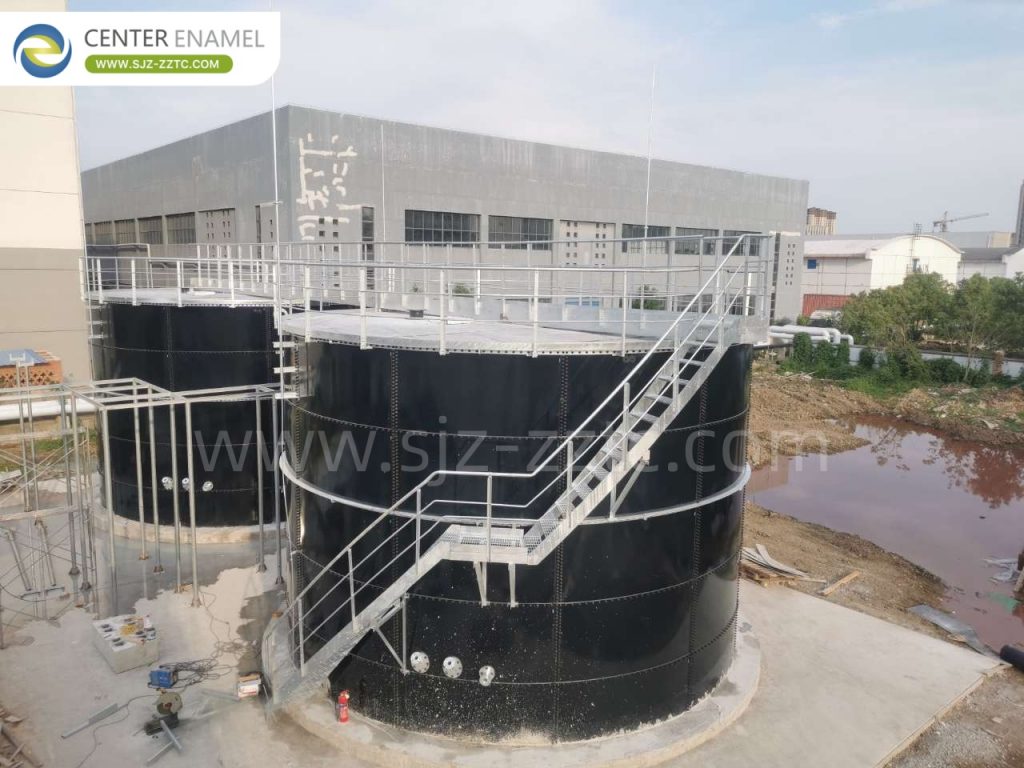
In the anaerobic process segment, UASB, EGSB, and IC anaerobic reactors, with advantages of high loading rates, small footprints, and stable operation, are widely used in high-concentration organic wastewater pretreatment in food processing, pharmaceutical fermentation, alcohol brewing, chemical, and other industries. These reactors use steel tank shells, and their corrosion resistance and gas-tightness directly determine long-term operational stability. This is where professional biogas plant project design becomes critical, as it must integrate biological performance with structural integrity. The application value of GFS tanks in such scenarios is increasingly prominent, offering factory-engineered quality that concrete construction simply cannot match.
Achieving Full-Process Factory Standardization with GFS Tanks for Unmatched Quality
To meet the demanding requirements of modern anaerobic systems, GFS tanks provide a superior foundation for any biogas plant project design. GFS tanks are fully factory-prefabricated to standardized specifications, with finished product quality stability far exceeding cast-in-place concrete tanks. All concrete tank processes are completed in the open air, with rebar tying, concrete pouring, and curing heavily influenced by worker skill, temperature, and rainfall. Wall thickness, density, and strength vary significantly between batches, with hidden defects like honeycombing, voids, and insufficient wall thickness common-quality cannot be uniformly controlled. Such variability poses unacceptable risks for biogas plant project design, where gas-tightness and corrosion resistance are paramount.
Center Enamel's GFS tanks steel panels, seals, and reinforcement components are all mass-produced in automated factories. Steel stamping, high-temperature enameling, and dimensional cutting are all controlled by CNC equipment, with each panel's parameters and enamel thickness strictly following unified national standards. All components are uniformly packaged and transported to site, with assembly strictly following standardized construction drawings. Full-process quality inspection from raw materials to finished components ensures highly consistent product performance parameters, completely eliminating the uncontrollable quality risks of on-site concrete construction, with every tank delivering stable, consistent performance. This factory-controlled approach ensures that the core reactors in any biogas plant project design maintain their integrity for decades, even under aggressive organic acid and biogas pressure conditions.
Understanding the UASB Reaction Process and Its Role in Biogas Plant Design
With the structural reliability of GFS tanks securing the physical reactor, the biological heart of many biogas plants relies on the proven UASB process. After pretreatment through screens and equalization tanks to remove impurities and balance water quality and flow, wastewater is uniformly fed into the reactor through the bottom distribution system. The wastewater rises at a constant rate through the high-concentration granular sludge bed at the bottom, where anaerobic microorganisms rapidly degrade most organic matter, converting it into biogas, clean water, and a small amount of sludge. Gentle hydraulic mixing maintains sludge suspension, expanding microbial contact area. Remaining pollutants continue to degrade in the mid-section suspended sludge layer, with the mixed liquor finally entering the top three-phase separator for gas, solid, and liquid separation. Biogas is collected upward for utilization, sludge settles back to the reaction zone, treated effluent overflows from the top, and aged sludge is periodically discharged-fully automated continuous operation. A well-executed biogas plant project design optimizes this process flow, and GFS tanks provide the ideal corrosion-resistant and gas-tight environment for each stage.
Assessing Brewery Wastewater Key Water Quality Characteristics for Optimal Reactor Configuration
The UASB process and associated biogas plant project design must adapt to specific waste streams, such as those from breweries. High concentration, high suspended solids, high color, slightly acidic, and excellent biodegradability-with significant fluctuations. COD typically 5,000-25,000 mg/L, with high-strength spent mash and still bottoms peaking at hundreds of thousands of mg/L. Suspended solids up to 40,000 mg/L, with thick turbid liquor. Stable slightly acidic pH 3-5. Pollutants are primarily natural organics from grain fermentation-starches, reducing sugars, proteins, alcohols-with no synthetic toxic substances. BOD/COD can reach 0.5-0.6-industry-leading biodegradability. Significant fluctuations with production batches and seasonal capacity, and susceptible to secondary fermentation and odor if left standing. Effective biogas plant project design must account for these peaks, and the modular nature of GFS tanks allows for scalable configurations that handle variable hydraulic and organic loads while maintaining process stability.
Scaling Up Production with Center Enamel’s Smart Manufacturing Base for Global Delivery
Executing sophisticated biogas plant project design at a global scale requires substantial manufacturing capacity. Center Enamel's core intelligent manufacturing base is located in Hebei Province, China, covering a total area of over 150,000 m², with Phase I mature manufacturing facility and Phase II high-end environmental equipment industrial park-dual-base synergy ensures stable production capacity. The base includes dedicated R&D office buildings, proprietary material laboratories, and finished product testing centers, with full-process quality control systems meeting ISO, NSF, CE, and other international standards.
The facility operates to green manufacturing standards, certified as a Provincial Green Factory-balancing efficient production with energy conservation and emission reduction. The company has 6 marketing service centers across China, establishing a nationwide production-sales network ensuring stable global order delivery. The base is adjacent to expressway networks and major logistics hubs, with complete container shipping capabilities-supporting simultaneous large-scale tank projects globally. The base employs over 500 staff, with multiple parallel automated production lines-facility scale and production capacity firmly placing it among the global top tier of GFS tanks equipment manufacturers. This scale directly supports timely delivery for any biogas plant project design, from pilot to utility-scale.
Leveraging Expert Design Team Capabilities for Customized Biogas Plant Projects
Behind every successful biogas plant project design lies a multidisciplinary team that translates site conditions into engineered solutions. The design team includes senior engineers registered in the Hebei Provincial Science and Technology Expert Database, with design standards aligned with strict European/American high-end equipment safety standards. The team can provide complete integrated design for differentiated overseas projects in livestock biogas, POME, municipal wastewater, hazardous waste storage, seawater desalination, etc.-covering tank structure, anti-corrosion/sealing systems, biogas piping, and anaerobic process integration. Their expertise ensures that GFS tanks are not just vessels but integral components of the overall process.
Pre-design thoroughly investigates local seismic zone, wind pressure, soil bearing capacity, water quality corrosivity, and local environmental discharge standards-applying thickened panels, reinforced anchored bases, and optimized sealing/corrosion structures as needed. Complete customized equipment solutions can be tailored to customer plant area, wastewater load, treatment targets, and budget-balancing safety, economics, and local adaptation-providing compliant, stable, and highly adaptable equipment structural design support for global environmental projects. This meticulous approach is the hallmark of professional biogas plant project design, ensuring that GFS tanks perform reliably in any climate or regulatory context.
Selecting the Right FRP Roof Cover Solution for Non-Pressurized Water Storage Applications
While GFS tanks excel as reactor vessels, complementary components like roof systems complete the biogas plant project design. FRP Roof is a general-purpose economical roof for atmospheric pressure storage tanks without air-tightness requirements, suitable for drinking water storage, agricultural irrigation water, firewater reserve, and general production wastewater temporary storage. It is available in two styles: flat and dome, allowing flexible selection based on tank specifications and site aesthetic requirements. The roof is integrally molded from resin and fiberglass, lightweight, with natural water resistance and mild acid/alkali corrosion resistance. It will not rust or rot in long-term humid environments, eliminating the frequent anti-corrosion maintenance required for metal roofs.
The dome style features excellent drainage performance due to its curved structure, resisting water accumulation, dust buildup, snow load, and strong winds. The flat style facilitates the installation of maintenance walkways, level gauges, and vents on top, making inspection and operation convenient. The product is fully insulated with no risk of galvanic corrosion, will not contaminate drinking water quality, and meets environmental standards for domestic water storage. The modular design with low individual component weight allows for simple on-site hoisting and assembly, offering high construction efficiency and affordable procurement and installation costs. It is only suitable for atmospheric pressure water storage tanks without biogas collection or pressurization requirements, and is not recommended for anaerobic fermentation gas-producing conditions. It is widely used in rural agricultural water storage tanks, industrial park firewater tanks, waterworks buffer tanks, and small to medium-sized domestic wastewater temporary storage facilities, making it a cost-effective general-purpose roof choice for conventional water storage applications. For sealed biogas reactors, however, GFS tanks with specialized gas-tight covers remain the standard in professional biogas plant project design.
Frequently Asked Questions
1. What does a professional Biogas Plant Project Design include?
It includes site assessment, reactor sizing (UASB/EGSB), GFS tank specification, biogas piping, corrosion protection, and full integration with pretreatment and post-treatment systems-ensuring safe, efficient biogas recovery and effluent compliance.
2. Why are GFS tanks preferred for biogas plants over concrete?
GFS tanks are factory-engineered with double-sided enamel coating, providing 30+ years of corrosion resistance against organic acids and H₂S. They eliminate on-site quality variability, ensure gas-tightness, and reduce construction time significantly.
3. Can Center Enamel customize designs for local conditions?
Yes. Our design team analyzes seismic zones, wind loads, soil capacity, and effluent standards. We adapt panel thickness, anchoring, and sealing systems to meet local regulations and environmental challenges-delivering tailored biogas plant project designs worldwide.