
Internal Circulation (IC) Anaerobic Reactor for Brewery Wastewater Treatment
Brewery wastewater presents unique challenges due to its high organic load, complex composition, and variability in flow rates. Traditional wastewater treatment methods may struggle to efficiently manage these characteristics while maintaining environmental compliance. In response, the internal circulation anaerobic reactor (IC reactor) has emerged as a robust solution for treating brewery effluents. Center Enamel’s advanced IC reactor technology is specifically engineered to address the demands of brewery wastewater treatment, ensuring high removal efficiencies and stable, continuous operation.
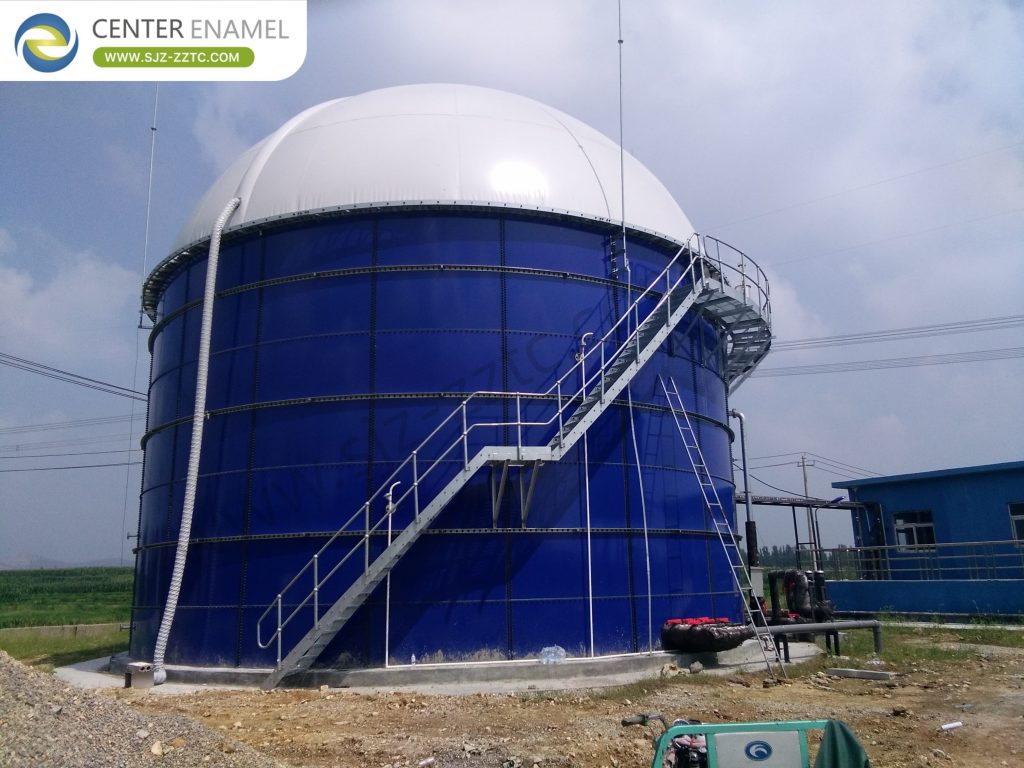
Brewery wastewater typically contains significant concentrations of organic compounds, nutrients, suspended solids, and sometimes inhibitory substances. The high chemical oxygen demand (COD) and biological oxygen demand (BOD) inherent in these effluents can impose substantial treatment burdens. Effective treatment requires a system that not only reduces pollutant loads but also recovers valuable energy in the form of biogas. The internal circulation anaerobic reactor is designed to meet these challenges through a controlled, recirculating process that optimizes microbial degradation.
Core Technology: Center Enamel's IC Reactor & GFS Tank Systems
Center Enamel's IC reactor systems are built to withstand the rigorous demands of industrial wastewater treatment. The core of our solution is our proprietary Glass-Fused-to-Steel (GFS) tank technology. This advanced material combines the strength of steel with the superior corrosion resistance of a glass coating, fused together at high temperatures. This creates an inert, impermeable barrier that is highly resistant to the organic acids, fats, and other corrosive elements found in brewery wastewater. The modular, bolted design of our GFS tanks allows for rapid and safe on-site installation, significantly reducing project timelines and labor costs.
The IC reactor employs a unique design that facilitates internal recirculation of biomass within the reactor. This configuration enhances the contact between microorganisms and organic substrates, which is critical for efficient anaerobic digestion. The reactor is typically divided into distinct zones that promote both hydrolysis and methanogenesis. By maintaining a high concentration of active biomass and providing a stable environment for microbial activity, the reactor achieves superior performance in organic matter degradation.
Key Design Features of Internal Circulation Anaerobic Reactors
Enhanced Mixing: The internal circulation mechanism ensures thorough mixing of the wastewater and microbial biomass, minimizing dead zones and maintaining uniform substrate concentration.
High Biomass Retention: Retains a significant fraction of biomass even at high hydraulic loading rates, ensuring process stability under fluctuating conditions.
Optimized Contact Time: Maximizes contact time between wastewater and microbial consortia for complete organic degradation, higher biogas yields, and superior COD/BOD reduction.
Modular and Scalable Design: Adaptable to various scales, supporting small craft breweries to large industrial plants with straightforward modular expansion.
Biochemical Process Dynamics & Operational Benefits for Breweries
The operation of an internal circulation anaerobic reactor is characterized by a series of interrelated biochemical processes. Initially, complex organic matter is hydrolyzed into simpler compounds. This is followed by acidogenesis, where these compounds are converted into volatile fatty acids. In the subsequent methanogenesis phase, specialized microorganisms transform these acids into methane and carbon dioxide. The continuous internal circulation ensures that the microbial population remains active and well-distributed, thereby stabilizing the digestion process.
Operational Benefits Table
| Operational Parameter / Benefit | Description & Impact on Brewery Effluents |
| High Organic Load Handling | Efficiently processes high-strength wastewater, ensuring major reductions in high COD and BOD levels across changing production cycles. |
| Energy Recovery | Generates renewable biogas through anaerobic digestion to offset energy costs or power combined heat and power (CHP) systems. |
| Operational Stability | Promotes stable microbial activity under variable load conditions to maintain continuous operation and regulatory compliance. |
| Low Sludge Production | Produces lower residual quantities compared to aerobic processes, minimizing waste handling challenges and operating costs. |
| Improved Process Control | Facilitates precise control over temperature, pH, and retention time via integrated real-time advanced monitoring systems. |
Global Project Cases & Proven Wastewater Solutions
Our expertise and product quality are demonstrated through an extensive portfolio of successful global installations across diverse industrial sectors.
| Project Name | Scope & Application | Number of Units | Total Capacity (m³) |
| Sichuan Brewing Wastewater Project | High-strength organic beverage wastewater treatment | 6 | 14,648 |
| Guangxi Beihai Papermaking Project | Industrial utility wastewater management | 2 | 11,213 |
| Muyuan Group Suining 4th Farm | Large-scale livestock wastewater treatment | 2 | 17,962 |
| Hebei Starch Wastewater Project | High-strength industrial wastewater treatment | 2 | 3,380 |
| Anhui Urban Water Supply Project | Public utility water supply storage | 2 | 1,180 |
| Hebei Municipal Water Project | Municipal urban water infrastructure | 1 | 1,010 |
Conclusion
The implementation of an internal circulation anaerobic reactor for brewery wastewater treatment yields both environmental and economic benefits. Environmentally, the reactor significantly reduces the release of methane and other pollutants into the atmosphere, mitigating total greenhouse gas emissions. By converting organic waste into biogas, breweries achieve a closed-loop system supporting renewable energy production.
Economically, energy recovery translates into cost savings and revenue generation. High IC reactor efficiency minimizes post-treatment needs, lowering capital and operational expenditures. Center Enamel leverages decades of manufacturing experience to deliver robust solutions tailored to diverse brewery requirements.
For further information on integrating internal circulation anaerobic reactors into your facility, please contact Center Enamel.
Frequently Asked Questions (FAQ)
1. What makes an Internal Circulation (IC) Reactor superior to a traditional UASB reactor for breweries?
An IC reactor functions essentially like two UASB reactors stacked in series, utilizing an internal self-circulating gas-lift mechanism. This allows it to handle much higher organic loading rates (OLR), require a smaller physical footprint, and ensure superior biomass-substrate contact without external pumping equipment.
2. How does Glass-Fused-to-Steel (GFS) technology benefit brewery wastewater tanks?
Brewery wastewater contains corrosive organic acids and fats. Center Enamel's GFS technology fuses glass coating to high-strength steel at ultra-high temperatures, creating an impermeable, inert barrier that resists corrosion, prevents biofilm buildup, and extends the asset lifecycle.
3. Can the biogas produced by the IC reactor be reused directly?
Yes. The biogas generated through anaerobic digestion is rich in methane and can be captured to fire on-site boilers, utilized in combined heat and power (CHP) systems, or cleaned for energy grid injection.
4. Is the IC reactor system scalable for craft breweries as well as large plants?
Yes. Thanks to the modular and bolted design of Center Enamel's systems, the infrastructure can be easily scaled up or customized to match smaller production footprints or massive industrial outputs.