
Is Anaerobic Digestion Better than Composting?
Livestock manure management is one of the most significant operational and environmental challenges facing modern agriculture. With millions of tons of manure generated annually, farmers and waste managers must choose between two primary biological treatment technologies: anaerobic digestion (AD) and composting (aerobic digestion) .
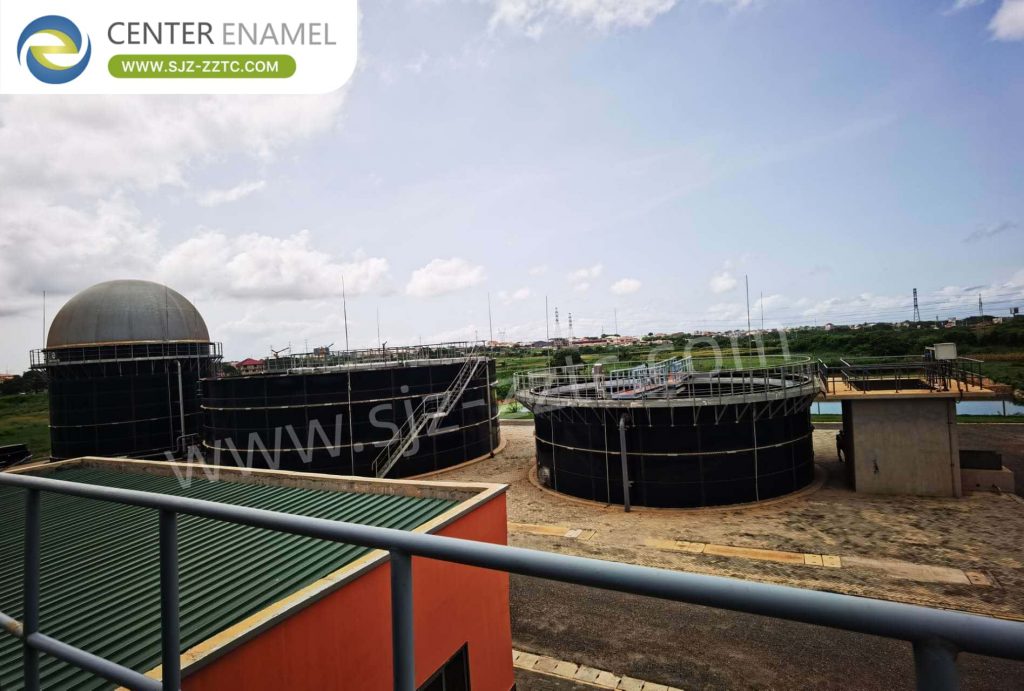
While composting has long been the traditional method for stabilizing manure and producing soil amendments, anaerobic digestion offers a compelling alternative that generates renewable energy while simultaneously producing a nutrient-rich fertilizer. Recent research demonstrates that AD systems reduce environmental impacts by approximately 40-60% relative to composting when biogas is effectively recovered .
This article presents a comprehensive comparison of these two technologies, with a focus on livestock manure treatment, and explains why anaerobic digestion delivers superior economic and environmental benefits for farms and waste management operations.
Understanding the Core Difference Between Anaerobic Digestion and Composting
Anaerobic Digestion (AD)
Anaerobic digestion is a biological process in which microorganisms decompose organic matter in the complete absence of oxygen. The process produces biogas-a mixture primarily composed of methane (50-70%) and carbon dioxide-which can be captured and used as a renewable fuel source. The residual material, called digestate, retains most of the original nutrients (nitrogen, phosphorus, potassium) and can be used as a slow-release fertilizer .
Composting
Composting is an aerobic process that requires a continuous supply of oxygen. Microorganisms oxidize organic matter, releasing energy as heat and producing CO₂, water, and stabilized organic solids (compost). While composting produces a valuable soil conditioner, it generates no usable fuel and releases substantial amounts of carbon and nitrogen into the atmosphere .
One Key Difference
Anaerobic digestion captures methane as an energy source; composting releases carbon and nitrogen as greenhouse gases and ammonia without energy recovery.
Energy Recovery - The Game-Changing Advantage of AD
The most significant advantage of anaerobic digestion over composting is energy production. When livestock manure is processed through AD, the biogas generated can be:
Combusted in combined heat and power (CHP) units to generate electricity and heat
Upgraded to biomethane for injection into natural gas grids
Used directly as a fuel for boilers or vehicles
Research confirms that co-digestion of swine manure with other organic wastes enhances biogas productivity, with methane production reaching 0.24-1.03 LNCH₄ per liter of reactor per day in continuous stirred-tank reactors . This represents a substantial energy return that offsets fossil fuel consumption and generates revenue.
Composting, by contrast, produces no recoverable energy. The heat generated during aerobic decomposition is lost to the environment, and the process requires significant energy input for aeration, turning, and material handling .
| Energy Parameter | Anaerobic Digestion | Composting |
| Usable energy output | Biogas (methane) - electricity/heat | None |
| Energy balance | Net positive (exporter) | Net negative (consumer) |
| Aeration requirement | None (sealed system) | High (mechanical turning/blowers) |
| Fossil fuel offset | Yes - displaces grid electricity/diesel | Minimal |
Nutrient Retention - Preserving Fertilizer Value
For livestock operations, preserving the nutrient value of manure is critical to reducing fertilizer costs and maintaining soil health. Anaerobic digestion excels at nutrient retention compared to composting.
Research comparing the two processes for cattle manure treatment found that AD retains more macronutrients (nitrogen and potassium) and converts organic nitrogen to ammonium, making nutrients more readily available to plants . This is because the sealed, oxygen-free environment of AD prevents the volatilization losses that plague composting operations.
Composting, on the other hand, suffers from significant nitrogen losses through:
Ammonia volatilization: Studies show 46.8-77.4% of initial total nitrogen can be lost as gaseous NH₃ during composting
Leaching: 9.6-19.6% of total nitrogen is lost through leachate, with 76.5-97.8% of that being ammonium-nitrogen
Denitrification: Additional losses as N₂O, a potent greenhouse gas
Phosphorus Bioavailability Trade-Offs
It is worth noting that phosphorus (P) bioavailability differs between the two processes. Composting increases Olsen-P (readily available P) by 22.3% , while AD decreases Olsen-P by 14.9% due to conversion to less readily available forms such as Ca-P . However, AD degrades phytate-like P (poor plant availability) by 48.26% compared to only 18.03% for composting, making total P more accessible over time. AD-derived fertilizers are better suited as slow-release P sources, reducing the risk of P runoff into waterways .
| Nutrient Parameter | Anaerobic Digestion | Composting |
| N retention | High - sealed system prevents volatilization | Low - 46-77% N lost as NH₃ |
| P bioavailability | Moderate (slow-release form) | High (readily available) |
| Phytate degradation | 48.26% | 18.03% |
| K retention | High (only 3% loss) | Moderate (up to 30% loss) |
| Leachate risk | Minimal (contained process) | Significant |
Environmental Impacts - Comparative Life Cycle Assessment
Life cycle assessments (LCAs) consistently show that anaerobic digestion outperforms composting in environmental terms, provided biogas is captured and utilized.
A comparative LCA study evaluating composting and AD for municipal solid waste found that composting yields the greatest burdens for human health, ecosystem quality, and resource depletion among the assessed options . The primary drivers include:
Uncontrolled emissions of NH₃, VOCs, and odorous compounds
No energy-recovery benefit to offset fossil fuel use
Larger land footprint and longer processing times
Conversely, integrated AD systems with biogas recovery consistently achieve the lowest human-health and ecosystem burdens among organic waste treatment routes. Research shows AD reduces overall impacts by approximately 40-60% relative to composting .
Carbon Emissions Comparison
A recent study of rural organic solid waste treatment found that total greenhouse gas emissions decreased in the order:
AD scenario: 4,115 kg CO₂-eq/FU
Composting (AC) scenario: 3,264 kg CO₂-eq/FU
Integrated AD-AC scenario: 2,692 kg CO₂-eq/FU
However, when considering net emissions (accounting for carbon offsets from energy generation and fertilizer substitution), the AD scenario outperforms composting. The integrated AD-AC system achieved the lowest net emissions at 1,462 kg CO₂-eq/FU .
Key insight: While composting has lower gross emissions than AD, AD's ability to displace fossil fuel electricity and synthetic fertilizers results in superior net environmental performance. Additionally, AD captures methane that would otherwise be released into the atmosphere from uncontrolled decomposition .
| Environmental Metric | Anaerobic Digestion | Composting |
| Gross GHGs | Higher (biogenic CO₂) | Lower |
| Net GHGs (with offsets) | Lower | Higher |
| Methane emissions | Captured (positive) | Released (negative) |
| NH₃ emissions | Low (sealed) | High |
| Odor potential | Moderate (managed) | High |
| Land requirement | Compact | Large |
Economic Returns - Revenue from Energy and Fertilizer
From a financial perspective, anaerobic digestion offers multiple revenue streams that composting cannot match. The economic case for AD includes:
Revenue Streams from AD:
Biogas sales/electricity generation: Export to grid or displace on-farm energy costs
Digestate sales: Nutrient-rich fertilizer with market value
Gate fees: Charging to accept waste from off-farm sources
Carbon credits: Verified emission reductions may generate tradeable credits
Composting Revenue (Limited):
Compost sales: Soil amendment - generally lower value than digestate fertilizer
Gate fees: May charge for waste acceptance
Research indicates that co-composting and co-AD can be profitable within 20 years with appropriate waste subsidies, but co-AD demonstrates a 21.36% increase in feasibility compared to mono-AD, while co-composting shows a 76.50% increase . However, these figures must be weighed against the higher capital costs of AD systems.
Scale Considerations
Economic viability depends heavily on scale. A cost-benefit analysis comparing small, medium, and large commercial facilities found:
Large-scale AD (100+ tonnes/day) is clearly viable
Small-scale composting (5 tonnes/day) can be viable but is sensitive to compost price drops
Small-scale AD (5 tonnes/day) is more challenging; domestic and large systems work, but "the smaller commercial systems are tough"
For livestock operations, digesting manure on-farm offers a hedge against energy price volatility and fertilizer cost increases, making AD an increasingly attractive investment despite higher upfront costs.
Integrating AD and Composting - The Best of Both Worlds
Rather than viewing AD and composting as competing technologies, forward-thinking operators are integrating both processes to maximize benefits.
The AD-AC Hybrid System
An integrated approach uses:
Anaerobic digestion as the primary treatment to produce biogas and a nutrient-rich digestate
Aerobic composting of the solid digestate fraction to produce a stabilized, pathogen-free soil conditioner
Research confirms that the AD-AC system:
Reduces GHG emissions by over 19% through fossil fuel displacement and enhanced soil carbon sequestration
Achieves biogas and biofertilizer production simultaneously
Represents the most efficient low-carbon approach for organic waste utilization
For livestock manure, the AD-AC system retains the energy benefits of biogas while producing high-quality compost from the digestate solids, reducing the land application risks associated with raw digestate.
Summary Comparison - Why AD Wins for Livestock Manure
| Decision Criterion | Anaerobic Digestion | Composting |
| Energy production | ✓ Biogas (renewable fuel) | ✗ No usable energy |
| Nutrient retention | ✓ High N and K retention | ✗ 46-77% N loss as NH₃ |
| GHG net emissions | ✓ Lower (with offsets) | ✗ Higher |
| Revenue streams | ✓ Multiple (energy, fertilizer, carbon credits) | ✗ Single (compost) |
| Odor control | ✓ Enclosed system | ✗ Open windrows emit odors |
| Pathogen reduction | ✓ Good (thermophilic) | ✓ Good (if temperature achieved) |
| Processing time | 15-40 days | 60-120+ days |
| Capital cost | Higher | Lower |
| Operating cost | Moderate | Moderate to High (aeration) |
| Best suited for | Liquid/slurry manure, energy recovery | Dry manure/green waste, soil improvement |
FAQ - Frequently Asked Questions
1. Is anaerobic digestion always better than composting for livestock manure?
For energy recovery and nutrient retention, yes. Anaerobic digestion produces biogas that can generate electricity or heat, while composting produces no usable energy. AD also retains significantly more nitrogen and potassium compared to composting, which loses 46-77% of nitrogen as ammonia gas. However, composting excels at producing stable organic matter for soil conditioning and is less capital-intensive. For farms with high manure volumes and energy needs, AD is the superior choice .
2. Can I combine anaerobic digestion and composting on my farm?
Yes. An integrated AD-AC system is increasingly recognized as the optimal approach. The manure first undergoes AD to produce biogas, and the digestate solids are then composted to produce a stabilized, pathogen-free soil amendment. Research shows this hybrid system reduces greenhouse gas emissions by over 19% compared to either technology alone and provides both energy and fertilizer revenue streams .
3. What scale of anaerobic digestion is economically viable for manure treatment?
Large-scale systems (processing 100+ tonnes of feedstock per day) are generally viable, while small commercial-scale AD (5 tonnes/day) faces economic challenges due to high capital costs and lower biogas yields. Medium-scale operations (20 tonnes/day) can be viable with consistent feedstock quality, co-digestion with other organic wastes, and favourable gate fees or energy prices. For smaller farms, co-operative AD facilities or integrated AD-AC systems may offer a more feasible path .
Conclusion
When comparing anaerobic digestion and composting for livestock manure treatment, the evidence clearly favours anaerobic digestion for farms and operations seeking maximum economic and environmental returns. AD captures methane as a renewable fuel, preserves nitrogen and potassium nutrients that composting loses to the atmosphere, and generates multiple revenue streams from energy and fertilizer sales.
While composting remains a cost-effective solution for dry, high-carbon feedstocks such as green waste, its high nitrogen losses, uncontrolled emissions, and lack of energy recovery make it less suitable for livestock manure management. The most forward-thinking approach integrates both technologies: AD for energy and nutrient capture, followed by composting of digestate solids for stable soil amendment production.
For livestock operations, investing in anaerobic digestion is not merely a waste treatment decision-it is a strategic commitment to energy independence, nutrient circularity, and climate-smart agriculture. As research continues to demonstrate the 40-60% impact reduction of AD over composting, the economic and environmental case for anaerobic digestion has never been stronger .