
Is Kitchen Waste Biodegradable? A Comprehensive Guide
Kitchen waste is inherently biodegradable, consisting primarily of organic materials such as food scraps, vegetable peels, meat, and leftovers that can be broken down by microorganisms through natural biological processes. This high organic content-often exceeding 90%-makes kitchen waste an ideal feedstock for biological treatment methods like anaerobic digestion and composting.
However, challenges such as rapid acidification, compositional variability, and contaminant presence require careful management. Through proper pretreatment, co-digestion, and process monitoring, kitchen waste can be efficiently converted into valuable biogas for energy recovery and nutrient-rich digestate for agricultural use. This article explores the biodegradation mechanisms, treatment options, challenges, and best practices for sustainable kitchen waste management.
What Makes Kitchen Waste Biodegradable?
Kitchen waste is inherently biodegradable because it consists primarily of organic matter derived from plants and animals. This includes vegetable and fruit peels, leftover cooked food, meat scraps, eggshells, coffee grounds, and tea leaves. These materials are composed of complex organic compounds such as cellulose, proteins, lipids, and carbohydrates that can be broken down by microorganisms through natural biological processes.
The term "biodegradable" means that organic matter can be decomposed by bacteria, fungi, and other living organisms into simpler substances like carbon dioxide, water, methane, and humus. Kitchen waste typically has a high moisture content, often exceeding 70-80%, which makes it unsuitable for incineration but ideal for biological treatment methods like composting and anaerobic digestion.
In fact, studies show that kitchen waste can contain up to 92% organic fraction, making it one of the most promising feedstocks for biological recycling. This high organic content is why kitchen waste is considered a valuable resource rather than just a disposal problem.
The Biodegradation Process: How It Works
Biodegradation of kitchen waste is carried out by microorganisms that use the organic matter as their energy source. The process involves several stages:
Hydrolysis: Complex organic polymers (carbohydrates, proteins, and fats) are broken down into simpler soluble compounds by extracellular enzymes produced by hydrolytic bacteria and fungi.
Acidogenesis: The simple compounds are further converted into volatile fatty acids, alcohols, hydrogen, and carbon dioxide by acidogenic bacteria.
Acetogenesis: The products from acidogenesis are converted into acetic acid, hydrogen, and carbon dioxide.
Methanogenesis: Methanogenic archaea convert these substrates into methane (CH₄) and carbon dioxide (CO₂), which together form biogas.
Research has demonstrated that fungal enzymes from species like Aspergillus niger, Fusarium solani, and Trichoderma asperellum can achieve approximately 90.80% weight reduction in kitchen waste under optimal conditions of pH 5.7 and 30°C. This shows the remarkable efficiency of biological decomposition.
Challenges in Kitchen Waste Biodegradation
Despite being highly biodegradable, kitchen waste presents several challenges for treatment systems:
Rapid Acidification: Kitchen waste decomposes quickly, leading to rapid acidification in anaerobic digesters. This can inhibit methanogenic microorganisms and cause process instability. Studies show that acetic acid content in kitchen waste digesters can be approximately 2.5 times higher than in other biowaste streams.
Composition Variability: Kitchen waste composition varies significantly with seasons, regions, and dietary habits. Research tracking seasonal variations found significant differences in waste characteristics across spring, summer, monsoon, autumn, early winter, and prevernal winter seasons.
High Contaminant Levels: Source-separated kitchen waste can contain up to 8% contaminants, primarily plastics and other non-biodegradable materials. These impurities must be removed before treatment.
Nutrient Imbalance: Kitchen waste may lack sufficient buffering capacity, requiring pH adjustment or co-digestion with other materials to maintain stable conditions.
Anaerobic Digestion: The Preferred Treatment Method
Anaerobic digestion (AD) is widely recognized as the most effective biological treatment for kitchen waste due to its biodegradable nature and high moisture content. This process converts organic waste into valuable biogas while reducing waste volume by up to 80%.
Biogas Yield: Kitchen waste typically produces between 0.56 to 0.68 m³ of biogas per kg of volatile solids (VS), with methane content ranging from 54.3% to 62.8%. This translates to approximately 300-435 mL of methane per gram of VS under optimal conditions.
Pretreatment Benefits: Studies show that thermal pretreatment at 250°C can increase soluble COD by 47%, while microwave irradiation at 1000W for 2 minutes increases it by 63%, resulting in significantly higher biogas yields-up to 1,540 mL/gTVS compared to 907 mL/gTVS for untreated waste.
Seasonal Performance: A year-long pilot study found that the maximum economic benefits from biogas production vary by season, with summer showing the highest returns when biogas is utilized as LPG or for electricity generation.
Composting: An Alternative Aerobic Approach
Composting is another viable method for treating biodegradable kitchen waste under aerobic (oxygen-present) conditions. This process produces nutrient-rich organic fertilizer rather than energy-rich biogas.
Research has demonstrated that kitchen waste mixed with cow dung and Trichoderma viride (a beneficial fungus) achieves significantly higher decomposition rates compared to other mixtures. The addition of microbial inoculants accelerates the breakdown process and improves the quality of the final compost product.
Center Enamel's compost fermentation tanks offer an intelligent integrated solution for treating kitchen waste, livestock manure, and other organic wastes by converting them into organic fertilizer, cultivation substrates, and soil conditioners. This approach achieves resource utilization while addressing environmental concerns.
Converting Kitchen Waste to Energy: The Biogas Advantage
The conversion of kitchen waste to biogas through anaerobic digestion represents one of the most sustainable waste-to-energy solutions available. Studies indicate that food waste can generate up to 600 kW of electricity per day from a mini biogas plant processing approximately 1,000 kg of waste daily.
Economic Viability: The Levelized Cost of Energy (LCOE) for biogas from food waste co-digested with cow dung is approximately €0.19 per kWh, making it cost-competitive with conventional energy sources.
Environmental Benefits: A theoretical analysis for Tenerife estimated that utilizing available food waste could produce 28.97 × 10⁶ Nm³ of biogas annually, saving 18.15 × 10⁶ liters of gasoline and 42.66 × 10³ tons of CO₂ equivalent.
Digestate as Fertilizer: The byproduct of anaerobic digestion, known as digestate, contains valuable nutrients-studies show nitrogen (2.3-2.6%), phosphorus (0.6-0.9%), and potassium (0.7-1.1%) content, making it an excellent organic fertilizer.
Best Practices for Kitchen Waste Treatment
To maximize the efficiency of kitchen waste biodegradation and resource recovery, the following best practices are recommended:
Source Separation: Proper segregation of kitchen waste from other municipal solid waste is essential. Studies confirm that source-separated kitchen waste achieves higher biogas yields (136.2 m³/ton) compared to mixed biowaste (116.6 m³/ton).
Pretreatment: Thermal or microwave pretreatment can significantly enhance biodegradability and biogas production by breaking down complex structures and increasing soluble organic matter availability.
Co-digestion: Mixing kitchen waste with other organic materials-such as cow dung, de-oiled pongamia cake, or agricultural residues-provides nutrient balance, buffering capacity, and improved process stability.
Effective Microorganisms: Adding microbial consortia or effective microorganisms can accelerate decomposition, control odors, and enhance treatment efficiency.
Process Monitoring: Regular monitoring of pH, volatile fatty acids, and alkalinity helps prevent acidification and maintain stable digestion conditions.
Center Enamel: Your Partner in Kitchen Waste to Biogas Solutions
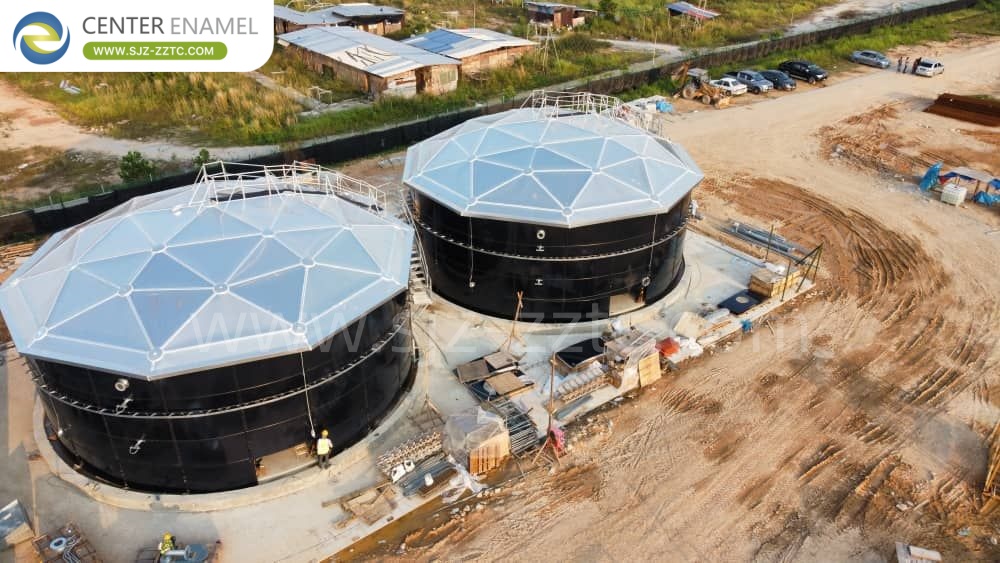
Center Enamel is a global leader in providing comprehensive organic waste treatment solutions, specializing in converting kitchen waste into valuable biogas and renewable energy. With over 30 years of experience and a presence in more than 100 countries, the company offers innovative technologies including Glass-Fused-to-Steel (GFS) anaerobic digestion tanks, carbon steel storage tanks, stainless steel tanks, and composting fermentation tanks.
Center Enamel's anaerobic digestion tanks, serving as Continuous Stirred Tank Reactors (CSTR), are specifically engineered to handle high-suspended solids, concentrated organic wastewater, and complex kitchen waste streams. These tanks efficiently degrade organic pollutants while producing biogas for energy recovery.
The company has successfully completed numerous kitchen waste treatment projects, including the Beijing kitchen waste treatment project and the Hunan Shaoyang kitchen waste treatment project. Their integrated approach encompasses environmental protection project contracting, process section undertaking, and intelligent manufacturing of environmental protection equipment, providing end-to-end solutions for sustainable waste management.
Center Enamel's commitment to quality, innovation, and customer value ensures that clients receive cost-effective and environmentally sound engineering solutions tailored to their specific project requirements.
Frequently Asked Questions (FAQ)
1. Is all kitchen waste biodegradable?
Yes, the organic portion of kitchen waste-including food scraps, vegetable peels, meat, and leftovers-is fully biodegradable. However, contaminants like plastics, metals, and glass are not biodegradable and must be removed before treatment.
2. How long does kitchen waste take to biodegrade?
Under optimal conditions, kitchen waste can achieve approximately 90% decomposition within weeks to months. Anaerobic digestion typically requires 20-30 days retention time, while composting may take 60-90 days depending on conditions and microbial activity.
3. What does Center Enamel's kitchen waste solution include?
Center Enamel provides Glass-Fused-to-Steel anaerobic digestion tanks, composting fermentation tanks, and complete EPC solutions for converting kitchen waste to biogas and fertilizer. Their systems are customized for project requirements and comply with international standards.