
Is STP Water Safe for Drinking? The Truth About Treated Wastewater
As water scarcity becomes an increasingly pressing global issue, many communities and industries are looking for solutions to stretch their water supplies. One question that frequently arises is: Is STP water safe for drinking?
STP stands for Sewage Treatment Plant, and STP water refers to the effluent that has undergone treatment at such a facility. With growing interest in water recycling and reuse, it is essential to understand what STP water actually contains, what standard treatment can and cannot remove, and whether it can ever be made safe for human consumption.
This article provides a comprehensive answer to this important question.
What Is STP Water? Understanding Sewage Treatment Plant Effluent
Sewage Treatment Plants process wastewater from homes, businesses, and industries. The treatment typically involves several stages:
Primary Treatment: Physical screening and sedimentation to remove large solids and grit.
Secondary Treatment: Biological processes (such as activated sludge or anaerobic digestion) to break down organic matter and reduce biological oxygen demand (BOD) and chemical oxygen demand (COD).
Tertiary Treatment: Additional filtration and disinfection (e.g., chlorination or UV treatment) to further improve water quality.
After these treatment stages, the resulting water is often clear and may have little odor. However, its safety for drinking depends on what remains in the water after treatment.
Why Standard STP Water Is NOT Safe for Drinking
The short answer to the question “Is STP water safe for drinking?” is NO-at least not without advanced treatment beyond what conventional STPs provide. Here is why.
1. Treatment Goals Are Different
Standard sewage treatment plants are designed to:
Remove visible solids and floating debris
Reduce organic pollution (BOD and COD)
Lower pathogen levels for safe environmental discharge or non-potable reuse
They are not designed to produce drinking water. The treatment trains used in conventional STPs do not remove all contaminants that pose health risks.
2. Remaining Contaminants in Standard STP Effluent
Even after secondary and basic tertiary treatment, STP water typically still contains:
Dissolved Chemicals: Pharmaceutical residues, hormones, personal care products, and household chemicals that pass through standard treatment
Resistant Microorganisms: Some viruses, bacteria (including antibiotic-resistant strains), and parasites may survive conventional disinfection
Nutrients: Nitrates and phosphates remain in the water; high nitrate levels are particularly dangerous for infants, causing methemoglobinemia (“blue baby syndrome”)
Heavy Metals and Industrial Pollutants: Trace amounts of metals and industrial chemicals may be present
Dissolved Salts and Total Dissolved Solids (TDS): These remain in the water and affect taste and safety
3. Regulatory Standards Confirm the Concern
Regulatory standards worldwide make a clear distinction between water suitable for discharge and water suitable for drinking.
The Indian Standard for drinking water (IS 10500:2012) specifies that water intended for drinking must contain no E. coli or thermo-tolerant coliform bacteria, and total coliform bacteria must be absent. Standard STP effluent often fails to meet these microbial standards without advanced treatment.
Similarly, health authorities worldwide require multiple barriers and advanced treatment before any recycled water can be approved for potable use.
How STP Water Is Used Safely (Non-Potable Applications)
Although standard STP water is not safe for drinking, it is widely and safely used for many non-potable purposes:
| Application | Description |
| Irrigation | Parks, golf courses, roadside greenery, and agricultural crops (with restrictions) |
| Toilet Flushing | Commercial buildings and residential complexes with dual plumbing systems |
| Industrial Cooling | Factories and power plants using treated water for cooling towers |
| Construction | Dust control, concrete mixing, and soil compaction |
| Fire Protection | Firefighting systems where drinking water quality is unnecessary |
Florida law explicitly recognizes these beneficial uses, stating that reclaimed water “shall be considered environmentally acceptable and not a threat to public health and safety” for approved non-potable applications.
Can STP Water Be Made Drinkable? Yes-With Advanced Treatment
The question “Is STP water safe for drinking?” has a different answer if we add the right technology. Yes, STP water CAN be made safe for drinking-but only with advanced treatment far beyond what conventional STPs provide.
Advanced Treatment Technologies Required for Potable Reuse
Making treated wastewater drinkable requires multiple layers of protection:
Ultrafiltration (UF): Removes fine particles, bacteria, and some viruses
Reverse Osmosis (RO): Removes dissolved salts, chemicals, pharmaceuticals, and most remaining contaminants
Advanced Oxidation (AOP): Breaks down complex organic compounds that pass through RO
Ultraviolet (UV) Disinfection: Destroys any remaining microorganisms
Cities such as Singapore (NEWater), Windhoek (Namibia), and Orange County (California) have successfully implemented direct potable reuse and indirect potable reuse projects using these advanced technologies.
However, these systems are expensive, energy-intensive, and require rigorous monitoring-far beyond what standard STP designs include.
How Center Enamel Enables Sustainable Wastewater Treatment and Reuse
While Center Enamel does not produce drinking water from sewage, the company plays a critical role in the first stage of sustainable water management: high-efficiency wastewater treatment and biogas recovery.
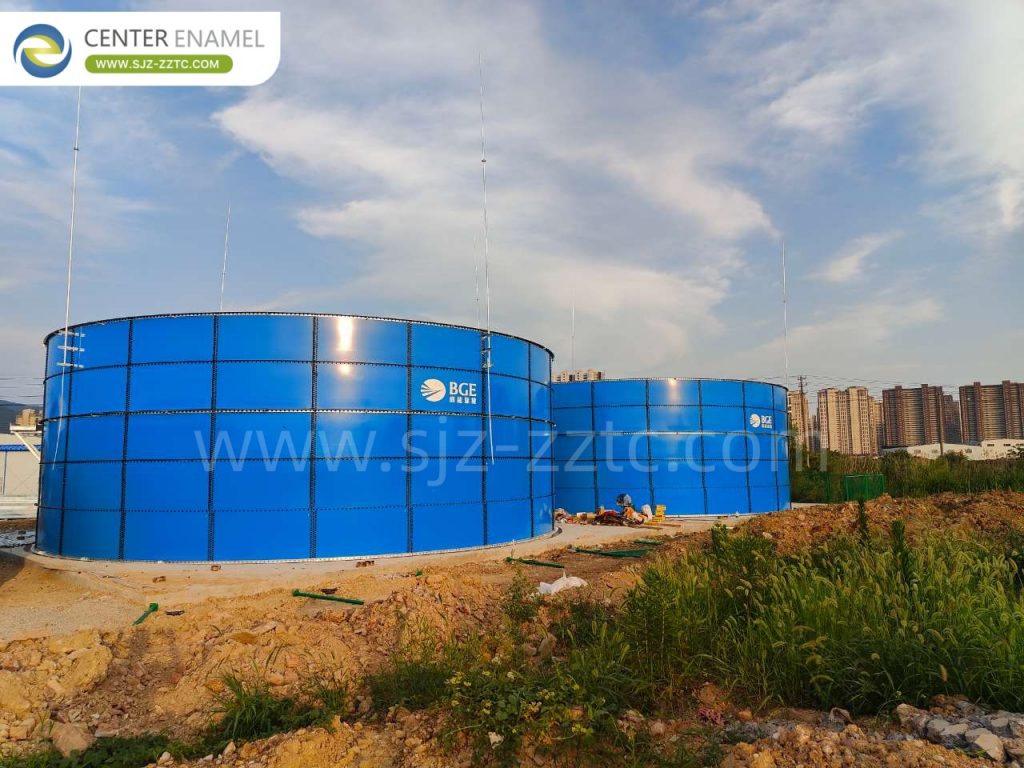
For over 36 years, Center Enamel has been a global leader in water, wastewater, and biogas projects. As the largest manufacturer of Glass-Fused-to-Steel (GFS) tanks in Asia, Center Enamel provides professional, custom-engineered anaerobic digestion solutions for sewage treatment plants worldwide.
The Center Enamel Difference in STP Projects
When a sewage treatment plant treats wastewater effectively, it produces two valuable outputs:
Treated effluent suitable for non-potable reuse (irrigation, industrial cooling, etc.)
Biogas (methane) captured during anaerobic digestion, which can generate renewable energy
Center Enamel’s integrated solutions include:
GFS Tanks (Glass-Fused-to-Steel): Engineered for exceptional corrosion resistance against the acidic, aggressive environment of anaerobic digesters. The glass coating is fused at over 800°C, creating a durable, inert surface that lasts 30+ years with minimal maintenance.
Double Membrane Roof Systems: For efficient biogas capture and storage, enabling wastewater treatment plants to generate renewable energy from organic waste.
Complete EPC Services: Center Enamel handles everything from site assessment and civil design to installation and commissioning-a true one-stop solution.
Anaerobic Digestion: The Biological Engine of STPs
At the heart of many modern sewage treatment plants is anaerobic digestion-a biological process that breaks down organic contaminants while producing methane-rich biogas.
Center Enamel’s expertise in implementing advanced anaerobic digestion helps STPs achieve:
Reduced sludge volume (lower disposal costs)
Renewable energy generation (biogas for heat or electricity)
Improved effluent quality (making subsequent reuse safer)
Lower carbon footprint (capturing methane that would otherwise escape to the atmosphere)
By providing durable, reliable, and efficient containment infrastructure, Center Enamel enables wastewater treatment facilities to operate sustainably-turning a waste stream into a resource.
Conclusion: Know the Limits, Embrace the Solutions
So, is STP water safe for drinking?
Standard STP effluent: NO. It still contains pathogens, dissolved chemicals, and contaminants that make it unsafe for human consumption.
Advanced treated wastewater (with RO, UF, AOP): YES. With rigorous multi-stage advanced treatment, wastewater can meet drinking water standards-but this is expensive and requires careful monitoring.
Safe non-potable uses: YES. Standard STP water is widely and safely used for irrigation, industrial cooling, toilet flushing, and many other purposes.
For palm oil mills, municipalities, and industries looking to treat wastewater efficiently and sustainably, Center Enamel provides the professional anaerobic digestion solutions and GFS Tank infrastructure that form the foundation of responsible water management and renewable energy recovery.
Frequently Asked Questions (FAQ)
Q1: Is STP water safe for gardening or watering plants?
Yes, standard STP water is generally safe for non-edible plants, landscaping, and golf courses. However, for edible crops, stricter treatment standards apply. According to wastewater reuse guidelines, edible crops consumed raw require zero fecal coliforms, while crops that are cooked may have lower standards. Always check local regulations before using STP water for food crops.
Q2: What is the difference between STP water and drinking water standards?
Drinking water must contain no E. coli or coliform bacteria, very low nitrates, and meet strict limits for dissolved chemicals and heavy metals. Standard STP effluent typically fails these standards because conventional treatment does not remove dissolved salts, pharmaceutical residues, and some resistant microorganisms. Advanced treatment (reverse osmosis + UV + advanced oxidation) is required to close this gap.
Q3: Does Center Enamel provide solutions for turning STP water into drinking water?
Center Enamel specializes in the anaerobic digestion stage of wastewater treatment-the biological process that reduces organic pollution and produces biogas. While this is a critical first step in any wastewater treatment plant, producing drinking water requires additional advanced treatment technologies (such as reverse osmosis) beyond Center Enamel’s core product line. However, Center Enamel’s GFS Tanks and anaerobic solutions help STPs achieve the effluent quality needed for subsequent advanced treatment and safe reuse.