
Kenya Pig Manure Biogas Project: Advanced Biogas Solutions GFS Tanks and CSTR Process
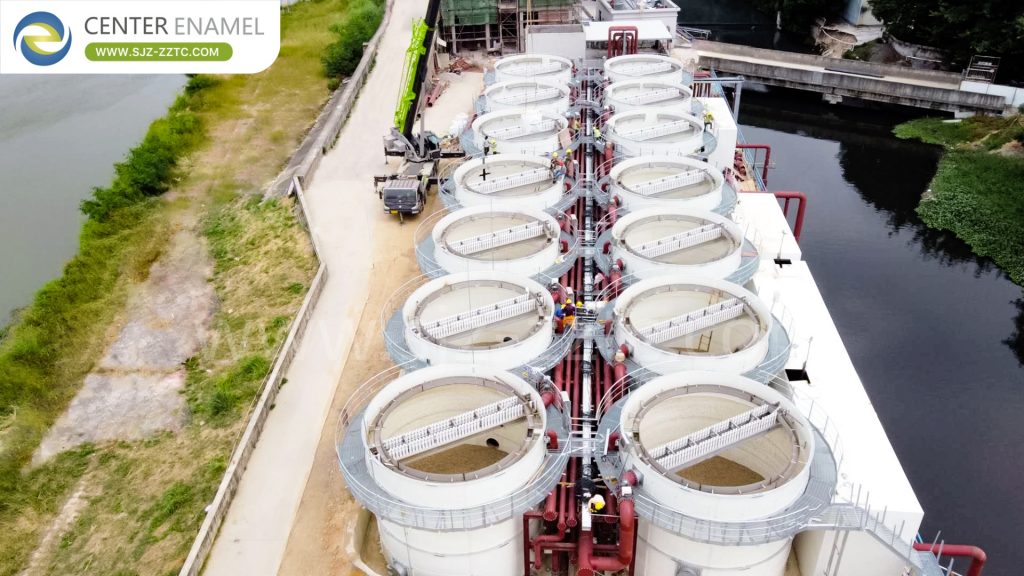
Kenya's expanding livestock sector presents both environmental challenges and energy opportunities. By deploying advanced Biogas Project solutions that combine the CSTR Process with durable GFS Tanks, Kenyan pig farms can achieve sustainable waste management while generating valuable renewable energy.
Kenya's Pig Farming Industry and Waste Management Challenges
As Kenya's livestock sector expands to meet growing food demands, the industry faces mounting pressure to manage significant volumes of animal waste . Traditional waste management methods—often relying on rudimentary pits or direct field discharge—are leading to contamination of precious local soil and water resources. Beyond these environmental threats, the uncontrolled decomposition of manure releases substantial greenhouse gases and creates persistent odors that degrade the quality of life for rural communities. To support the modernization of Kenya's agricultural landscape, there is an urgent need for sustainable, regulatory-compliant waste treatment infrastructure that can mitigate ecological risks while fostering long-term farm productivity . The government has recognized biogas technology as a cornerstone of its green development agenda .
How Pig Manure Converts to Biogas
Transitioning from outdated disposal techniques to advanced anaerobic digestion provides livestock farms with essential dual benefits. Primarily, it tackles pollution by stabilizing organic matter and neutralizing dangerous pathogens before they can enter the local ecosystem . Second, it transforms a waste liability into a profitable, high-value asset: renewable energy. Biogas produced from pig manure can be leveraged for electricity generation, heating, or as a clean cooking fuel, substantially reducing daily energy expenditures for farm operators. The remaining digestate serves as nutrient-rich fertilizer, enhancing soil fertility and agricultural productivity while contributing to a circular economy model . This transition encourages environmental stewardship while fostering sustainable agricultural development.
The CSTR Process: Core Technology for Kenyan Biogas Projects
The CSTR Process (Continuous Stirred-Tank Reactor) serves as the core technology for biogas production in Kenya . Equipped with a high-performance mechanical stirring device, the CSTR maintains a fully mixed, temperature-controlled environment that enables the efficient degradation of organic matter . The process begins with a structured pre-treatment stage: raw organic waste is first processed through screens to remove large solid impurities, followed by specialized crushing devices that simplify the waste stream. A homogenization tank subsequently extracts sand and heavy particles, ensuring uniform influent flow for stable fermentation .
Professional Biogas Project Design by Center Enamel
Center Enamel provides comprehensive, end-to-end design solutions specifically engineered for the unique requirements of livestock Biogas Project development in Kenya . Leveraging extensive international expertise, the company integrates sophisticated engineering technology with resilient, high-performance equipment to deliver systems that are both exceptionally reliable and highly efficient. Their expert technical team meticulously oversees the entire project lifecycle—from initial site feasibility assessments to final commissioning—ensuring that every design is optimized to maximize gas yield, simplify ongoing maintenance, and guarantee long-term operational stability for clients .
GFS Tanks and Double Membrane Roof for Biogas Projects
GFS Tanks and the Double Membrane Roof are the preferred containment solutions for biogas projects in Kenya . GFS Tanks provide superior corrosion resistance and structural integrity, supporting large-scale diameters required for demanding industrial applications . The glass-fused-to-steel coating withstands the acidic environment of anaerobic digestion, ensuring a leak-proof system with a service life exceeding 30 years. The Double Membrane Roof serves as the standard gas holder for biogas storage, offering significant cost optimization and space efficiency—a highly reliable alternative to traditional ground-mounted gas holders that reduces the overall plant footprint and simplifies site layout .
Diverse Storage Tank and Cover Solutions
Center Enamel offers a complete range of storage tanks and roof solutions:
Glass-Fused-to-Steel (GFS) Tanks: Superior corrosion resistance with pH 1–14 tolerance, ideal for Kenya's demanding biogas environments.
Fusion Bonded Epoxy (FBE) Tanks: Advanced epoxy coating technology for effective corrosion protection.
Roof Solutions:
Double Membrane Roof: Preferred for biogas storage with cost and space efficiency
Aluminum Geodesic Dome: Advanced corrosion resistance and cost-effective construction
Glass-Fused-to-Steel Roof: Airtight option suitable for pressurized structures
Aluminum Alloy Trough Deck: Economical option for odor control
FRP Roof: Versatile option for non-airtight applications
Comprehensive Biogas Supporting Equipment
A complete biogas plant relies on specialized auxiliary systems:
Gas Holders: For safe gas storage and pressure maintenance
Solid-Liquid Separators: For efficient digestate management and fertilizer production
Torch Systems: Critical safety components for burning excess biogas during emergencies
Dehydration and Desulfurization Tanks: For biogas purification by removing moisture and hydrogen sulfide
Screw Sludge Dewatering Machines: For efficient sludge volume reduction
Lifting Pumps: For consistent wastewater transfer
Efficient Installation of GFS Tanks in Kenya
Center Enamel's GFS Tanks are designed for quick and efficient installation suited to Kenya's diverse rural locations:
No large cranes required: Hydraulic jacking method allows installation without scaffolding or heavy lifting equipment
Zero on-site welding: Factory-prefabricated bolted components avoid welding failures common in tropical climates
Rapid commissioning: The bolted system eliminates long curing periods, significantly shortening construction cycles
Local capacity building: Professional training and knowledge transfer for long-term project sustainability
Why Choose Center Enamel for Your Biogas Project
Center Enamel is a leading one-stop solution provider for biogas projects in Kenya:
Global Manufacturing Leadership: Asia's largest GFS tank manufacturer with extensive production capacity
Proven International Experience: Successful projects in over 100 countries with deep understanding of East African agriculture
International Quality Standards: Products certified to ISO 28765, AWWA D103, NSF61, and OSHA
Complete EPC Service: Full turnkey solutions from design to installation and after-sales support
Local Partnership: Commitment to building long-term relationships and supporting Kenya's sustainable development goals
Successful Project Case Studies
Indonesia Biogas Project
Application: Anaerobic reactor for palm oil wastewater treatment plant
Tank models: Ø17.58m x 8.4m, Ø16.82m x 7.2m
Number of tanks: 3 GFS tanks
Installation date: 2013
Turkey Food Waste Treatment Project
Process: CSTR
Tank dimensions: φ16.81m x 16.8m (H) (2 units) Total capacity: 7,452 m³
Year of completion: 2020
Conclusion
Kenya's pig farming industry has a significant opportunity to address environmental challenges while generating renewable energy. By implementing proven Biogas Project solutions powered by the CSTR Process and durable GFS Tanks, Kenyan farms can transform waste management burdens into profitable energy streams. With world-class manufacturing, international certifications, and comprehensive turnkey services, Center Enamel provides reliable solutions for Kenya's sustainable agricultural future and energy security.
FAQs
1. How does the CSTR Process ensure stable biogas production with Kenya's variable manure quality?
The CSTR Process uses mechanical stirring to maintain a fully mixed, temperature-controlled environment, preventing solids settling and ensuring stable biological activity even when feedstock composition varies. This robust design handles Kenya's diverse agricultural waste streams effectively .
2. What advantages do GFS Tanks offer for Kenya's biogas facilities?
GFS Tanks provide exceptional corrosion resistance, a service life exceeding 30 years, and bolted assembly that enables fast installation in rural locations without welding. They withstand Kenya's varied climate conditions and require minimal maintenance .
3. Does Center Enamel provide ongoing support for biogas projects in Kenya?
Yes, Center Enamel offers comprehensive after-sales support including technical guidance, regular maintenance assistance, and operational optimization—ensuring long-term project success in Kenya .