
Kitchen Waste Projects: Centralized And On-Site Delivery Models
Kitchen waste projects choose between a centralized plant that collects scraps across a city and an on-site digester at the source, such as a hotel or food campus. Centralized wins on economies of scale and off-take; on-site wins on transport cost and odour control. Tankage is then scaled to the verified daily tonnage.
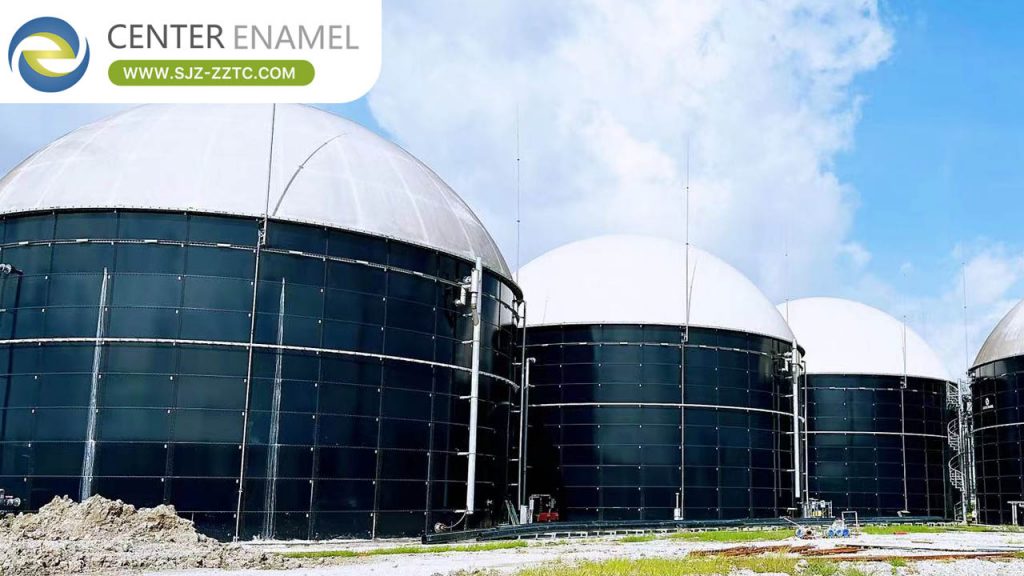
Centralized Versus On-Site
A centralized facility aggregates large volumes, justifying an upgrading skid and a vehicle-fuel off-take. An on-site digester avoids collection trucks and landfill haul but must match a smaller, steadier stream. The decision is driven by collection radius and the reliability of the feed.
| Model | Best When | Main Trade-off |
| Centralized plant | Dense city, large volume | Collection and transport cost |
| On-site digester | Single large campus | Smaller, steadier stream |
| Satellite plus hub | Mixed geography | Pre-treatment at satellite |
Scoping A Kitchen Waste Project
Start from the daily tonnage and its variability, then set the retention time and digester volume. For food waste the pre-treatment (screening and milling) is as important as the digester, because contamination and grit决定了 how clean the feed enters the reactor.
Tankage And Process
Whether centralized or on-site, the sealed digester is typically a Glass-Fused-to-Steel CSTR, chosen for corrosion resistance and factory-controlled assembly. A bolted GFS tank lets a project scale the digester volume as the collected tonnage grows, without rebuilding concrete.
Off-take Planning
A project is only bankable with an off-take: power, heat, or upgraded vehicle fuel. Centralized plants usually target vehicle-grade methane because the volume justifies the upgrading investment; on-site units often use biogas for on-demand heat or power.
About The Supplier
Shijiazhuang Zhengzhong Technology Co., Ltd (Center Enamel) manufactures Glass-Fused-to-Steel tanks for food and agricultural waste digestion, with enamel firing at 820-930 C and certifications including ISO 9001, NSF/ANSI 61, and CE-EN 1090. The bolted CSTR packages support both centralized and on-site kitchen-waste projects.
Comparison: Delivery Responsibility
| Model | Best For | Main Risk |
| Single-responsibility EPC | Owners wanting one guarantee | Higher coordination upfront |
| Equipment supply | Owners with own civil team | Interface gaps |
| Build-own-operate | Operators wanting output | Long contract term |
A kitchen waste project is a logistics decision before it is an engineering one. Fix the collection model and the off-take, then size the bolted GFS digester to the real daily tonnage.
Frequently Asked Questions
Q1: What are the kitchen waste project models? A1: Centralized plant, on-site digester, or satellite-plus-hub.
Q2: Centralized or on-site: which wins? A2: Centralized for scale and fuel off-take; on-site for transport and odour control.
Q3: How is a food waste plant scoped? A3: From daily tonnage and variability, then retention time and digester volume.
Q4: What tankage does it need? A4: A sealed Glass-Fused-to-Steel CSTR, corrosion-resistant and modular.
Q5: What off-take works best? A5: Vehicle-grade methane for large centralized plants; heat or power for on-site units.
Q6: How important is pre-treatment? A6: Critical, because contamination and grit decide feed quality.
Q7: Can tankage expand later? A7: Yes, bolted GFS panels let the digester grow with tonnage.
Q8: What temperature does digestion need? A8: Mesophilic CSTR typically runs at 35-38 C.
Outline your collection radius and daily tonnage to an engineer, or request a kitchen-waste project delivery model and tankage plan.