
Kitchen Waste Solution: Food Waste To Biogas And Vehicle Fuel
A kitchen waste solution routes food scraps into anaerobic digestion, where microbes convert the organics into biogas. Upgrading that biogas removes carbon dioxide and hydrogen sulphide to reach vehicle-grade methane, closing a circular loop that cuts landfill and diesel at once.
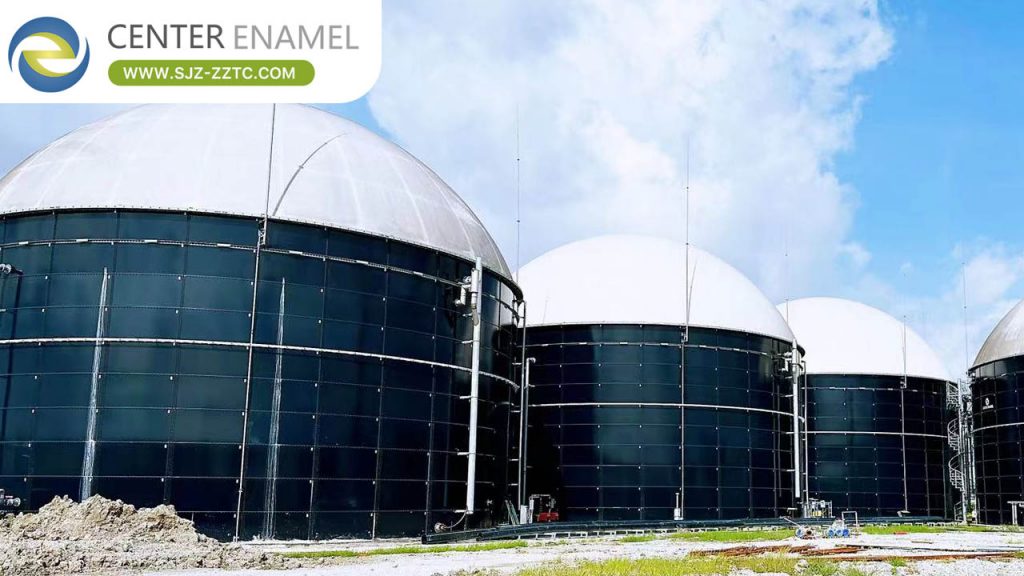
Why Digest Kitchen Waste
Food waste is high in volatile solids and water, so it digests readily and produces more biogas per tonne than many dry feeds. Diverting it from landfill also avoids methane leaks and tipping fees, which is why cities and food processors increasingly treat it as a feedstock rather than refuse.
From Food Waste To Fuel
The stream is screened, milled, and pumped into a sealed digester, typically a CSTR at 35-38 C for the uniform slurry. The biogas is desulphurised, then upgraded to biomethane; compressed, it meets vehicle-grade specification for fleet or public transport fuel.
| Step | What Happens | Output |
| Pre-treatment | Screen, mill, slurry | Pumpable feed |
| Digestion | CSTR at 35-38 C | Raw biogas |
| Upgrading | Remove CO2 and H2S | Biomethane |
| Use | Compress and dispense | Vehicle fuel |
Yield And Co-digestion
Food waste alone can be too rich in fats and low in buffer, so co-digesting it with manure or agricultural residue balances the carbon-to-nitrogen ratio toward 20-30:1 and steadies the biology. Yield then tracks the volatile solids fed, with mature manure returning 0.20-0.30 m3 biogas per kg volatile solids.
Project Case Study: Zhenyuan Group Biogas Project In Henan
Project / Application: Vehicle-grade methane from manure and washing wastewater, Henan, China. Industry: Renewable energy and transport fuel. Tank Type: CSTR (two-stage). Key Requirements: Consistent vehicle-grade methane output.
| Field | Value | Source / Evidence |
| Handling Capacity | 650 T/D (manure plus washing wastewater) | Company project reference |
| Treatment Type | Medium Temperature Anaerobic Fermentation | Company project reference |
| Reactor Type | CSTR (Continuous Stirred-Tank Reactor) | Company project reference |
| Primary Reactors | 3 sets, O15.29 x 15 m | Company project reference |
| Secondary Reactor | 1 set, O5.22 x 6 m | Company project reference |
| Annual Methane Production | 3,000,000 m3 (vehicle-grade) | Company project reference |
| Installation Year | 2013 | Company project reference |
About The Supplier
Shijiazhuang Zhengzhong Technology Co., Ltd (Center Enamel) manufactures Glass-Fused-to-Steel tanks rated for anaerobic digestion of food and agricultural waste, with enamel firing at 820-930 C and certifications including ISO 9001, NSF/ANSI 61, and CE-EN 1090. The bolted CSTR packages support rapid deployment for vehicle-fuel biogas projects.
Comparison: Food Waste Routes
| Route | Best For | Main Trade-off |
| Anaerobic digestion to fuel | Cities and fleets | Needs upgrading skid |
| Composting | Low-tech sites | No energy recovery |
| Landfill | Last resort | Methane leakage risk |
A kitchen waste solution pays back when the food scraps are seen as fuel, not refuse. Pre-treat, digest in a sealed CSTR, and upgrade the biogas to vehicle-grade methane, and the loop becomes both environmental and economic.
Frequently Asked Questions
Q1: How is kitchen waste turned into energy? A1: It is digested in a sealed CSTR, and the biogas is upgraded to biomethane.
Q2: What process makes vehicle fuel? A2: Anaerobic digestion plus CO2 and H2S removal to reach vehicle-grade methane.
Q3: How much methane from food waste? A3: Yield tracks volatile solids; co-digestion with manure balances the C:N toward 20-30:1.
Q4: Is food waste digestion reliable? A4: Yes with pre-treatment and co-digestion to buffer fats and stabilise biology.
Q5: What temperature does it need? A5: Mesophilic digestion typically runs at 35-38 C.
Q6: Can the gas run vehicles? A6: After upgrading to biomethane, yes, at vehicle-grade specification.
Q7: What tank is used? A7: A sealed Glass-Fused-to-Steel CSTR, corrosion-resistant and fast to build.
Q8: Is two-stage better? A8: Two-stage CSTR can improve stabilisation and gas consistency for large throughputs.
Tell an engineer your food-waste tonnage and off-take plan, or request a digestion and upgrading scope for vehicle fuel.