
Landfill Gas to Energy: Capture Systems, Processing, and Project Economics
Every landfill accepting organic waste is an uncontrolled anaerobic digester emitting methane around the clock. Landfill gas (LFG) projects turn this liability into an asset: vertical and horizontal wells extract the gas, blower and flaring systems condition it, and engines, turbines, or upgrading plants convert it into electricity, renewable natural gas, or carbon credits. LFG-to-energy remains one of the lowest-cost sources of renewable methane in the world.
The regulatory and commercial context has shifted decisively. Over 140 countries have signed the Global Methane Pledge targeting 30% methane reduction by 2030, and landfills are among the first sectors regulated. At the same time, renewable natural gas (RNG) mandates in North America have pushed landfill-sourced biomethane to premium values, making collection-and-upgrade configurations increasingly attractive relative to simple power generation.
This guide covers the full LFG project chain—gas generation modeling, collection system engineering, composition and treatment requirements, utilization pathways, and economics—closing with a direct comparison against engineered anaerobic digestion for developers weighing both routes.
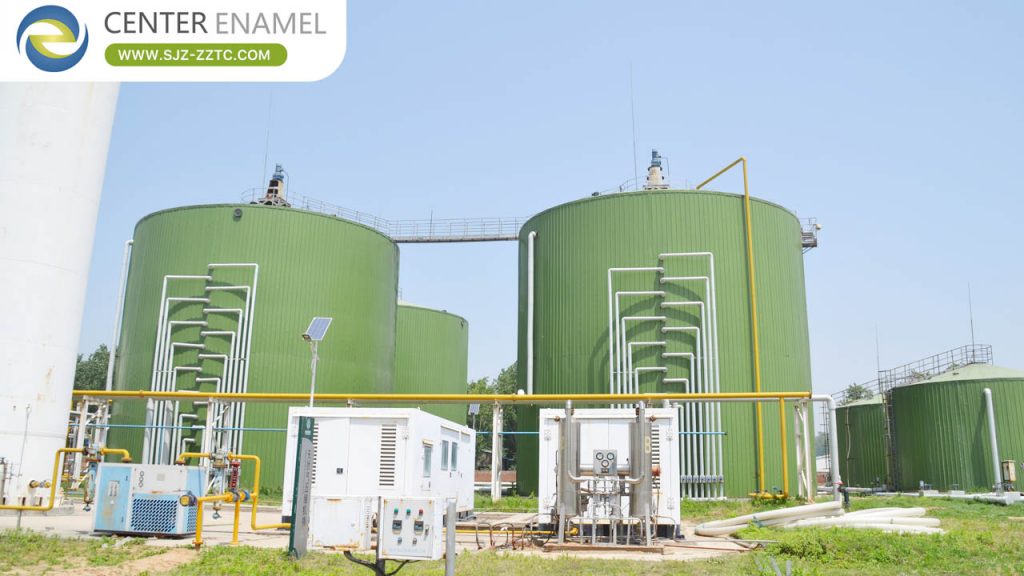
How Landfill Gas Is Generated and Collected
Landfill gas to energy begins with methane generated by methanogenic bacteria decomposing organic waste under anaerobic conditions. A typical LFG stream contains 45-55% methane, 40-50% CO2, 2-5% nitrogen, plus trace H2S and siloxanes. Collection systems comprise vertical wells (spaced 30-60 meters apart) or horizontal trenches connected by HDPE header piping to a blower/flare station that maintains slight vacuum (-10 to -40 mbar), preventing lateral migration while extracting gas at 100-3,000 m3/hour per wellfield.
Gas Composition, Treatment, and Utilization Pathways
LFG's moderate methane content and contaminant profile shape its utilization options. Electricity via reciprocating engines or turbines remains the most common pathway globally; medium-Btu direct use supplies boilers, kilns, and leachate evaporation nearby; and upgrading to pipeline-grade RNG (98%+ CH4) now captures the highest value where mandates and gas grids exist. Every pathway requires condensate removal, and siloxane polishing is essential for sewage-adjacent or high-siloxane sites feeding engines or upgrading plants.
1. Moisture and Condensate Management: Knockout drums, drip legs, and chillers protect downstream equipment and stabilize calorific value.
2. Siloxane and VOC Removal: Activated carbon, regenerative silica gel, or deep chilling prevents abrasive silica deposits; media costs run $0.002-0.01 per m3 treated depending on inlet load.
3. H2S Polishing: Iron sponge, biofilters, or carbon beds reduce sulfur below 50-100 ppm for engines and below 0.1 ppm for some pipeline RNG specs.
4. Upgrading to RNG: Water wash, PSA, membrane, or amine systems concentrate CH4 to 96-99% with methane slip below 1-2% for CO2 removal and tail-gas management.
Comparative Data Table: Landfill Gas versus Anaerobic Digestion Projects
| Parameter | Landfill Gas (LFG) Project | Anaerobic Digestion (AD) Project |
| Methane content of raw gas | 45-55% | 50-70% |
| Gas production profile | Rises 1-2 yrs, plateaus, declines over 20-40 yrs | Steady within days of commissioning, feedstock-driven |
| CAPEX per installed MW (typical) | $1.5M-$3M (collection + power) | $3M-$6M (digestion + power) |
| Feedstock logistics | None (waste already in place) | Daily trucking and supply contracts required |
| Gas quality control | Variable; heavy siloxane/VOC treatment | Controllable; predictable H2S loading |
| New-project development | Only existing landfills; regulated closure | Greenfield anywhere feedstock exists |
| Methane abatement additionality | Moderate (capture mandated in many regions) | High (avoids open decomposition) |
| Best-fit scenario | Mature landfills near grid or gas pipeline | Farms, food processors, municipal organics |
Project Economics and Revenue Stacking
LFG-to-electricity projects typically achieve payback in 3-6 years thanks to modest CAPEX and no feedstock cost. RNG conversion projects cost more ($15-25 million for a 2,000 m3/h facility) but stack revenue from gas sales, RINs or equivalent credits, and renewable identification—often reaching 2-4x electricity-only value in North American markets. A 1 MW LFG power project generates roughly 8,000 MWh annually, abating 12,000-25,000 tonnes CO2-equivalent per year depending on collection efficiency (typically 50-85%).
Frequently Asked Questions (FAQ)
Q1: How long will a landfill keep producing usable gas?
A: A typical municipal landfill produces economically extractable gas for 20-40 years after closure, with peak generation in years 5-15 and gradual decline thereafter. First-order decay models (IPCC and LandGEM) using waste tonnage, composition, and climate data predict the curve; developers typically size utilization equipment to the 15-20 year economic horizon rather than peak flow.
Q2: Is landfill gas renewable if regulations already require collection?
A: It remains renewable but its carbon-credit additionality is weakening where methane capture is legally mandated. Energy attributes and RNG credits are unaffected. This is why new voluntary-market investment increasingly favors anaerobic digestion, which prevents open decomposition rather than capturing it after the fact.
Q3: What collection efficiency should a well-run LFG system achieve?
A: Modern wellfields with dense spacing, interim covers, and automated well tuning reach 75-85% collection efficiency; older systems with sparse wells may capture only 50-60%. Each 10-point efficiency gain on a mid-size landfill typically adds thousands of tonnes of annual CO2-equivalent abatement plus proportionate energy revenue.
Q4: Can landfill gas be injected into natural gas pipelines?
A: Yes, after upgrading to 96-99% methane and meeting pipeline specifications for CO2, oxygen, sulfur, water, and siloxanes. More than a hundred landfills in North America now produce pipeline RNG. Sites with high nitrogen ingress (3%+ N2) face additional separation costs that can undermine economics, so cover integrity and well vacuum management matter as much as the upgrading technology itself.