
Leading Biogas Project Contractor and GFS Tanks Solutions for Wastewater Treatment
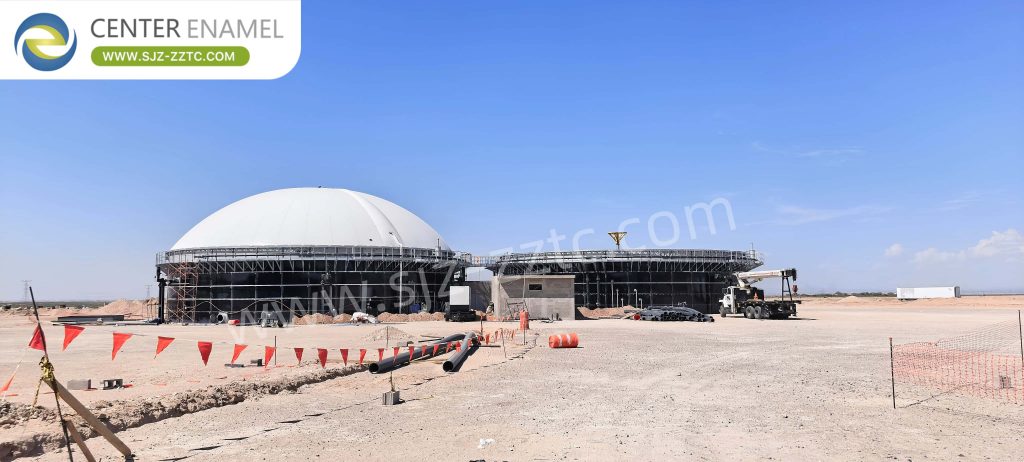
The competitive landscape shows divergence, with leading companies building integrated service capabilities through technical integration and capital operations, and industry concentration gradually increasing. Chinese companies continue to consolidate their advantages in mid-tier equipment exports. International giants target high-end customers and complex industrial wastewater markets, while local players occupy the mid-to-low-end and industrial park centralized treatment markets with service responsiveness and cost advantages. In the anaerobic process segment, UASB, EGSB, and IC anaerobic reactors, with advantages of high loading rates, small footprints, and stable operation, are widely used in high-concentration organic wastewater pretreatment in food processing, pharmaceutical fermentation, alcohol brewing, chemical, and other industries. These reactors use steel tank shells, and their corrosion resistance and gas-tightness directly determine long-term operational stability. The application value of glass-fused-to-steel tanks in such scenarios is increasingly prominent.
As the market evolves towards high-efficiency solutions, the demand for modular and durable infrastructure has surged. Professional expertise is required to integrate these advanced reactors into cohesive industrial systems. This is where the role of a specialized partner becomes crucial for project success.
GFS Tanks Bolted Assembly Construction
GFS Tanks are assembled on-site from prefabricated panels, with short construction periods and support for expansion, relocation, and reuse-advantages distinctly different from immovable concrete tanks. Concrete tank pouring requires formwork, rebar tying, pouring, and long curing periods, with a single tank construction taking months. Rain, snow, and low temperatures force work stoppages and delays. Once poured, they are permanent fixed structures that cannot be dismantled, expanded, or relocated-project relocation means complete abandonment.
GFS tank panels are all factory-prefabricated, transported to site, and directly assembled in panels with simple procedures. Construction can proceed even in low-temperature, light-rain conditions, with installation time only one-third that of concrete tanks-construction schedules are controllable. For expansion, additional steel panels can be installed to increase volume; for plant relocation, tanks can be fully disassembled with panels transported to new sites for reassembly and reuse, significantly reducing material and construction costs for new construction and reconstruction. This is ideally suited for short-term environmental projects, phased expansion projects, and relocated construction projects.
The flexibility offered by modular construction significantly enhances the operational capacity of anaerobic systems. Once the structural integrity is established, selecting the correct process configuration is vital for maximizing throughput. Effective systems leverage these tanks to handle challenging feedstocks with ease.
CSTR Applicable Scenarios
Primarily for high-solids organic pollutant treatment, widely used in food waste leachate, large-scale livestock manure, slaughterhouse wastewater, and food processing high-strength wastewater. Also suitable for municipal sludge and industrial organic sludge anaerobic digestion. In the agricultural and environmental sector, it is used for large-scale farm manure resource recovery, achieving wastewater reduction, harmless treatment, and energy recovery. In the food and brewing industry, it is suitable for high-oil, high-protein, high-suspended-solids wastewater. It is also suitable for small to medium-sized wastewater treatment projects, township decentralized wastewater treatment, and as a pretreatment process for high-strength organic wastewater in large industrial parks to reduce downstream load. It is particularly suitable for difficult-to-treat organic wastewater with complex composition, high solids content, and easy crusting.
While the process design drives the treatment efficiency, the long-term feasibility of the plant depends on rigorous financial and maintenance planning. Balancing initial investment with resource recovery benefits is essential for sustainable operations. Owners must ensure their facility remains economically viable throughout its lifespan.
Food Waste Operation and Maintenance Cost Analysis
O&M costs are moderate to high, but resource recovery benefits are substantial-good overall economics. Pretreatment oil removal equipment and three-phase separators have high capital investment, but recovered oil can be sold-biodiesel feedstock oil has good market value, providing core revenue for food waste treatment. Stable biogas from anaerobic digestion can be used for power generation or heating, offsetting energy costs. CSTR process has simple equipment with no precision wear parts-low maintenance costs. High-salt, high-oil conditions require premium corrosion protection (GFS Tanks), with higher initial investment but long service life and low maintenance. Chemical consumption is mainly flocculants and desulfurizers-moderate expenditure. Oil and salt cause pipe fouling and membrane pollution, requiring periodic cleaning-moderate labor requirements. Overall resource recovery revenues (oil sales + biogas energy + digestate fertilizer) generally cover O&M costs-good overall economics.
These economic advantages are best realized through proven project execution and successful real-world deployments. Benchmarking against established international projects demonstrates the reliability of our systems. A trusted Biogas Project Contractor turns these theoretical benefits into tangible operational reality.
Indonesia Palm Oil Biogas Project
Specifically designed for high-concentration palm oil wastewater treatment with 3 GFS Tanks fermentation tanks, each 19.86 m diameter × 8.4 m height. Installation began November 2009 with only 7 construction personnel, completing all tank assembly in 40 days-highly efficient and time-saving. Tanks are fitted with dual-membrane gas storage covers for POME anaerobic digestion-degrading organics and recovering biogas energy while eliminating palm industry pollution. This is an early benchmark POME biogas treatment project in Southeast Asia.
Sustained project performance is further guaranteed by comprehensive after-sales support and technical guidance. Ensuring that every installation receives expert monitoring helps maintain peak process efficiency. A commitment to long-term client success defines the entire service lifecycle.
After-Sales and Technical Support Team
The after-sales team adheres to the service principles of rapid response, professional efficiency, and full-cycle support-providing 24/7 full-lifecycle O&M support to global clients.
Standard remote services include fault diagnosis, process parameter adjustment, and tank anti-corrosion maintenance guidance. For domestic and long-distance overseas clients, overseas technical service personnel can be dispatched for on-site inspection, annual inspection, and equipment refurbishment as needed. The team also maintains long-term client feedback tracking mechanisms-regularly collecting tank and anaerobic equipment operational data to continuously optimize product structure and support processes.
Supporting external technical expert teams provide specialized support for anaerobic process commissioning, biogas upgrading O&M, and wastewater upgrade/retrofit projects-ensuring long-term stable operation of domestic and overseas projects, continuously improving global client satisfaction and repurchase rates.
Ultimately, the success of any environmental project hinges on the seamless integration of modular construction, specialized process engineering, and responsive field support. This holistic service delivery system ensures maximum value for every industrial client. We stand ready to provide excellence from project inception to ongoing operation.
Flexible and Efficient Service Delivery System
Center Enamel's own cross-border construction teams + global localized agent network-modular GFS Tanks assembly with short construction periods and dismantlable/reusable capability-suitable for overseas short-term projects, phased expansions, and relocation needs-full-lifecycle after-sales O&M support ensuring long-term stable client operations.
FAQs
1.What are the advantages of hiring Center Enamel as your Biogas Project Contractor?
Center Enamel provides an integrated service model, combining advanced R&D, modular GFS tank manufacturing, and global construction expertise. We deliver efficient, scalable, and turnkey anaerobic digestion solutions that ensure long-term regulatory compliance and optimized energy recovery for diverse industrial wastewater projects worldwide.
2.Why are GFS Tanks preferred for modern biogas plants?
GFS tanks offer superior corrosion resistance, rapid bolted assembly, and structural flexibility. Unlike concrete, they can be expanded, relocated, or reused. Their factory-prefabricated panels ensure consistent quality and significantly reduced construction times, making them the most reliable storage solution for complex anaerobic environments.
3.How does Center Enamel support global biogas projects after completion?
We offer 24/7 full-lifecycle O&M support, including remote fault diagnosis, process optimization, and on-site technical inspection. Our global support team and expert partners ensure stable project operations, providing regular equipment maintenance and refurbishment services to guarantee long-term performance and client satisfaction.