
Leading Biogas Project EPC Contractor for Nepal Pig Farm Wastewater Treatment Project
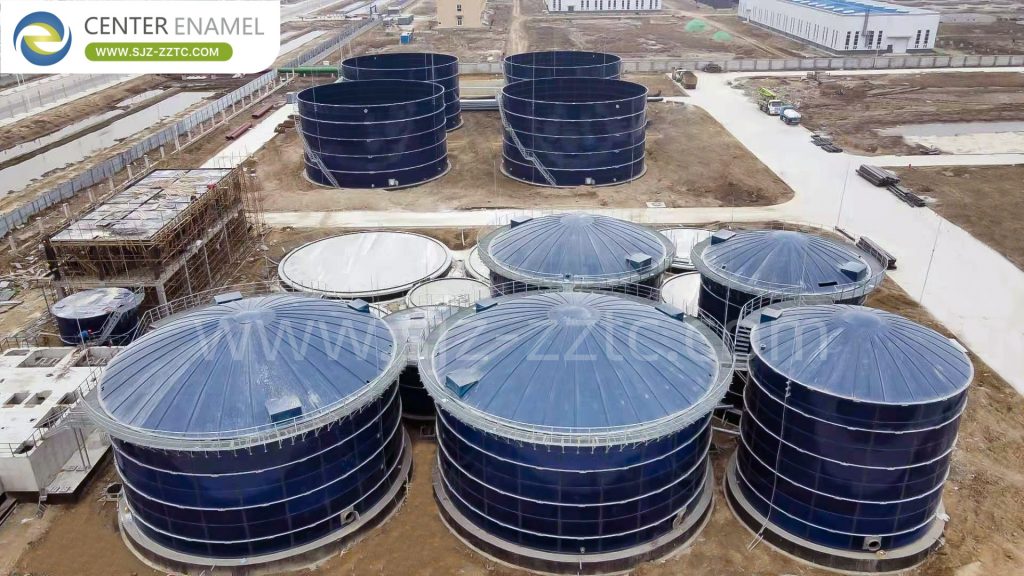
In Nepal, livestock farming has long been a vital part of rural livelihoods and agricultural economic development. In recent years, the shift from small-scale backyard pig rearing to intensive and commercial pig farming has accelerated, bringing higher productivity and income while creating a pressing challenge: pig farm wastewater management. Pig farm wastewater contains extremely high levels of organic matter, COD, ammonia nitrogen, suspended solids, and pathogens. If discharged untreated, it severely contaminates rivers, groundwater, soil, and mountain ecosystems, which are especially fragile in Nepal’s highland and hilly regions.
For Nepalese pig farms, complying with environmental regulations, reducing pollution risks, and turning waste into valuable energy have become essential for sustainable operations. As a trusted and experienced biogas Project EPC Contractor, Center Enamel delivers full-scope turnkey solutions for Nepal pig farm Wastewater Treatment Project. With our core CSTR Process, high-performance equipment, and proven engineering expertise, we help pig farms achieve efficient wastewater purification, biogas energy recovery, and circular economic benefits.
How Biogas Is Produced from Pig Farm Wastewater
Biogas generation from pig farm wastewater is a natural anaerobic digestion process driven by microorganisms in a sealed, oxygen-free environment. It consists of three key stages:
Hydrolysis Acidification Stage: Complex organics including carbohydrates, proteins, and fats in manure, urine, and flushing water are broken down by acidogenic bacteria into small-molecule organic acids, alcohols, hydrogen, and carbon dioxide. This step converts non-soluble pollutants into soluble substances, preparing for further decomposition.
Acetogenic Stage: Intermediate products from the first stage are further degraded by acetogenic bacteria into acetic acid, hydrogen, and CO₂. Acetic acid is the primary precursor for methane, supporting stable and high biogas yield.
Methanogenic Stage: Methanogenic archaea convert acetic acid, hydrogen, and carbon dioxide into biogas, mainly composed of methane (50%–60%) and carbon dioxide (40%–50%). After desulfurization and dehydration, biogas can be used for on-farm power generation, heating, boiler fuel, or daily cooking, turning waste into a renewable energy source.
This process not only removes high concentrations of pollutants but also produces reusable biogas and organic fertilizer from digestate, forming an eco-friendly breeding cycle ideal for Nepal’s agricultural landscape.
Anaerobic Technologies for Nepal Pig Farm Wastewater Treatment Project
To match Nepal’s highland climate, terrain constraints, and high-solid pig wastewater characteristics, Center Enamel applies four proven anaerobic processes, with CSTR Process as the core solution.
1. CSTR Process (Completely Stirred Tank Reactor)
The CSTR Process is the most suitable technology for Nepal’s intensive pig farms with high solid content and variable wastewater flow.
Working Principle: Uses powerful mechanical stirring to fully mix wastewater and anaerobic sludge, preventing sedimentation, crusting, and dead zones inside the reactor.
Core Advantages: Strong resistance to shock loading; ideal for high-SS pig manure; stable biogas production; easy operation and low maintenance.
Application in Nepal: Widely used in medium and large-scale pig farms across hilly and plain areas, ensuring stable treatment efficiency and high COD removal even under variable feeding and weather conditions.
2. USR Process (Upflow Solid Reactor)
Simple structure with no mechanical mixing equipment. Solids are trapped in the sludge bed, prolonging reaction time. Low operating cost, suitable for small to medium farms in remote mountainous areas.
3. UASB Process (Upflow Anaerobic Sludge Blanket)
Mature and reliable technology using granular sludge for high-efficiency organic removal. Small footprint and stable performance, ideal for liquid-rich pig wastewater with low suspended solids.
4. IC Process (Internal Circulation)
High-rate anaerobic technology with internal liquid circulation driven by biogas. Treatment capacity is 3–5 times higher than traditional reactors, perfect for large-scale pig farms and centralized breeding parks with limited land.
Center Enamel provides customized process combinations such as CSTR + UASB or CSTR + IC based on farm size, wastewater volume, land availability, and energy demand to achieve optimal performance and cost-effectiveness.
Overall Advantages of Center Enamel in Nepal Pig Farm Biogas Projects
As a leading biogas Project EPC Contractor, Center Enamel brings unique strengths to Nepal pig farm Wastewater Treatment Project:
Deep understanding of South Asian market: Familiar with Nepal’s highland climate, seismic conditions, transportation challenges, and local environmental policies.
Full turnkey EPC service: Covers design, manufacturing, construction, installation, commissioning, training, and after-sales support.
Strong R&D and material technology: Over 200 patented enamel formulas, specially designed to resist corrosion from pig farm wastewater.
Tailored solutions: Adapted to mountain terrain, remote sites, and limited construction resources in Nepal.
Core Equipment Provided by Center Enamel for Biogas Projects
Center Enamel supplies a complete set of high-quality equipment for pig farm Wastewater Treatment Project, ensuring long service life and stable operation.
Glass-Fused-to-Steel (GFS) Tanks
As the core reactor for anaerobic digestion, GFS tanks are made by fusing enamel to steel at over 820°C, forming an extremely durable anti-corrosion layer.
Wide pH resistance (1–14): Withstands organic acids, hydrogen sulfide, and corrosive components in pig wastewater.
Seismic and weather resistance: Bolted structure offers better seismic performance than concrete; suitable for strong UV and variable temperatures in Nepal.
Fast bolted assembly: Factory prefabricated, no on-site welding, short construction period, ideal for remote areas.
Fusion Bonded Epoxy (FBE) Tanks
Used for equalization, sedimentation, and treated water storage, providing cost-effective and reliable auxiliary storage.
Biogas Utilization System
Double Membrane Gas Holders for safe biogas storage
Biogas desulfurization and dehydration units
Aluminum Dome Roofs to resist humidity and salt corrosion
Supporting Equipment
Solid-liquid separators, mixing systems for CSTR, piping, valves, and automatic control systems form a fully integrated treatment system.
Why Center Enamel Is the Preferred Biogas Project EPC Contractor
Asia’s largest GFS tank manufacturing base: Ensures stable supply, precise quality, and on-time delivery even for remote Nepal sites.
International quality certifications: Complies with ISO 28765, AWWA D103-09, OSHA, and NSF/ANSI 61 standards. Each plate passes 1500V spark test.
Industry standard leader: As the main drafter of China’s GFS tank standard, we set global quality benchmarks.
Localized engineering design: Optimized for Nepal’s mountainous terrain, high altitude, and high humidity environment.
Economic and environmental benefits: Reduces treatment cost, generates clean biogas, produces organic fertilizer, and fully meets emission standards.
Center Enamel’s Efficient Installation Process
Our installation method is specially designed for Nepal’s field conditions:
Hydraulic jacking system: Top-down installation without high scaffolding or large cranes.
Zero on-site welding: All components are prefabricated and bolt-assembled, avoiding humidity-related weld defects.
Fast commissioning: Much shorter construction period than concrete tanks, enabling early operation and income.
Professional international team: Experienced in South Asian projects ensuring safe, high-quality construction.
Two Successful Biogas Project Cases by Center Enamel
Case 1: Pig Farm Wastewater Treatment Project in Guangdong
Installation: November 2016
Location: Guangdong Province
Daily treatment volume: 300m³/d
Technical mode: Energy ecotype
Case 2: Beijing Pig Farm Wastewater Treatment Project
Installation: 2020
Location: Beijing
Daily treatment volume: 580m³/day
Treatment Process:UASB+AOAO.
The sustainable development of Nepal’s pig farming industry relies on effective pig farm Wastewater Treatment Project and biogas energy recovery. As a professional biogas Project EPC Contractor, Center Enamel provides industry-leading CSTR Process, high-quality GFS tanks, customized solutions, and full EPC services to support Nepalese pig farms.
We help clients reduce environmental risks, lower energy costs, generate renewable biogas, and build a closed-loop circular economy. For any Nepal pig farm Wastewater Treatment Project, Center Enamel is your most reliable long-term partner for environmental protection, energy efficiency, and profitable growth.