
Leading Biogas Project EPC Contractor for Vietnam Pig Farm Wastewater Treatment Project
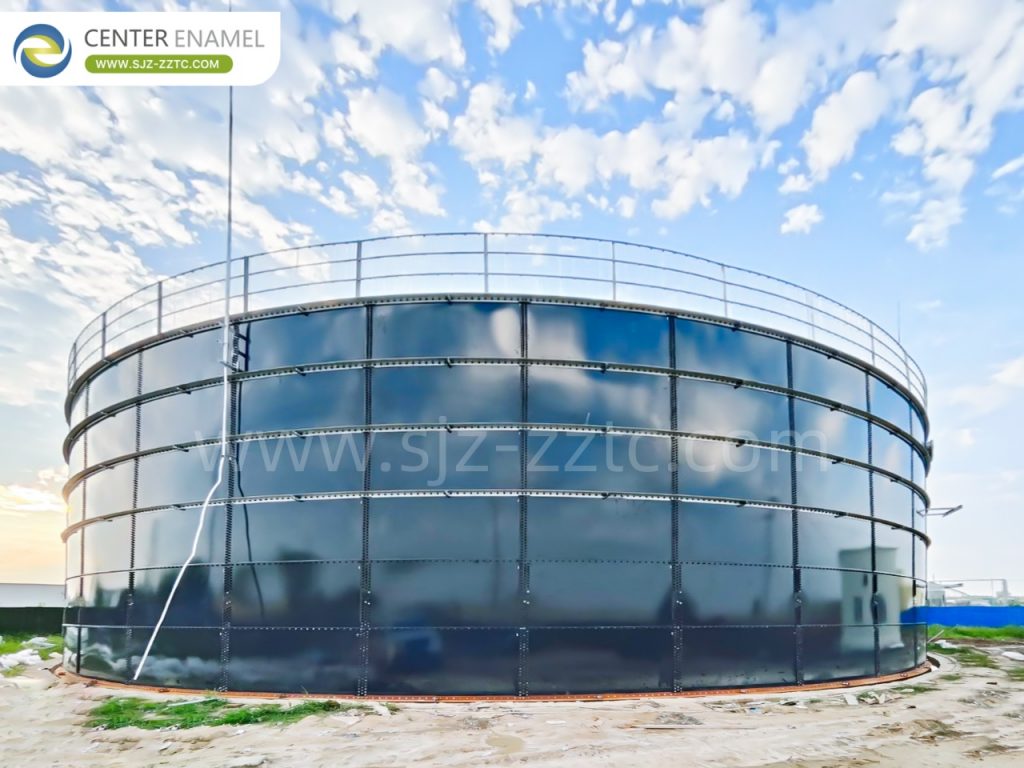
In Vietnam’s rapidly developing livestock industry, pig farming has become a pillar of agricultural economic growth. With the expansion of large-scale and intensive pig farms, the treatment of pig farm wastewater has turned into a core environmental and economic issue. Pig farm wastewater features high COD, high ammonia nitrogen, high suspended solids, and rich organic matter; if discharged without proper treatment, it will seriously pollute water bodies, soil, and air, and restrict the sustainable development of the pig farming industry.
As a professional biogas project EPC contractor, Center Enamel provides full-chain turnkey solutions for Vietnam pig farm wastewater treatment projects, combining advanced anaerobic technologies (especially the CSTR Process), high-quality equipment, and rich engineering experience to help pig farms achieve waste reduction, resource utilization, and energy recycling.
How Biogas Is Produced from Pig Farm Wastewater
Biogas generation from pig farm wastewater is a biochemical process completed by anaerobic microorganisms under oxygen-free conditions, which can be divided into three stages:
Hydrolysis Acidification Stage: Complex organic substances in pig manure, urine, and flushing wastewater—such as carbohydrates, proteins, and fats—are decomposed into small molecular organic acids, alcohols, carbon dioxide, and hydrogen by acidogenic bacteria. This stage converts non-soluble organics into soluble substances, laying the foundation for subsequent methanogenesis.
Acetogenic Stage: Small molecular products from the first stage are further degraded by acetogenic bacteria into acetic acid, hydrogen, and carbon dioxide. Acetic acid is the most critical precursor for methane production, and about 70% of methane is derived from acetic acid decomposition.
Methanogenic Stage:Methanogenic archaea convert acetic acid, hydrogen, and carbon dioxide into methane and carbon dioxide—the main components of biogas. Under suitable temperature, pH, and mixing conditions, this process efficiently converts high-strength organic wastewater into combustible biogas, while significantly reducing COD and pollutants in the wastewater.
The biogas produced is mainly composed of 50%–60% methane, 40%–50% carbon dioxide, plus small amounts of hydrogen sulfide and water vapor. After desulfurization, dehydration, and purification, biogas can be used for on-site power generation, boiler combustion, heating, or even upgraded to biomethane for pipeline injection. This turns waste into a high-value energy source, helping pig farms lower energy costs and meet strict emission standards.
Anaerobic Technologies for Vietnam Pig Farm Wastewater Treatment Projects
For Vietnam’s tropical and subtropical climate, high ambient temperature, and pig wastewater characteristics, Center Enamel applies four mature anaerobic processes to match farms of different scales and wastewater traits:
1. CSTR Process (Completely Stirred Tank Reactor)
As the core technology for large-scale pig farm wastewater treatment, the CSTR Process is the most suitable choice for high-solid-content manure and mixed waste streams.
Working Principle: Adopts high-torque mechanical stirring to fully mix influent wastewater and anaerobic sludge, preventing sediment accumulation and crusting caused by fibers and suspended solids. It maintains uniform distribution of microorganisms and substrates, stabilizing reaction efficiency.
Core Advantages: Strong shock loading resistance; suitable for high-SS pig manure and wastewater; stable biogas output; easy operation and maintenance; ideal for zero-waste integrated farms.
Application in Vietnam: Widely used in large-scale pig farms with high solid content, ensuring stable operation under high organic loading and achieving high COD removal and biogas yield.
2. USR Process (Upflow Solid Reactor)
Working Principle: Wastewater flows upward through a dense sludge layer; solid particles are intercepted and retained in the reactor, prolonging sludge age and improving degradation efficiency of solid organics.
Core Advantages: No mechanical mixing equipment, low operating cost; good adaptability to high suspended solids; suitable for medium-sized pig farms with relatively high solid content.
3. UASB Process (Upflow Anaerobic Sludge Blanket)
Working Principle: Wastewater flows upward through a granular sludge bed; organic matter is fully contacted and degraded by anaerobic microbes, forming a three-phase separation of gas–liquid–solid at the top.
Core Advantages: Mature technology, stable performance, high volumetric loading rate; suitable for liquid-rich, relatively low-solid pig farm wastewater; widely applied in Southeast Asian livestock projects.
4. IC Process (Internal Circulation)
Working Principle: Uses biogas lift to drive internal liquid circulation, strengthening mixing and mass transfer; supports volumetric loading rates 3–5 times higher than conventional reactors.
Core Advantages: Small footprint, high treatment efficiency, fast startup; suitable for large-scale pig-farming industrial zones with super high-strength organic wastewater and limited land area.
Center Enamel customizes process combinations—such as CSTR + UASB or CSTR + IC—based on Vietnam pig farm scale, wastewater composition, land conditions, and biogas demand, ensuring optimal treatment efficiency and economic benefits.
Overall Advantages of Center Enamel in Vietnam Pig Farm Biogas Projects
As a leading biogas project EPC contractor, Center Enamel has unique strengths in serving Vietnam’s pig farm wastewater treatment projects:
Rich Experience in Southeast Asian Markets: Deep understanding of Vietnam’s tropical climate, coastal salinity, geological conditions, and local environmental policies. Long-term practice in Malaysia, Indonesia, Thailand, and other Southeast Asian countries supports stable operation of biogas projects in high-temperature, high-humidity, and corrosive environments.
Customized Integrated Solutions: Provides full-process customized design covering wastewater collection, pretreatment, anaerobic digestion, biogas purification & utilization, effluent post-treatment, and biogas slurry & residue recycling. One-stop EPC services cover design, procurement, construction, installation, commissioning, and after-sales support.
Strong R&D and Technical Strength: Possesses more than 200 patented enamel formulas and independent R&D of enamel frits. Materials and processes are tailored to the corrosiveness of pig farm wastewater, outperforming ordinary coating products in durability.
Full Lifecycle Service System: From early consultation, process design, equipment manufacturing, on-site installation to later operation training and maintenance, we ensure stable project operation and maximize customer return on investment.
Core Equipment Provided by Center Enamel for Biogas Projects
Center Enamel supplies a full set of high-performance equipment for Vietnam pig farm biogas projects, with core products as follows:
1. Glass-Fused-to-Steel (GFS) Tanks
As the core equipment for anaerobic reactors, GFS tanks are manufactured by fusing high-quality enamel onto special steel plates at over 820°C, forming a solid anti-corrosion layer.
Strong Corrosion Resistance: Wide pH resistance (1–14), withstands organic acids, hydrogen sulfide, and other corrosive substances in pig farm wastewater without rust or leakage.
Excellent Seismic & Thermal Stability: Bolted connection structure offers better seismic performance than concrete; resistant to strong ultraviolet radiation in Vietnam, suitable for long-term use in coastal and high-temperature areas.
Fast Installation & Expansion: Factory-prefabricated plates, assembled on site with bolts; short construction period, easy capacity expansion with farm development.
2. Fusion Bonded Epoxy (FBE) Tanks
Used for equalization tanks, post-treatment water storage, and other auxiliary units. Adopts electrostatic powder coating to form a dense protective layer, providing cost-effective, durable, and reliable storage for non-anaerobic sections.
3. Biogas Utilization Equipment
Double Membrane Gas Holders: Safely store biogas with good sealing and adaptability to pressure fluctuations, ensuring stable gas supply for power generation or combustion.
Biogas Desulfurization & Dehydration Units: Remove hydrogen sulfide and moisture to protect generators and boilers from corrosion, extending service life.
Aluminum Dome Roofs: Resist coastal humidity and salt corrosion; prevent rain dilution and ensure stable operation of post-treatment units.
4. Supporting Equipment
Solid-liquid separators, mixing systems, piping and valves, electrical control systems, etc., form a complete and stable treatment system.
Why Center Enamel Is the Preferred Biogas Project EPC Contractor
Asia’s Largest GFS Tank Manufacturing Base: Guarantees large-scale, high-precision equipment supply and on-time delivery even for remote Vietnam pig farm sites.
Strict International Quality Certification: Products comply with ISO 28765, AWWA D103-09, OSHA, NSF/ANSI 61 standards. Every steel plate passes a 1500-V high-voltage spark test to ensure zero coating defects.
Dominate Industry Standards: As the main drafter of China’s GFS tank industry standard, Center Enamel leads global quality benchmarks and provides reliable technical assurance.
Tailored for Vietnam’s Local Conditions: Solves Vietnam’s unique challenges: mountainous terrain, inconvenient transportation, high temperature and humidity, coastal salt spray, and frequent typhoons. Our equipment and processes are specially optimized.
Proven Economic & Environmental Benefits: Projects significantly reduce wastewater treatment costs, produce clean biogas to cut energy expenses, and turn biogas slurry and residue into organic fertilizers, creating a closed-loop economy of pig breeding → wastewater → biogas → power/heat → organic fertilizer → planting.
Center Enamel’s Efficient Installation Process
Center Enamel’s installation technology is specially adapted to Vietnam’s terrain and infrastructure conditions, featuring fast speed, high quality, and low on-site requirements:
Hydraulic Jacking System Technology: Adopts top-down installation with a hydraulic jacking system, eliminating high-altitude scaffolding. Suitable for narrow spaces and remote sites where large cranes cannot access.
Zero On-Site Welding: All components are factory-prefabricated; on-site assembly uses high-strength bolts, avoiding weld failures caused by high humidity or dust.
Short Construction & Fast Commissioning: Compared with long concrete curing cycles, bolted GFS tanks greatly shorten the construction period, helping pig farms quickly put into operation and realize benefits.
Professional Installation Team: Experienced teams familiar with local Vietnamese conditions ensure standardized, safe, and efficient construction.
Two Successful Biogas Project Cases by Center Enamel
Case 1:Hoggery Wastewater Treatment Project in Guangdong Province, China
Process: Pre-process +USR+AOAO
Processing treatment capacity: Manure cleaning by water submerging: 300m³/ day
Case 2: Beijing Pig Farm Wastewater Treatment Project
Installation: 2020
Location: Beijing
Daily treatment volume: 580m³/day
Treatment Process:UASB+AOAO.
Vietnam’s pig farming industry is moving toward intensification, greening, and recycling, and pig farm wastewater treatment and biogas projects have become essential infrastructure. As a leading biogas project EPC contractor, Center Enamel relies on advanced technologies including the CSTR Process, high-quality GFS tank equipment, rich Southeast Asian engineering experience, and full-chain EPC service capabilities to provide safe, efficient, and economical solutions for Vietnam pig farm wastewater treatment projects.
We are committed to helping Vietnamese pig farms solve environmental problems, recover high-value biogas energy, promote circular economy development, and support the sustainable growth of Vietnam’s livestock industry. Choosing Center Enamel means choosing a reliable partner that integrates environmental protection, energy saving, and economic efficiency, creating long-term value for your pig farm wastewater treatment and biogas project.