
Leading Biogas Solution Provider and CSTR Reactor Solutions by Center Enamel
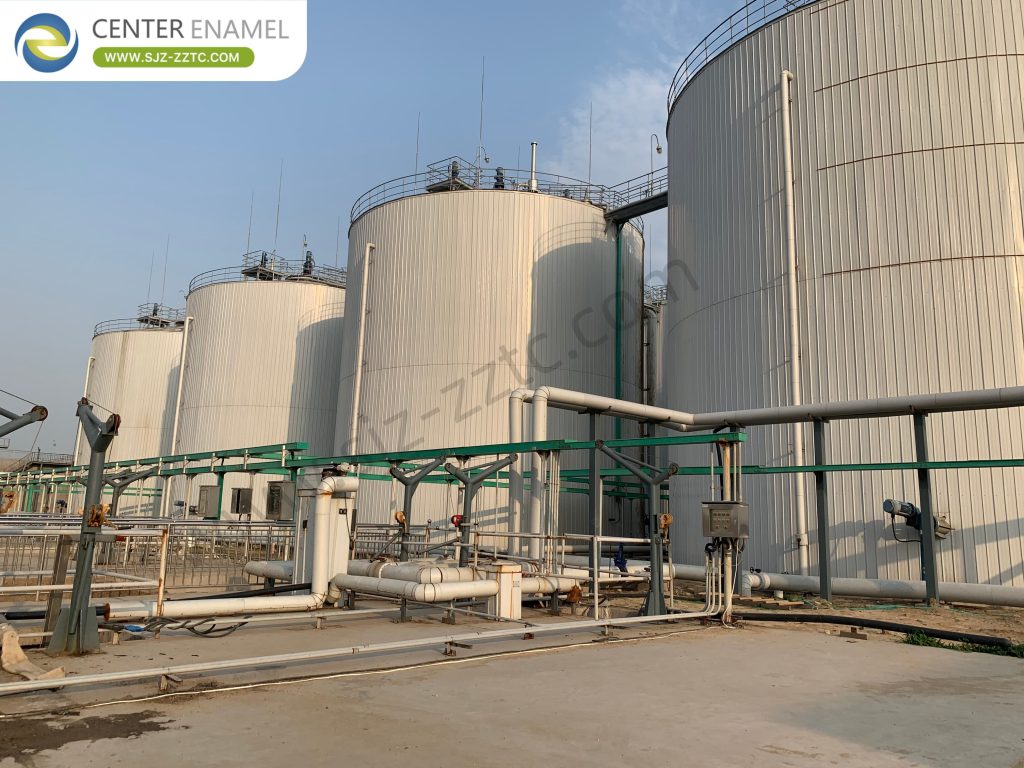
The Asia-Pacific region, particularly China, has become the world's largest industrial wastewater treatment market, with the operation and maintenance service segment's contribution continuing to rise, marking a shift from project construction to long-term operational management. The North American market focuses on upgrading existing facilities, while Europe emphasizes high-value-added resource recovery technologies. Wastewater from the new energy industry chain (lithium batteries, photovoltaics, hydrogen) has become the most notable emerging growth area due to its complex composition and high treatment difficulty, generating significant demand for customized solutions. The maturity of third-party treatment models in industrial parks continues to improve, driving consolidation in the professional operation market. The Middle East has strong demand for advanced treatment and reuse of industrial wastewater due to water scarcity; manufacturing transfer in Southeast Asia drives local industrial wastewater treatment facility construction demand.
As regional demands for sophisticated treatment grow, the industry relies on modular and resilient infrastructure to meet evolving standards. Selecting the right hardware is essential to ensure long-term operational stability. This foundation allows for the seamless implementation of advanced anaerobic technologies.
GFS Tanks Bolted Assembly Construction
GFS tanks are assembled on-site from prefabricated panels, with short construction periods and support for expansion, relocation, and reuse-advantages distinctly different from immovable concrete tanks. Concrete tank pouring requires formwork, rebar tying, pouring, and long curing periods, with a single tank construction taking months. Rain, snow, and low temperatures force work stoppages and delays. Once poured, they are permanent fixed structures that cannot be dismantled, expanded, or relocated-project relocation means complete abandonment.
GFS tank panels are all factory-prefabricated, transported to site, and directly assembled in panels with simple procedures. Construction can proceed even in low-temperature, light-rain conditions, with installation time only one-third that of concrete tanks-construction schedules are controllable. For expansion, additional steel panels can be installed to increase volume; for plant relocation, tanks can be fully disassembled with panels transported to new sites for reassembly and reuse, significantly reducing material and construction costs for new construction and reconstruction. This is ideally suited for short-term environmental projects, phased expansion projects, and relocated construction projects.
With the structural integrity of GFS tanks established, the core of an effective anaerobic system relies on precise process engineering. Implementing a high-performance CSTR Reactor is the key to maximizing conversion efficiency in challenging environments. A specialized Biogas Solution Provider ensures that these components work in perfect harmony.
CSTR Reaction Process
The CSTR Reactor operates in continuous feed, continuous reaction, and intermittent/continuous sludge discharge mode, with a concise and coherent process flow. High-solids organic wastewater, after pretreatment to remove large-particle impurities, is fed at a constant rate into the sealed anaerobic reactor via feed pumps. Continuous mechanical stirring maintains uniform mixing throughout the reactor, creating a stable anaerobic environment. Within the reactor, acidogenic bacteria and methanogens decompose macromolecular organic matter in stages, first hydrolyzing and acidifying polysaccharides, proteins, and lipids into volatile fatty acids, then further degrading them into methane and carbon dioxide biogas. Throughout the reaction, no material stratification occurs, pollutants are continuously degraded, treated supernatant overflows from the upper portion of the reactor, aged sludge is periodically discharged from the bottom, and biogas is uniformly collected for resource utilization, maintaining stable sludge concentration and reaction equilibrium for consistent treatment performance.
Optimizing this reaction requires a deep understanding of the incoming influent characteristics. Analyzing the complex nature of industrial and food waste helps engineers tailor the system for optimal performance. Success is defined by how well the reactor handles these high-load pollution streams.
Key Water Quality Characteristics of Food Waste
Prominent "four highs"-high COD, high oil and grease, high salinity, high suspended solids-with extremely high pollution load and complex composition. COD typically 15,000-80,000 mg/L, with oil separation wastewater exceeding 100,000 mg/L. Animal/vegetable oil content is extremely high at 5,000-20,000 mg/L-oil easily adheres and accumulates on pipe and equipment walls, causing blockages and membrane fouling. High salinity with sodium chloride content of 5,000-15,000 mg/L from seasonings and salt residues. High suspended solids rich in food residue particles, bone fragments, and fibrous impurities. Rich in proteins and amino acids, readily decomposing, emitting odors, and breeding flies. pH is slightly acidic to neutral, BOD/COD approximately 0.4-0.5-good biodegradability but oils and salts pose microbial inhibition risks. Water quality varies with collection volume, season, and dietary habits-higher summer volumes with higher oil content.
Addressing these complex waste characteristics requires extensive field experience and a proven track record. Global project delivery proves that our technical solutions can handle the toughest conditions. Partnering with an expert ensures that your facility is built on a foundation of international excellence.
Over a Decade of Global Installation Experience
Unmatched global practical experience among domestic peers-over a decade covering multiple regions and all industry sectors. In 2009, Center Enamel completed the first overseas GFS tank installation-sending a team to Niger, Africa for drinking water storage tank installation. In 2015, it broke industry ground with China's first GFS tank export and installation to the US-passing strict US acceptance standards. All installed projects have operated stably for many years, covering livestock biogas, POME, municipal wastewater, and drinking water storage applications. Construction has covered Southeast Asia, Africa, the Americas, and other regions-accumulating specialized solutions for complex sites including mountainous terrain, coastal salt spray, tropical high temperatures, and high-standard European/American facility conditions-maturely addressing global special construction requirements.
The strength of our service delivery lies in our unique ability to control every phase of the project lifecycle. By integrating R&D, manufacturing, and general contracting, we streamline the path from concept to commissioning. This comprehensive approach is what elevates us as a premier Biogas Solution Provider.
Full-Industry-Chain Integrated Delivery Capability
Center Enamel is the only company globally integrating proprietary enamel frit R&D, self-manufactured tanks, and EPC general contracting-full-process self-control from solution design, equipment production, cross-border logistics, overseas construction, to post-construction O&M-significantly reducing client coordination and time costs.
Finally, ensuring airtight containment and biogas recovery is the crowning achievement of a successful project. Advanced roof technologies provide the necessary safety and sealing for high-efficiency fermentation. These final components complete the structural and functional requirements of a high-end installation.
Single and Double Membrane Roof Cover Solution
Single and Double Membrane Roofs are proprietary airtight tank cover systems for anaerobic digestion and biogas storage projects, specifically developed for biogas collection and odor containment, representing a benchmark lightweight sealing solution for fermentation tanks. The single-layer membrane roof features a simple structure with economical cost, meeting basic biogas containment needs. The double-layer membrane roof consists of inner and outer corrosion-resistant membrane materials, with pressurized air in the interlayer forming rigid support, providing outstanding thermal insulation that reduces biogas condensate formation inside the tank, with enhanced wind and snow load resistance suitable for high-altitude and windy outdoor sites.
The membrane material is specialized aging-resistant and biogas-slurry-corrosion-resistant PVDF membrane, which will not leak or degrade from long-term contact with biogas or hydrogen sulfide. The flexible structure accommodates tank settlement and slight deformation without cracking or gas leakage. The lightweight design eliminates heavy steel support trusses, significantly reducing the load on the tank and foundation, saving construction costs. The roof integrates biogas outlets, safety pressure relief valves, and access channels, fully enabling closed gas collection for anaerobic fermentation tanks, recovering biogas for power generation and heating while blocking odor diffusion to meet environmental odor control requirements. It is widely used in large-scale livestock biogas projects, municipal sludge anaerobic digestion, and food waste fermentation projects, compatible with large-volume glass-fused-to-steel anaerobic tanks, with fast construction and simple maintenance requiring only periodic membrane seal integrity checks, offering significant overall engineering advantages.
FAQs
1.Why should I choose Center Enamel as my Biogas Solution Provider?
Center Enamel offers an integrated "full-industry-chain" service, combining proprietary enamel technology, precision-engineered CSTR reactors, and global construction expertise. Our turnkey solutions reduce coordination costs and ensure high-performance, long-term operational stability for complex industrial waste-to-energy projects worldwide.
2. What makes the CSTR Reactor the preferred choice for high-solids waste?
The CSTR Reactor utilizes continuous mechanical stirring to ensure uniform mixing, preventing stratification and crusting in high-viscosity wastewater. It is designed to handle high-suspended-solids loads, providing consistent microbial contact and high biogas yields, making it ideal for food waste and livestock manure treatment.
3.How do membrane roofs improve the efficiency of anaerobic projects?
Membrane roofs provide a highly airtight, corrosion-resistant seal that prevents biogas leakage and odor diffusion. Their lightweight, flexible design reduces structural load on the tank, enhances thermal insulation, and allows for efficient gas collection and pressure regulation, which are critical for maximizing energy recovery in biogas plants.