
Leading Biogas Solution Provider: Enhancing Sustainability with Premium GFS Tanks
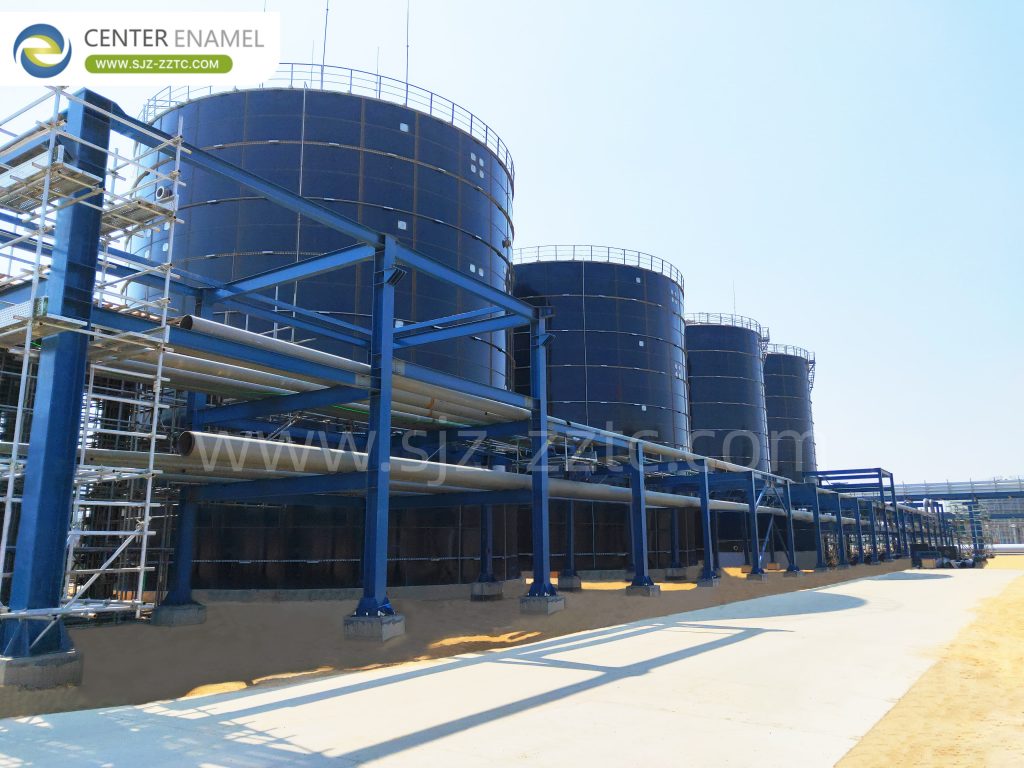
The core challenges of industrial wastewater treatment center on the "three highs"-high difficulty, high cost, and high energy consumption. Wastewater from new energy, chemical, and pharmaceutical industries is complex in composition with numerous characteristic pollutants, and traditional treatment processes are difficult to remove effectively. Chinese companies have significant price advantages in the mid-to-low-end equipment segment. The industry also faces continuous technological upgrade pressure from increasingly stringent emission standards, as well as new requirements for digitalization and low-carbon transformation on operational refinement management capabilities.
To address these complex environmental hurdles, industrial leaders are increasingly turning to a professional Biogas Solution Provider. By leveraging cutting-edge technology, companies can transition from high-cost, inefficient systems to streamlined operational models. The right infrastructure is the foundation for overcoming these technical barriers and meeting modern emission demands.
Full-Process Factory Standardized for GFS Tanks
GFS tanks are fully factory-prefabricated to standardized specifications, with finished product quality stability far exceeding cast-in-place concrete tanks. All concrete tank processes are completed in the open air, with rebar tying, concrete pouring, and curing heavily influenced by worker skill, temperature, and rainfall. Wall thickness, density, and strength vary significantly between batches, with hidden defects like honeycombing, voids, and insufficient wall thickness common-quality cannot be uniformly controlled.
Center Enamel's GFS Tanks steel panels, seals, and reinforcement components are all mass-produced in automated factories. Steel stamping, high-temperature enameling, and dimensional cutting are all controlled by CNC equipment, with each panel's parameters and enamel thickness strictly following unified national standards. All components are uniformly packaged and transported to site, with assembly strictly following standardized construction drawings. Full-process quality inspection from raw materials to finished components ensures highly consistent product performance parameters, completely eliminating the uncontrollable quality risks of on-site concrete construction, with every tank delivering stable, consistent performance.
Beyond structural integrity, the core process efficiency within these tanks dictates the overall success of the treatment cycle. Integrating high-performance storage solutions with specialized reactor technology maximizes biological activity and resource recovery. This synergy between physical infrastructure and chemical process is what defines modern industrial success.
CSTR Core Advantages
Excellent adaptability, with outstanding treatment results for high-solids, high-viscosity, high-suspended-solids organic wastewater, thoroughly solving the shortcomings of traditional anaerobic processes such as stratification, crusting, and low sludge utilization. The full-mix agitation mode ensures thorough contact between microorganisms and pollutants, with homogeneous and stable reaction conditions and excellent resistance to water quality and hydraulic shock loads-stable compliance even with significant influent fluctuations. The simple process structure, without complex media or three-phase separators, results in low equipment cost, short construction period, and low maintenance difficulty, with no need for frequent cleaning of clogged components and low O&M costs. The process simultaneously achieves wastewater treatment and biogas energy recovery. Sludge acclimation is fast, quickly adapting to various specialty organic wastewaters, with high process error tolerance and strong universal applicability.
While high-efficiency reactors provide the solution, understanding the nature of the influent remains vital for long-term project stability. By identifying the environmental toxicity of pollutants, we can tailor our processes for optimal purification and ecosystem protection. This analytical approach ensures that every waste stream is treated with maximum ecological care.
Food Waste Environmental Toxicity of Pollutants
Pollutants are primarily natural organics with no synthetic toxic chemicals-low acute chemical toxicity, but biological pollution and eutrophication risks are significant. High-concentration oil discharged to natural waters forms a surface film blocking oxygen exchange, causing aquatic organism suffocation; oil adheres to gills and body surfaces, directly harming fish. High salinity causes osmotic imbalance in freshwater organisms, inhibiting growth and reproduction. High-concentration organics decompose consuming dissolved oxygen, causing oxygen depletion and black-odor conditions. Food waste decomposition breeds pathogens, flies, and parasite eggs-posing public health risks. Long-term discharge causes oil scaling and pipe blockages, corrosion of sewer systems. Digestate with high nitrogen/phosphorus causes rapid eutrophication and algal blooms. Overall pollution is primarily organic pollution and ecological damage, with no heavy metal or persistent organic accumulation risks-environmental recovery periods are relatively short.
Practical applications, such as our benchmark projects in Southeast Asia, demonstrate the real-world impact of these technologies. Implementing these systems correctly requires an experienced team capable of managing complex site conditions and global standards. Effective construction management turns theoretical process benefits into lasting operational results.
Indonesia Palm Oil Biogas Project
Specifically designed for high-concentration palm oil wastewater treatment with 3 GFS fermentation tanks, each 19.86 m diameter × 8.4 m height. Installation began November 2009 with only 7 construction personnel, completing all tank assembly in 40 days-highly efficient and time-saving. Tanks are fitted with dual-membrane gas storage covers for POME anaerobic digestion-degrading organics and recovering biogas energy while eliminating palm industry pollution. This is an early benchmark POME biogas treatment project in Southeast Asia.
Achieving these high-level results across diverse global markets relies on an unwavering commitment to standardized installation and service. Our global portfolio confirms that with the right partner, complex waste challenges can be transformed into reliable energy assets. This commitment is the backbone of our enduring international partnerships.
Installation and Construction Team
The installation team has practical experience from over 10,000 GFS tank projects globally, strictly following standardized construction procedures-full control over project mobilization, civil coordination, tank assembly, piping, and commissioning schedules and quality. The team is proficient in complete standardized installation processes for GFS tanks, dual-membrane gas storage covers, USR/CSTR/IC anaerobic reactors, and biogas desulfurization/piping systems-adaptable to large-scale farms, industrial parks, remote mountainous sites, coastal high-corrosion sites, and other complex locations-strictly implementing unified global safety construction standards. For large overseas cross-border projects, the team can be deployed as complete units for on-site construction, technical training, and local worker practical instruction-full control over construction details, air-tightness testing, and corrosion protection-ensuring timely and stable commissioning of global environmental projects through standardized delivery capability.
Building on a foundation of thousands of successful installations, our global project reach continues to expand into new industries and regions. By consistently delivering customized solutions, we empower clients to meet their sustainability goals, regardless of local climate or regulatory complexity. The future of industrial waste treatment is integrated, standardized, and globally scalable.
Center Enamel's Extensive Global Benchmark Project Cases
Center Enamel's project portfolio covers over 100 countries across Southeast Asia, Africa, Europe, and the Americas-30,000+ mature projects-accumulating complete industry solutions across palm oil, livestock, municipal, brewing, and food waste biogas-rapidly matching customized solutions for different regional climates, water quality, and regulations.
FAQs
1.Why choose Center Enamel as your Biogas Solution Provider?
Center Enamel offers comprehensive, turnkey environmental engineering services. We combine proprietary GFS Tank manufacturing with advanced anaerobic process expertise. Our global experience across 100+ countries ensures that your biogas project benefits from standardized quality, rapid deployment, and customized solutions tailored to specific regional regulatory and environmental requirements.
2. What are the key advantages of using GFS Tanks for biogas projects?
Our GFS Tanks are mass-produced in automated factories, ensuring consistent enamel thickness, high corrosion resistance, and structural stability. Unlike concrete tanks, they feature modular, rapid assembly, significantly reducing construction time and labor costs. Their durable design makes them ideal for high-corrosion, high-viscosity environments in diverse industrial biogas applications.
3. How does the CSTR process improve biogas energy recovery?
The CSTR process provides a fully mixed environment that ensures uniform contact between microorganisms and organic waste. This prevents stratification and crusting while offering excellent resistance to hydraulic shocks. By optimizing internal reaction conditions, the process ensures stable, continuous biogas production, making it a highly efficient solution for high-concentration organic wastewater.