
How Can a China Brewing Wastewater Treatment EPC Contractor Ensure Discharge Compliance Worldwide?
Global industrial wastewater policy is shifting decisively from "compliance discharge" toward mandatory resource recovery and zero liquid discharge. The EU, through its Circular Economy Action Plan, requires member states to raise industrial wastewater reuse rates and extends carbon footprint accounting across the full life cycle of treatment. China continuously updates and tightens industrial water pollutant discharge standards, with increasingly stringent limits on total nitrogen, total phosphorus, and characteristic pollutants for chemicals, pharmaceuticals, and printing and dyeing.
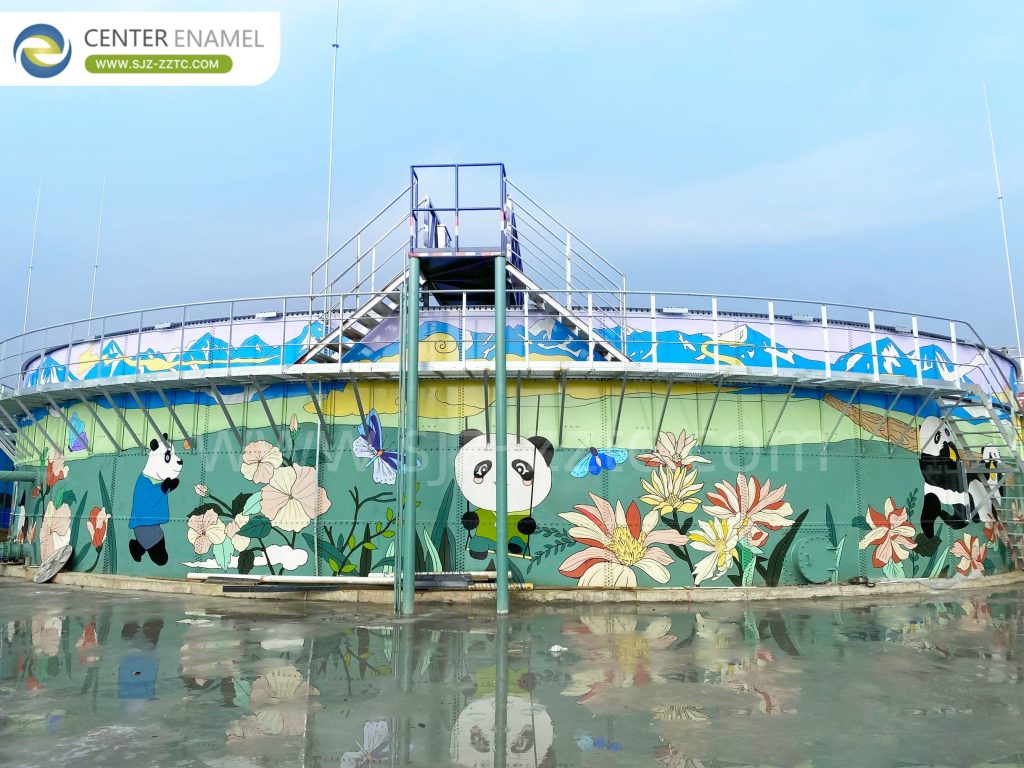
Some water-scarce regions and highly polluting industries are now mandated to adopt zero or near-zero liquid discharge technologies. Germany has built a differentiated pretreatment standard system by industry, requiring industrial wastewater to meet specific quality requirements before entering municipal treatment plants. For breweries operating under these rules, compliance depends on process design, containment durability, and service capability working together-the exact combination a China Brewing Wastewater Treatment Project EPC Contractor must deliver.
Policy Pressure Reshapes Brewery Wastewater Strategy
These regulatory trends have direct consequences for brewing operations. Higher reuse targets mean effluent quality must be predictable, not merely acceptable on average. Carbon footprint accounting across the treatment life cycle favors anaerobic processes that recover biogas rather than aerobic systems that consume power. Stricter limits on nitrogen and phosphorus push breweries toward complete process trains rather than partial treatment. And mandated near-zero discharge in water-scarce regions requires robust, gas-tight, corrosion-resistant containment that can operate reliably for decades. Meeting all four pressures simultaneously is difficult with fragmented suppliers, which is why integrated EPC delivery has become the practical choice for brewery projects of any significant scale.
GFS Tanks Engineered for Extreme Climates and Seismic Zones
Containment durability underpins every one of those policy requirements. GFS Tanks can undergo customized wind and seismic design based on project site climate and geological conditions, with environmental adaptability far superior to concrete tanks. Concrete tanks are cast-in-place monolithic structures whose seismic and wind resistance depends entirely on on-site construction quality-a serious weakness in remote areas, typhoon-prone zones, and earthquake belts where quality control is difficult. Under strong earthquakes or typhoons, concrete tanks are prone to cracking and base settlement damage, and subsequent reinforcement costs can equal rebuilding.
GFS Tanks follow a factory-controlled path instead. Before construction, local seismic intensity, maximum wind pressure, and foundation bearing capacity data are collected, with thickened steel panels, stiffening ribs, and anchored base components factory-prefabricated to standardized specifications. The bolted panel structure distributes stress exceptionally well, making it less prone to overall fracture under seismic and typhoon impact, while minor foundation settlement will not cause through-cracking. Structural parameters can be flexibly adjusted for mountainous, coastal typhoon-zone, and high-seismic-zone projects, providing long-term protection against extreme natural climate damage.
IC Supporting Equipment and System Integration
Process performance depends as much on the supporting equipment as on the reactor itself. At the core sits the GFS tank with a built-in gas-lift internal circulation system and upper and lower three-phase separators-the key components enabling autonomous circulation and sludge-water separation. A bottom precision distribution system and pressure-regulating feed device ensure uniform, stable influent. Supporting equipment includes influent lift pumps, equalization tanks, and flow meters for precise influent control, plus top-mounted high-efficiency biogas collection, desulfurization, dehydration, and storage integrated equipment. High-precision online monitoring covers real-time temperature, pH, COD, and level, while dedicated sludge discharge pipes and recirculation control devices at the bottom and mid-section eliminate the need for external return pumps. The complete system is highly integrated, with no excess external equipment, a compact structure, and high automation.
Standardized Brewery Wastewater Treatment Train
Around this equipment, a mature "solid-liquid separation + anaerobic digestion + aerobic polishing" process train delivers reliable results for high-concentration, easily biodegradable organic wastewater. Pretreatment uses screens, sedimentation tanks, and microfiltration to remove spent grain residues and colloidal suspended solids, preventing equipment clogging and reducing biochemical load. The main stage applies UASB or EGSB high-efficiency anaerobic processes for rapid degradation of high-concentration organics with simultaneous biogas energy recovery, suited to high pollution loads. Subsequent A/O or contact oxidation aerobic processes deeply degrade residual pollutants, with final sedimentation and disinfection ensuring stable effluent compliance. Anaerobic digesters use Center Enamel GFS Tanks, resistant to organic acid corrosion with long service life. The entire process offers strong shock load resistance, simple flow, convenient O&M, and suitability for the brewery industry's intermittent and seasonal discharge patterns.
Reference Project Data
The following table summarizes representative project performance underpinning Center Enamel's delivery capability as a China Brewing Wastewater Treatment Project EPC Contractor.
| Project | Location | Technology/Scope | Capacity/Performance | Status |
| Food Waste + Napier Grass Biogas Demonstration | Pakistan | CSTR anaerobic process with mechanical mixing; co-digestion of food waste and Napier grass | Stable daily biogas production of 100 m³ | Local official demonstration project validating gas production efficiency and long-term operational stability |
| Brewery IC Reactor Installation | Chongqing, China | IC reactor × 6 sets | 6,000 tons/day | Stable operation treating full brewery effluent |
| High-Rise IC Reactor | Xinjiang Aksu, China | IC reactor (6.88 × 21 m) | 780 m³ total capacity | COD removal exceeding 70%, operational since 2024 |
The Pakistan demonstration project confirms anaerobic process stability under mixed-feedstock conditions, and following successful pilot operation, multiple large-scale Napier grass biogas projects are planned locally to promote biomass clean energy and regional low-carbon development. Together with the brewery references, these installations show how Center Enamel's process integration performs under real operating loads.
Global Service System and After-Sales Support
Even well-designed systems require responsive service. Leveraging regional sales centers in China and overseas local agent networks, Center Enamel has established a complete after-sales service loop covering all markets. The system rests on four core pillars: a 24/7 rapid response mechanism, on-site domestic and overseas installation services, full-project-cycle after-sales support, and long-term warranty protection-forming a complete service chain from preliminary site survey through mid-term construction management to long-term inspection and maintenance. The entire system is uniformly adapted to both domestic and international project service standards, coordinating personnel scheduling, material support, and on-site coordination for simultaneous projects across multiple regions, significantly reducing customer multi-party coordination costs and ensuring efficient delivery at home and abroad.
Aluminum Geodesic Dome Roof for Gas-Tight Coverage
Where biogas collection or odor control is required, roof selection becomes part of the process design. The Aluminum Geodesic Dome Roof independently developed by Center Enamel is manufactured from high-strength aluminum alloy plates through integral stamping, featuring a triangular grid spherical self-supporting structure that enables large-span full coverage without internal support columns. The aluminum alloy construction offers excellent weather and corrosion resistance, with long-term protection against acid rain, salt spray, and UV radiation across extreme outdoor climates. Structural design complies with international AWWA D108 standards, with aluminum plate thickness, rib cross-sections, and joint connections all verified by finite element stress analysis, ensuring wind and snow load resistance that meets building code requirements across different global regions.
Weighing only one-third to one-half of a steel roof with the same span, the dome significantly reduces load on the tank top and allows direct installation without tank wall reinforcement. It provides superior overall sealing, with double sealing between panels using specialized sealant strips and mechanical interlocking, enabling both airtight gas storage and enclosed odor control-suitable for biogas collection and storage, wastewater tank odor control, and drinking water contamination prevention. The support-column-free design does not interfere with internal equipment such as mixers and water distributors, and the aluminum material does not support microbial growth, requiring no anti-corrosion maintenance over long-term use and resulting in low total life-cycle costs.
Structural and Performance Specifications
| Parameter | Specification |
| Roof material | High-strength aluminum alloy plates, integrally stamped |
| Structural system | Triangular grid spherical self-supporting, no internal support columns |
| Design standard | AWWA D108, verified by finite element stress analysis |
| Weight versus steel roof | One-third to one-half of equivalent span |
| Sealing performance | Double sealing with specialized sealant strips and mechanical interlocking |
| Maintenance requirement | No anti-corrosion maintenance; low life-cycle cost |
These specifications matter because policy-driven projects increasingly require gas capture and odor control alongside treatment. A roof that seals reliably and lasts without repainting protects both the biogas yield and the surrounding community relationship.
Frequently Asked Questions
How do tightening discharge rules affect brewery treatment design?
Stricter nitrogen, phosphorus, and reuse requirements mean breweries need complete process trains-pretreatment, anaerobic digestion, and aerobic polishing-rather than partial treatment. Anaerobic stages also reduce life-cycle carbon footprint by recovering biogas instead of consuming power.
What role do GFS Tanks play in meeting zero liquid discharge targets?
GFS Tanks provide corrosion-resistant, gas-tight containment for anaerobic digesters and storage, with over 30 years of service life and customized seismic and wind design. Reliable containment prevents leakage and biogas loss, which is essential for near-zero discharge compliance.
Does Center Enamel support projects outside China?
Yes. With regional sales centers and overseas agent networks, Center Enamel offers 24/7 response, on-site installation, full-cycle after-sales support, and long-term warranty protection across domestic and international projects.
Share your brewery's discharge limits, reuse targets, and site conditions with Center Enamel, and our engineers will outline a compliant EPC configuration with matched GFS Tanks specifications.
From policy review to commissioning, our team can map your project against local regulations and reference installations-contact us to schedule a technical discussion.