
Leading EPC Contractor and Anaerobic Technologies for Nepal Household Waste Biogas Project
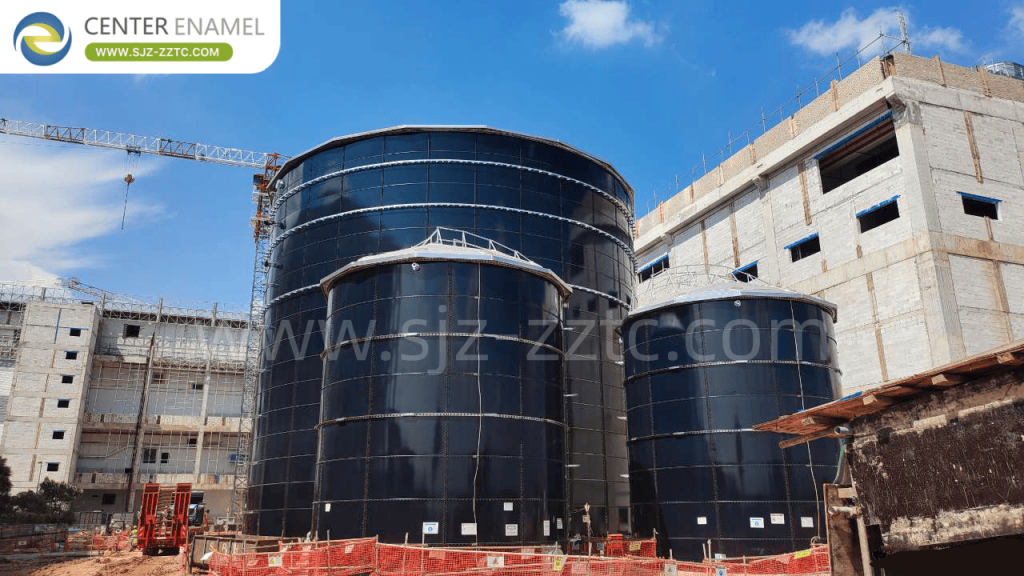
With rapid urbanization, population growth and tourism development, household waste management has become a critical challenge across Nepal, especially in Kathmandu, Pokhara and other major cities. Most household waste is openly dumped or landfilled without proper treatment, causing severe land and water pollution, public health risks and uncontrolled methane emissions. As a professional global EPC contractor, Center Enamel delivers tailored Anaerobic Technologies and full turnkey solutions for Nepal Household Waste Biogas Project, helping local governments and communities turn Household waste into clean renewable energy, solve waste crises and achieve circular low-carbon development.
Brief Overview of Household Waste Situation in India
India faces an acute household waste crisis featured by massive daily waste volume, overloaded landfills, high moisture content and insufficient treatment capacity. Open dumping and landfilling lead to serious soil, groundwater and air pollution, public health hazards and large greenhouse gas emissions. Anaerobic digestion-based biogas projects have become the most practical and sustainable solution for both urban and rural waste management in India.
Sources of Household Waste
Household waste, also known as municipal solid waste, is generated from daily residential, commercial and community activities. Its main sources include:
- Kitchen waste: Vegetable peels, fruit residues, leftover meals, rice, flour, oil and eggshells, which are rich in organic matter and have the highest biogas production potential.
- Household cleaning waste: Paper, cardboard, textiles, wood scraps and garden trimmings such as leaves and branches.
- Inert impurities: Plastic, glass, metal and ceramics that need sorting before anaerobic treatment.
- Community and catering waste: Waste from restaurants, canteens, fresh markets, street vendors and tourist areas.
Most household waste has high organic content, moderate moisture and good biodegradability, making it ideal feedstock for anaerobic digestion and biogas production.
Challenges of Household Waste Treatment in Nepal
Nepal is facing severe and long-standing household waste management problems that restrict urban sustainable development:
- Huge and growing waste output: Major cities like Kathmandu generate thousands of tons of household waste daily, far exceeding local treatment capacity.
- Backward treatment infrastructure: Most waste is simply landfilled or dumped openly, lacking professional collection, transportation and treatment systems.
- Complex composition and high moisture: Nepalese household waste has high water content and mixed ingredients, unsuitable for direct incineration and difficult for traditional biological treatment.
- Mountainous terrain and limited land: Steep topography and dense urban areas leave little land for large landfills or treatment plants, requiring compact and space-saving technologies.
- Severe energy shortage: Nepal suffers from frequent power outages and unstable energy supply, increasing demand for decentralized renewable energy.
- Ecological and public health risks: Open waste causes odor, mosquito breeding, toxic leachate and water contamination, threatening public health and fragile mountain ecosystems.
These bottlenecks make anaerobic digestion-based biogas Project the most practical and sustainable solution for Nepal’s household waste treatment.
Why Household Waste Produces Biogas and Its Production Process
Household waste rich in organic matter can be decomposed by anaerobic microorganisms in an oxygen-free environment to produce biogas, which mainly consists of 55–70% methane and carbon dioxide. Organic substances such as carbohydrates, proteins and fats are broken down through hydrolysis, acidification and methanation to release methane that can be used for cooking, heating, power generation or upgraded to biomethane.
Standard Biogas Production Process
Sorting and pretreatment: Remove inert materials such as plastic, glass and metal; crush organic waste to improve digestion efficiency.
- Homogenization: Adjust moisture, temperature and carbon-nitrogen ratio to create optimal conditions for anaerobic bacteria.
- Anaerobic digestion: Organic matter decomposes in closed reactors driven by specialized microbial communities.
- Biogas collection and purification: Remove hydrogen sulfide, moisture and other impurities to improve safety and calorific value.
- Biogas utilization: Use biogas for on-site power generation, centralized gas supply or grid injection after upgrading.
- Digestate treatment: Convert residues into organic fertilizer to realize full resource recycling.
This integrated process achieves harmless, reduced and resourceful treatment of household waste.
Benefits of Household Waste-to-Biogas Projects for Nepal
Converting Household waste into energy through professional Anaerobic Technologies brings comprehensive economic, environmental and social benefits to Nepal:
- Solve waste crisis: Reduce landfilling volume, relieve landfill pressure and eliminate waste piles in cities and scenic areas.
- Supply stable clean energy: Produce renewable biogas to ease power shortages, replace traditional biomass and fossil fuels, and lower energy costs.
- Cut greenhouse gas emissions: Avoid methane release from landfills and support Nepal’s low-carbon and climate goals.
- Protect fragile ecosystems: Reduce pollution to rivers, groundwater and mountain environments, preserving natural beauty and tourism resources.
- Improve public health: Eliminate odor, bacteria and disease risks caused by open waste dumping.
- Build circular economy: Biogas provides energy while digestate becomes organic fertilizer, supporting sustainable agriculture.
- Low operation cost: Mature anaerobic systems feature low energy consumption, long service life and stable operation.
For Nepal, Household waste biogas Project is both critical environmental infrastructure and a core livelihood and energy security project.
Advanced Anaerobic Technologies for Household Waste Biogas Projects
Center Enamel provides a complete portfolio of advanced Anaerobic Technologies to adapt to different waste compositions, project scales and site conditions in Nepal:
1. CSTR (Continuous Stirred-Tank Reactor)
Equipped with mechanical stirring for full material mixing. Strong anti-shock loading capacity, suitable for high-solid and high-impurity household waste.
2. UASB (Upflow Anaerobic Sludge Blanket)
Relies on high-activity granular sludge beds with high organic load and high COD removal efficiency, ideal for sorted soluble organic waste.
3. USR (Upflow Solid Reactor)
Simple structure, low investment, strong anti-clogging performance, suitable for high-SS household waste and small-to-medium community projects.
4. IC (Internal Circulation)
High-rate internal circulation reactor with 3–5 times higher load than traditional reactors, small footprint, perfect for large-scale urban projects with limited land.
These technologies form a complete technical system to ensure high biogas yield, stable operation and strong adaptability for any Household waste biogas Project.
Advantages of GFS Tanks in Nepal Household Waste Biogas Project
GFS (Glass-Fused-to-Steel) Tanks are the core equipment of Center Enamel’s solutions, highly suitable for Nepal’s climate, terrain and high-standard engineering needs:
- Superior corrosion resistance: Fused at over 820°C, resistant to pH 1–14, durable against acidic waste and humid mountain environments.
- Compact and space-saving: Modular bolted vertical structure greatly reduces floor area, ideal for narrow and mountainous sites.
- Fast installation: Factory prefabricated and bolt-assembled on site, no welding or long curing period, realizing rapid project delivery.
- Strong weather resistance: Resistant to high temperature, strong UV, heavy rain and seismic activity, adapting to Nepal’s complex climate.
- Long service life: Service life exceeds 30 years, smooth surface resists scaling, low maintenance cost.
- Excellent tightness: Ensures safe and efficient biogas production and collection without leakage.
- Flexible expansion: Can be easily expanded or relocated to support long-term project development.
GFS Tanks are the most reliable and cost-effective reactor and storage containers for Nepal’s biogas Project.
Why Choose Center Enamel as EPC Contractor for Biogas Projects
Choosing a professional EPC contractor determines the stability, safety and long-term value of a Household waste biogas Project. Center Enamel’s core strengths include:
- Customized Anaerobic Technologies: Tailored design based on Nepal’s waste composition, climate, terrain and emission standards.
- Strong engineering capacity: Asia’s largest GFS tank manufacturing base ensures stable quality, short delivery and large-scale supply.
- Strict international quality control: Each tank plate passes 1500V spark test, complying with ISO, AWWA, NSF/ANSI 61 standards.
- Patented material technology: More than 200 patented enamel formulas provide superior corrosion resistance.
- Full-life cycle one-stop service: Covers design, production, transportation, installation, commissioning, training and after-sales maintenance.
- Rich overseas experience: Familiar with South Asian policies, construction habits and local cooperation models.
- Proven stable performance: High biogas yield, low failure rate, low operating cost, trusted by global customers.
Center Enamel provides a full-chain guarantee for Nepal Household Waste Biogas Project from design to stable operation.
Center Enamel’s Professional Installation of GFS Tanks
Center Enamel has a mature, efficient installation system optimized for Nepalese project sites:
- Hydraulic jacking technology: Top-down installation without high scaffolding, safe for narrow and mountainous spaces.
- Bolted modular assembly: No on-site welding, avoiding quality risks caused by high humidity.
- Fast commissioning: No curing period, enabling early operation and investment recovery.
- Professional technical team: Experienced engineers provide on-site guidance, supervision and operator training.
- Localized cooperation: Collaborate with local teams to improve efficiency and reduce costs.
- Strict acceptance: Comprehensive testing ensures safe, stable and compliant operation.
Our installation system ensures high quality, short duration and low risk for GFS tank projects in Nepal.
Typical Successful Project Cases
Case 1: French Biogas Project
Process Section: CSTR
Tank Dimensions: φ18.33*8.4 m (H) 1 unit
Total Volume: 2215 m³ 1 unit
Completion Date: 2021
Case 2: Canadian Biogas Project
Tank Dimensions: φ8.4*7.2 m (H) 2 units
Total Volume: 798 m³
Completion Date: 2024
Household waste biogas Project equipped with professional Anaerobic Technologies is the optimal way for Nepal to solve waste crises, ease energy shortages and achieve sustainable development. Center Enamel, as a leading global EPC contractor, integrates advanced GFS Tanks, mature anaerobic technologies including CSTR, UASB, IC and USR, and full-process one-stop services to provide safe, efficient and reliable waste-to-energy solutions. Our projects help reduce pollution, protect fragile ecosystems, supply renewable energy and create comprehensive economic and social benefits. With rich overseas experience and customized design capabilities, Center Enamel is committed to becoming the most trusted partner for Nepal Household Waste Biogas Project, promoting the construction of clean, low-carbon and circular cities.