
Leading EPC Contractor and Biogas Technology for New Zealand Dry Straw Biogas Project
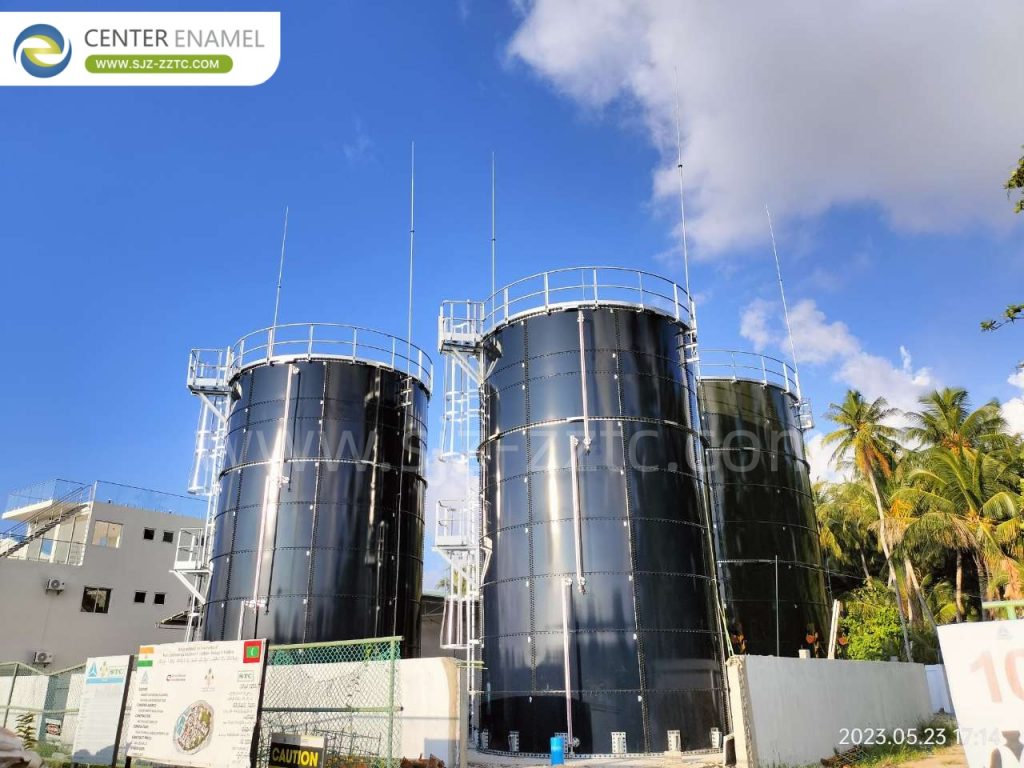
With the rapid development of modern agriculture, vigorous promotion of circular economy and strict promotion of carbon neutrality goals, New Zealand is facing a sharp increase in dry straw production, bringing huge pressure on straw treatment, environmental governance and renewable energy supply. Traditional straw burning, random stacking and simple returning to field can no longer meet New Zealand's requirements of ecological environmental protection, resource recycling and low-carbon energy transformation.
As a professional global EPC Contractor, Center Enamel provides integrated and customized biogas technology for New Zealand Dry Straw Biogas Project, relying on mature anaerobic processes, high-efficiency reaction systems and high-performance GFS Tanks, efficiently converting massive dry straw into clean renewable energy, helping New Zealand achieve straw reduction, resource recycling and low-carbon sustainable development.
Source and Production Status of Dry Straw in New Zealand
Dry straw, as a typical lignocellulosic biomass waste, is the core raw material of Dry Straw Biogas Project. New Zealand is a major agricultural country in Oceania, with developed planting industry and abundant straw resources. The main sources of dry straw include wheat straw, barley straw, oat straw, corn straw, pasture straw and other crop residues, as well as wood processing residues and garden pruning waste. These dry straws are widely distributed in North Island, South Island and major agricultural areas, with large annual output, stable supply and high recyclability.
Affected by climate and planting structure, New Zealand's dry straw has the characteristics of high lignin content, moderate moisture, good biodegradability and easy collection and storage. At present, the annual output of dry straw in New Zealand maintains steady growth, most of which are used for simple returning to field, feed processing or outdoor stacking, and the proportion of high-value energy utilization is low. A large amount of straw is underutilized, which not only causes resource waste, but also easily leads to soil pollution, water pollution and fire risks. In this context, Dry Straw Biogas Project with advanced biogas technology has become the most practical and efficient way for New Zealand to realize straw resource utilization.
Application Fields of Dry Straw
Dry straw has a wide range of application value, and its reasonable utilization can bring significant economic and environmental benefits. The main application fields are as follows:
Renewable energy production: As a high-quality raw material for biogas production, dry straw can be converted into biogas through anaerobic digestion, which is used for power generation, heating, cooking and biomethane injection into natural gas pipeline network, providing stable clean energy for families, farms and enterprises.
Agricultural production: The digestate produced after anaerobic fermentation of dry straw is rich in organic matter and nutrients, which can be processed into high-quality organic fertilizer, improving soil structure, increasing soil fertility and reducing the use of chemical fertilizers, suitable for New Zealand's developed planting and animal husbandry.
Feed processing: Properly processed dry straw can be used as roughage for livestock and poultry, reducing feed cost and promoting the development of animal husbandry.
Industrial raw materials: Dry straw can be used as raw materials for paper making, biomass materials, biodegradable products and other industries, expanding the industrial application scope of straw resources.
Environmental governance: Replacing straw burning with biogas engineering can reduce harmful gas emissions such as smoke and dust, and improve air quality in agricultural areas.
Among many application fields, Dry Straw Biogas Project has become the preferred way of straw utilization because of its high resource utilization rate, obvious environmental benefits and sustainable industrial chain, which can realize the coordinated development of energy, agriculture and environment.
How Does Dry Straw Produce Biogas?
The biogas conversion of dry straw relies on mature anaerobic digestion technology, which decomposes lignin, cellulose and other organic matter in dry straw into biogas in a closed oxygen-free environment. The whole process is divided into four key stages:
- Hydrolysis: Microorganisms secrete enzymes to break down macromolecular organic substances such as cellulose and lignin in dry straw into small molecular soluble substances, laying a foundation for subsequent reactions.
- Acidification: Acid-producing bacteria convert small molecular substances into volatile fatty acids, alcohols and other intermediate products, adjusting the nutritional environment for subsequent reactions.
- Acetogenesis: Acetogenic bacteria further transform volatile fatty acids and alcohols into acetic acid, hydrogen and carbon dioxide, providing raw materials for methanation.
- Methanation: Methanogenic bacteria use acetic acid, hydrogen and other substrates to react to produce biogas, which is mainly composed of 55%-70% methane and carbon dioxide.
After desulfurization, dehydration, purification and compression, high-purity biogas can be used for on-site power generation, centralized gas supply, biomethane marketing and other fields, realizing high-value resource utilization of dry straw.
Benefits of Dry Straw-to-Biogas Projects for New Zealand
The promotion and application of Dry Straw Biogas Project bring comprehensive environmental, economic and social benefits to New Zealand:
Environmental improvement: Greatly reduce the amount of dry straw burned and stacked, control air pollution, soil pollution and water pollution caused by straw waste, reduce methane emissions from straw decay, and help New Zealand achieve carbon emission reduction and carbon neutrality goals.
Energy supply: Provide stable clean renewable energy, ease the pressure of regional energy demand, reduce dependence on fossil energy such as coal and natural gas, enhance energy independence and security, and support the development of low-carbon energy system.
Circular economy: Form a complete industrial chain of "straw collection - biogas production - power generation / gas supply - organic fertilizer - agricultural planting", realize the closed-loop recycling of resources, and promote the construction of circular agriculture and zero-waste cities.
Agricultural development: The digestate after fermentation is processed into organic fertilizer, which improves soil quality, increases crop yield and quality, reduces agricultural non-point source pollution, and boosts the sustainable development of New Zealand's agriculture and animal husbandry.
Rural revitalization: Create employment opportunities in straw collection, engineering operation and maintenance, fertilizer processing and other links, increase farmers' income, improve rural living environment, and promote the coordinated development of urban and rural areas.
Advanced Biogas Technology: CSTR, UASB, USR, IC
Center Enamel provides a full range of advanced anaerobic processes as core biogas technology for New Zealand Dry Straw Biogas Project, adapting to different straw characteristics, project scales and application scenarios:
CSTR (Continuous Stirred-Tank Reactor)
Equipped with a mechanical stirring system, it can fully mix dry straw materials and microorganisms, avoid material stratification and crusting, with strong anti-shock load capacity, suitable for high-solid and high-lignin dry straw, ensuring stable and efficient biogas production, and is the preferred technology for large and medium-sized Dry Straw Biogas Project.
UASB (Upflow Anaerobic Sludge Blanket)
Relies on high-activity granular sludge, with high organic load rate and high COD removal efficiency, suitable for pretreated dry straw leachate and soluble organic matter, with small floor area, low energy consumption and stable operation, suitable for supporting projects with high pretreatment degree.
USR Process (Upflow Solid Reactor)
As a high-efficiency anaerobic process specially suitable for high-solid dry straw, USR Process features simple structure, low investment cost and excellent anti-clogging performance. It can directly treat dry straw with high suspended solids without complex pretreatment, with low operation and maintenance costs, making it the preferred technology for small and medium-sized Dry Straw Biogas Project in New Zealand's rural, pastoral and remote areas.
IC (Internal Circulation)
High-load high-efficiency reactor, with internal circulation system, treatment efficiency 3-5 times that of traditional technology, small floor area, high gas production rate, suitable for large-scale urban and industrial dry straw centralized treatment projects, meeting the needs of large-scale straw disposal and high-volume biogas production.
Advantages of GFS Tanks in Dry Straw Biogas Projects
GFS Tanks (Glass-Fused-to-Steel Tanks) are the core equipment of Center Enamel's biogas technology, highly adaptable to New Zealand's climate characteristics and Dry Straw Biogas Project operation requirements:
Super corrosion resistance: High-temperature sintered enamel layer is resistant to acid, alkali and salt corrosion, adapting to corrosive substances in dry straw fermentation and New Zealand's coastal and humid environment, ensuring long-term stable operation of equipment.
Excellent airtightness: Special sealing design and enamel coating effectively prevent biogas leakage, ensure safe and efficient biogas collection and storage, and improve energy utilization rate.
Modular bolted structure: Factory prefabricated, on-site assembly, fast installation, short construction period, no on-site welding, reducing construction difficulty and quality risks.
Long service life: Service life exceeds 30 years, smooth surface is not easy to scale and adhere to materials, low daily maintenance cost, reducing long-term operation investment.
Flexible expansion: Can be expanded or adjusted according to straw output and biogas demand growth, meeting the long-term operation and development needs of Dry Straw Biogas Project.
Wide applicability: Suitable for anaerobic reaction tanks, storage tanks, mixing tanks and other links of biogas projects, matching various biogas technology processes, and realizing integrated equipment configuration.
Why Choose Center Enamel as Biogas Project EPC Contractor
As a professional and reliable global EPC Contractor in the field of biomass energy, Center Enamel provides full-chain integrated services for New Zealand Dry Straw Biogas Project with obvious core advantages:
Strong R&D and manufacturing strength: With 200+ patented enamel technologies, professional R&D team and advanced production line, strict quality control, and products comply with ISO, AWWA and other international standards, ensuring the reliability and advancement of equipment and technology.
Full turnkey EPC services: Covering project design, equipment production, transportation, installation, commissioning, technical training and after-sales maintenance, providing one-stop biogas technology solutions, saving customers' time and cost.
Customized technical design: According to New Zealand's dry straw composition, climate characteristics, site conditions and project scale, tailor efficient and stable anaerobic digestion systems, optimize process parameters and improve gas production efficiency.
Rich overseas project experience: Familiar with Oceania policies, regulations, construction environment and market demand, rich experience in biomass biogas project construction and operation, ensuring smooth project implementation and stable operation.
High efficiency and cost-effective: High biogas yield, low equipment failure rate, low operation and maintenance cost, creating long-term stable economic and environmental benefits for customers, and enhancing project profitability and sustainability.
Perfect after-sales support: Establish a global after-sales service network, provide timely technical guidance, maintenance and upgrade services, and ensure the long-term efficient operation of Dry Straw Biogas Project.
Center Enamel’s Professional GFS Tanks Installation
Center Enamel has established a mature, standardized and safe installation system suitable for New Zealand's construction environment, ensuring the quality and efficiency of GFS Tanks installation:
Hydraulic jacking top-down installation: No high scaffolding, high construction safety, suitable for narrow sites in rural areas, pastures and industrial zones in New Zealand, reducing site requirements.
Modular bolted assembly: Avoid on-site welding, reduce quality risks caused by climate and human factors, adapt to New Zealand's temperature and humidity changes, and ensure equipment installation accuracy.
Professional on-site team: Experienced installation engineers provide full-process technical guidance, training and coordinated construction with local teams, improve construction efficiency and ensure project progress.
Strict acceptance testing: Conduct comprehensive airtightness, pressure and corrosion resistance tests after installation, ensure equipment meets biogas project operation standards, and support stable operation of various biogas technology.
Typical Successful Project Cases
Case 1: Singapore Biogas Project
Process Stage: CSTR
Tank Dimensions:
φ18.34 × 8.4 m (H) — 1 Unit
φ8.41 × 9.0 m (H) — 1 Unit
φ11.46 × 7.2 m (H) — 1 Unit
Total Volume: 3,458 m³
Completion Year: 2021
Case 2: France Biogas Project
Process Stage: CSTR
Tank Dimensions: φ18.33 × 8.4 m (H) — 1 Unit
Total Volume: 2,215 m³ — 1 Unit
Completion Year: 2021
Dry Straw Biogas Project is an important way for New Zealand to solve straw treatment problems, develop renewable energy and build a circular economy system. Center Enamel, as a professional EPC Contractor, relies on leading biogas technology, complete anaerobic processes, high-quality GFS Tanks and full-process engineering services to provide safe, efficient and stable waste-to-energy solutions for New Zealand.
Rich overseas experience, customized technical design and reliable after-sales support ensure long-term stable operation of the project, help New Zealand improve environmental quality, optimize energy structure, develop circular agriculture and achieve sustainable low-carbon development goals. For New Zealand's agricultural modernization and carbon neutrality strategy, Dry Straw Biogas Project will play an increasingly important role, and Center Enamel will continue to be a reliable partner for New Zealand's dry straw resource utilization and renewable energy development.