
Leading EPC Contractor for Myanmar Food Processing Wastewater Treatment Project
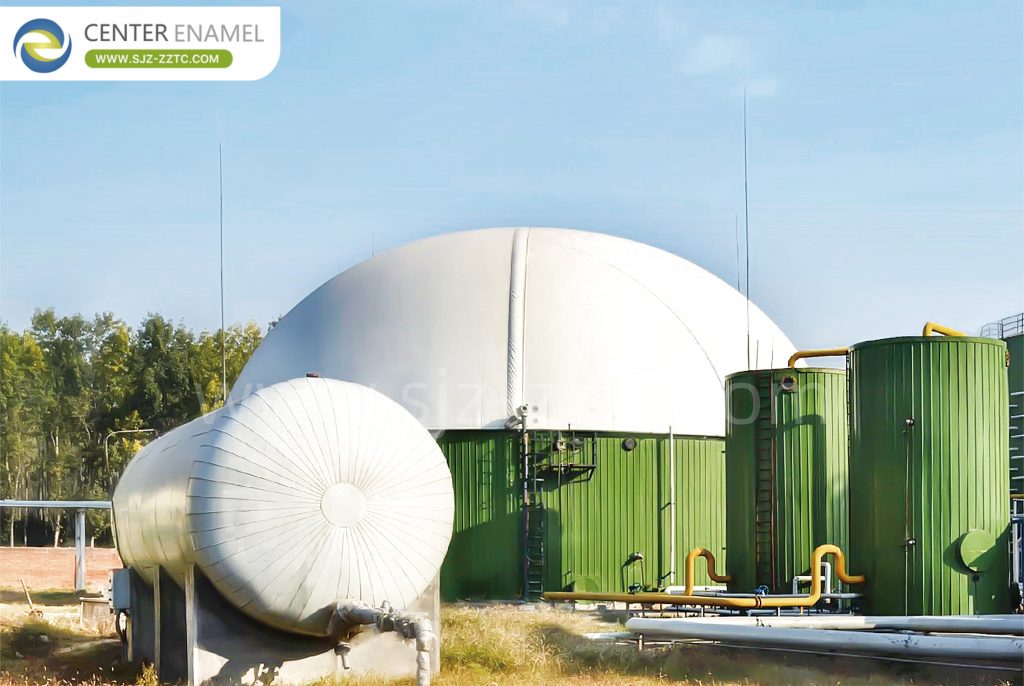
Myanmar’s food processing industry is growing rapidly as one of the key agricultural economies in Southeast Asia. The sector covers rice milling, edible oil, seafood processing, fruit and vegetable canning, beverage production, and cassava starch processing. With rising domestic consumption, growing export demand, and government support for agricultural industrialization, the industry has become an important part of Myanmar’s manufacturing development. However, the rapid expansion of production has brought a sharp increase in high-concentration organic wastewater discharge. Therefore, Food Processing Wastewater Treatment Project has become a necessary condition for enterprises to meet national environmental regulations, control operating costs, and achieve sustainable production.
Center Enamel (Shijiazhuang Zhengzhong Technology Co., Ltd) is a globally leading EPC Contractor focusing on high-concentration organic wastewater treatment and biogas engineering. We provide full-process turnkey solutions for Myanmar’s food processing industry, with mature UASB Process as the core technology, supported by high-quality GFS Tanks and professional engineering services. Our solutions help local food enterprises achieve stable effluent compliance, efficient biogas energy recovery, and long-term stable operation. This article introduces the characteristics of Myanmar’s food wastewater, policy environment, core technologies, EPC advantages, and successful cases to provide a reliable reference for local enterprises.
Overview of Myanmar Food Processing Industry and Wastewater Treatment Challenges
Myanmar’s food processing industry is dominated by rice milling, edible oil, seafood, cassava starch, and fruit and vegetable processing. These industries produce large volumes of high-organic, high-suspended solid wastewater with rapid acidification. The Myanmar Ministry of Natural Resources and Environmental Conservation (MONREC) has issued strict industrial wastewater discharge standards to protect rivers, lakes, and agricultural water resources. Enterprises that fail to build a complete and stable Food Processing Wastewater Treatment Project face fines, production suspension, and license revocation.
Food processing wastewater in Myanmar has typical characteristics:
High organic load: COD ranges from 8,000 to 40,000 mg/L, mainly from starch, sugar, fat, and protein.
High suspended solids (SS): Residues and sediment easily cause pipeline blockage and equipment wear.
Rapid acidification: Carbohydrate fermentation quickly lowers pH and inhibits microbial activity.
Flow and concentration fluctuation: Seasonal raw material supply leads to unstable loading.
Good biodegradability: Highly suitable for anaerobic treatment with high efficiency.
For Myanmar’s food processing enterprises, cost-effectiveness, stable operation, and easy maintenance are key requirements. Among all anaerobic technologies, UASB Process is the most suitable choice due to its mature technology, low investment, and stable performance.
Generation and Hazards of Food Processing Wastewater
Food processing wastewater is generated from raw material washing, peeling, cutting, blanching, fermentation, refining, and equipment cleaning. Although different products have different water quality, they share common pollution features:
High organic content consumes dissolved oxygen in water, causing eutrophication and killing aquatic life.
High suspended solids cause system blockage, increased maintenance, and unstable operation.
Acidification corrodes ordinary concrete and steel structures, shortening service life.
Fluctuating loading affects treatment efficiency and increases operational risks.
Without professional treatment, wastewater will seriously damage Myanmar’s water ecological environment, affect drinking water safety, and violate environmental laws. Thus, a complete Food Processing Wastewater Treatment Project is essential for every food enterprise.
Core Technology: UASB Process for Myanmar Food Processing Wastewater Treatment Project
UASB Process (Upflow Anaerobic Sludge Blanket) is the most widely used and mature anaerobic technology for food processing wastewater in Myanmar. It has become the preferred solution for local enterprises due to high efficiency, low cost, and stable operation.
Advantages of UASB Process
High treatment efficiency: Forms high-activity granular sludge to efficiently degrade soluble organic matter, with COD removal rate up to 80%–90%.
Low investment and operation cost: No mechanical stirring equipment, simple structure, low energy consumption, and less excess sludge.
Stable and reliable: Mature three-phase separator realizes automatic sludge reflux, maintaining high sludge concentration and stable operation.
Strong adaptability: Suitable for tropical climate, easy startup, and convenient maintenance.
Biogas recovery: Converts organic matter into methane-rich biogas for factory heating, drying, or power generation, realizing energy recycling.
Application Scenarios
UASB Process is widely used in rice milling, edible oil, beverage, sugar, seafood, and starch processing wastewater in Myanmar, especially for medium-sized and large-scale food factories pursuing cost-effective solutions.
Center Enamel provides a complete set of anaerobic treatment processes to meet different wastewater conditions in Myanmar:
CSTR Process: Suitable for high-solid and high-impurity food wastewater with full mechanical stirring.
IC Process: High-rate technology with small footprint for large-scale industrial parks.
USR Process: Simple structure, anti-clogging, suitable for high-SS wastewater.
Core Equipment: GFS Tanks Matching UASB Process
Center Enamel’s GFS Tanks (Glass-Fused-to-Steel Tanks) are the ideal reactor and storage containers for UASB Process, widely used in Myanmar’s wastewater projects.
Advantages of Center Enamel GFS Tanks
Super corrosion resistance: Fused at over 820°C, resistant to pH 1–14, adapting to acidic and corrosive food wastewater.
Strong weather resistance: Resistant to tropical high temperature, humidity, and UV, with long service life.
Fast installation: Factory-prefabricated, bolted assembly, no on-site welding, short construction period.
Compact structure: Vertical design saves land area, suitable for factory sites with limited space.
Seismic performance: Bolted structure has good seismic resistance, adapting to local geological conditions.
Center Enamel: Reliable EPC Contractor for Myanmar Food Processing Wastewater Treatment Project
As a professional EPC Contractor, Center Enamel provides full-process one-stop services for Food Processing Wastewater Treatment Project in Myanmar, covering design, production, transportation, installation, commissioning, training, and after-sales support.
Core Advantages
Customized solutions: Design targeted systems based on water quality, flow, and site conditions, with UASB Process as the core.
Strong engineering capacity: Asia’s largest GFS tank manufacturing base ensures stable quality and on-time delivery.
Strict quality control: Comply with ISO, AWWA, NSF/ANSI 61 standards; each plate passes 1500V spark test.
Patented technology: 200+ patented enamel formulas provide superior corrosion resistance.
Rich overseas experience: Familiar with Southeast Asian policies, geology, and construction habits.
Full-life cycle service: Continuous support to ensure long-term stable operation.
Efficient Installation & Construction Process
Center Enamel’s construction system is optimized for Myanmar’s project sites:
Hydraulic jacking technology: Top-down installation without high-altitude scaffolding.
Bolted assembly: No on-site welding, avoiding quality risks in high-humidity environment.
Fast commissioning: No curing period, enabling early operation and investment recovery.
Localized cooperation: Collaborate with local teams to ensure smooth construction.
Typical Successful Project Cases
Case 1: Hunan Food Wastewater Treatment Project
Tank Dimensions: φ14.52 × 16.8 m (H) — 2 Units
Total Volume: 5,560 m³
Completion Date: 2024
Case 2: Jiangxi Food Wastewater Treatment Project
Tank Dimensions:
φ7.64 × 12 m (H) — 1 Unit Unit
φ8.41 × 9.6 m (H) — 1 Unit
Total Volume: 1,083 m³
Completion Date: 2025
Myanmar’s food processing industry is in a critical stage of rapid development and green upgrading. Food Processing Wastewater Treatment Project is the key to environmental compliance and circular economy. As a professional EPC Contractor, Center Enamel provides stable, economical, and reliable solutions with mature UASB Process and high-quality GFS Tanks. We help enterprises achieve stable wastewater discharge, biogas energy recycling, and long-term operational benefits. Center Enamel will continue to support the sustainable development of Myanmar’s food processing industry with professional technology and full-process services.