
Liquid Digestate Complete Guide: Definition, Sources, and Treatment Methods Explained
Liquid digestate is the nutrient-rich liquid fraction that remains after the anaerobic digestion of organic materials in a biogas plant. When microorganisms break down organic matter without oxygen, they produce biogas-primarily methane and carbon dioxide-and leave behind a residual slurry called digestate. This digestate can be mechanically separated into a solid fraction and a liquid fraction. The liquid portion, often referred to as liquid digestate or digester effluent, is a dilute but valuable stream containing plant-available nitrogen, phosphorus, potassium, and trace minerals.
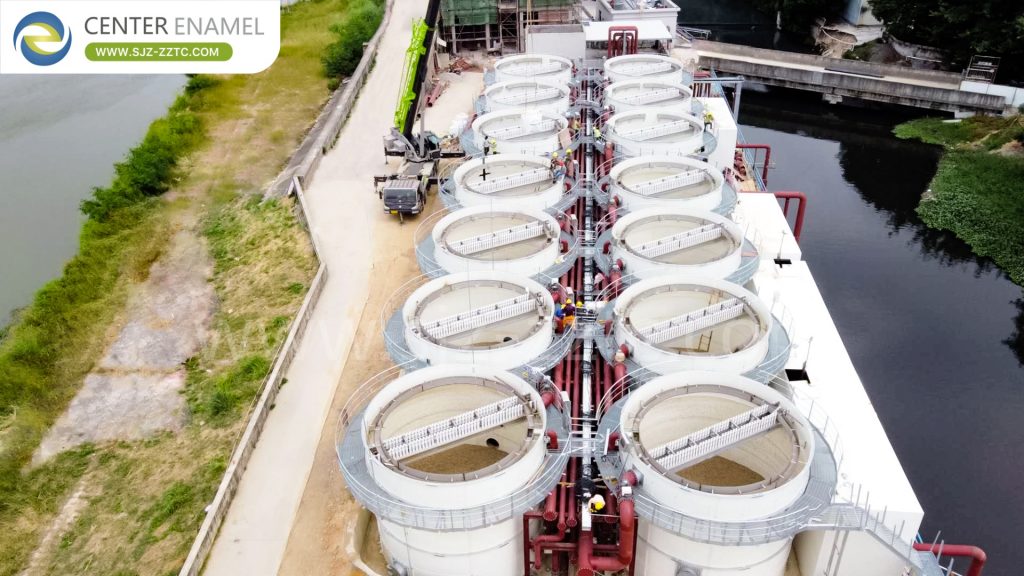
Unlike synthetic fertilizers, the nutrients in liquid digestate are largely mineralized, meaning plants can absorb them quickly, while a portion remains in organic form for slower release. This dual availability makes liquid digestate a promising bio-fertilizer, though its high water content and variable composition present handling and environmental challenges that require thoughtful treatment.
| Parameter | Typical Concentration |
| Total Solids | 10,000 – 20,000 mg/L |
| Suspended Solids | 4,000 – 6,000 mg/L |
| Ammonia | 1,000 – 3,000 mg/L |
| Phosphorus | 1,000 – 10,000 mg/L |
| Potassium | 5,000 – 15,000 mg/L |
| BOD | 5,000 – 15,000 mg/L |
Where Does Liquid Digestate Come From?
Liquid digestate originates from the anaerobic digestion process itself. Biogas plants accept a wide range of feedstocks-livestock manure, food waste, sewage sludge, energy crops, and industrial organic residues-and digest them in sealed reactors. After digestion, the effluent is discharged and typically passed through a solid-liquid separator such as a screw press or centrifuge. The solid fraction can be composted or dried, while the liquid fraction becomes the liquid digestate that demands further management.
The composition of liquid digestate depends heavily on the feedstock. Manure-based digestate tends to be rich in ammonia nitrogen, while food-waste digestate may carry higher salts and organic load. In Europe, regulatory attention has focused on manure-derived liquid digestate because its nitrogen content can substitute for synthetic fertilizers, potentially reducing farmers’ dependence on imported nutrients.
Treatment Method 1: Return to Farmland
The most direct and historically common use of liquid digestate is land application as a bio-fertilizer. Farmers inject or spray the liquid onto fields, where crops uptake the dissolved nitrogen, phosphorus, and potassium. This approach closes the nutrient loop: crops feed animals or humans, waste is digested, and nutrients return to the soil.
However, direct land application faces constraints. Liquid digestate is bulky-mostly water-making transport expensive beyond a short radius. Over-application can leach nitrate into groundwater and emit ammonia. The European Commission has proposed giving member states more flexibility to allow certain manure-based liquid digestates to count under the Nitrates Directive’s RENURE rules, recognizing their fertilizer value while maintaining environmental safeguards. Timing matters too: application during growing seasons maximizes nutrient uptake and minimizes runoff risk.
Treatment Method 2: Biological Treatment
Biological treatment uses microorganisms to reduce the organic load and stabilize liquid digestate before discharge or reuse. Aerobic treatment, for example, introduces oxygen to encourage bacteria that consume residual biodegradable matter, lowering chemical oxygen demand (COD) and reducing odor potential. Research has shown that aerating liquid digestate can also strip out hydrogen sulfide, improving safety and reducing corrosion in downstream equipment.
More advanced biological systems combine anaerobic and aerobic stages. A thermophilic anaerobic membrane bioreactor (tAnMBR) can polish liquid digestate while recovering additional biogas, though ammonia inhibition must be managed-often through pre-stripping. Biological treatment is energy-intensive compared to land application but becomes necessary when local land is unavailable or when discharge standards apply.
Treatment Method 3: Ecological Treatment
Ecological treatment harnesses natural processes-plants, soil, and microbial communities-to polish liquid digestate with minimal chemical inputs. Constructed wetlands are a leading example. In a vertical subsurface flow wetland, liquid digestate percolates through gravel, clay aggregate, and sand planted with wetland species. Microbes and plant roots remove organic matter, ammonium, phosphate, and even trace metals and antibiotics.
Lab-scale studies have reported impressive performance: over 98% removal of ammonium and phosphate, 85–97% removal of organic matter, and substantial reduction of antibiotic resistance genes. Constructed wetlands are low-cost and decentralized, making them attractive for smaller biogas plants or rural settings where advanced treatment infrastructure is impractical. The trade-off is land area-wetlands require a footprint and residence time of days to weeks.
Treatment Method 4: Concentration and Drying
When transport distance is a barrier to land application, concentration and drying reduce the water content of liquid digestate, producing a more transportable fertilizer product. Thermal drying, often powered by waste heat from the biogas plant’s CHP engine, evaporates water and yields a dried solid or granule rich in nitrogen and phosphorus. Ammonia loss during drying can be minimized by lowering pH before the process.
Concentration can also involve membrane processes that separate water from nutrients, but thermal drying remains the most straightforward route to a stable, stackable product. The resulting material resembles compost or dried fertilizer and can be sold or blended into soil amendments. The energy requirement is the main operating cost, which is why coupling drying with waste-heat recovery makes economic sense for many biogas facilities.
Treatment Method 5: Membrane Separation
Membrane separation uses physical barriers with microscopic pores to fractionate liquid digestate into clean water, nutrient concentrates, and sometimes additional biogas. Ultrafiltration and reverse osmosis are commonly deployed in series: ultrafiltration removes suspended solids and macromolecules, while reverse osmosis concentrates dissolved salts and nutrients into a small volume while producing high-quality permeate.
More advanced configurations combine membrane contactors with ammonia stripping to recover nearly 100% of residual ammonium from the liquid. The concentrated nutrient stream can become a liquid fertilizer product, and the recovered water can be reused in the plant or discharged. Membrane systems have a small footprint and precise separation capability, but they demand pretreatment to prevent fouling and consume electricity for pumping and pressure generation.
Treatment Method 6: Emission to River
Discharging treated liquid digestate to a river or surface water is the most regulated and least common endpoint. It requires the digestate to meet strict effluent standards for organic matter, nutrients, and pathogens-conditions rarely achievable without combining multiple treatment steps. A typical discharge train might include solid separation, biological nitrification-denitrification, membrane filtration, and disinfection.
The environmental sensitivity of the receiving water body dictates the permitted limits. In practice, direct river discharge is reserved for large facilities with dedicated wastewater treatment infrastructure or for situations where land application and reuse options are exhausted. For most biogas plants, liquid digestate is a resource to be recovered, not a waste to be discarded.
Key Considerations for Choosing a Treatment Method
Selecting a liquid digestate treatment strategy depends on local regulations, land availability, energy costs, and the desired end product. The table below summarizes how the six methods compare.
| Method | Best Suited For | Key Advantage | Main Constraint |
| Return to farmland | Plants near agricultural land | Lowest cost; closes nutrient loop | Transport distance; application timing |
| Biological treatment | Facilities needing COD/BOD reduction | Stabilizes effluent; reduces odor | Energy demand; process control |
| Ecological treatment | Rural or space-available sites | Low cost; removes emerging contaminants | Large land footprint; slower |
| Concentration & drying | Plants with waste heat available | Produces transportable fertilizer | Thermal energy input |
| Membrane separation | Space-constrained or high-value recovery | Produces clean water and concentrate | Fouling; electricity demand |
| Emission to river | Large facilities with advanced treatment | Ultimate disposal option | Strict permitting; high treatment cost |
Frequently Asked Questions
Is liquid digestate safe to use on crops?
Yes, when applied according to agronomic rates and local regulations. Liquid digestate contains plant-available nutrients and beneficial microbes. However, raw digestate may carry pathogens or antibiotic residues, so some regions require additional treatment or waiting periods before harvest. Understanding feedstock sources and treatment history is essential for safe use.
Can liquid digestate replace chemical fertilizer entirely?
It can supply most macronutrients, but the ratio of nitrogen, phosphorus, and potassium may not match every crop’s needs at every growth stage. Farmers often supplement with targeted mineral fertilizers. Regulatory frameworks like the EU’s proposed RENURE rules aim to recognize liquid digestate’s fertilizer value while managing environmental risks.
What is the most environmentally friendly treatment method?
There is no single answer. Return to farmland and ecological treatment have low energy demands and support circular nutrient cycles. Membrane separation and biological treatment offer more controlled discharge but consume electricity. The “best” method depends on local conditions-proximity to farmland, energy sources, and water quality goals.
Need help selecting a liquid digestate treatment solution for your biogas project? Contact our engineering team to discuss your feedstock, site constraints, and discharge requirements.