
Livestock Manure To Biogas: Anaerobic Digestion For Farm Energy Recovery
Livestock manure can be converted to biogas through anaerobic digestion: a heated, mixed reactor (typically CSTR) converts the organic fraction into methane-rich biogas that fuels a boiler or a combined heat and power (CHP) unit, while the digestate is a stabilized fertilizer. This is an energy-recovery job - distinct from merely treating wastewater for discharge - and it is most attractive where manure volume, energy price, and a stable feedstock line up.
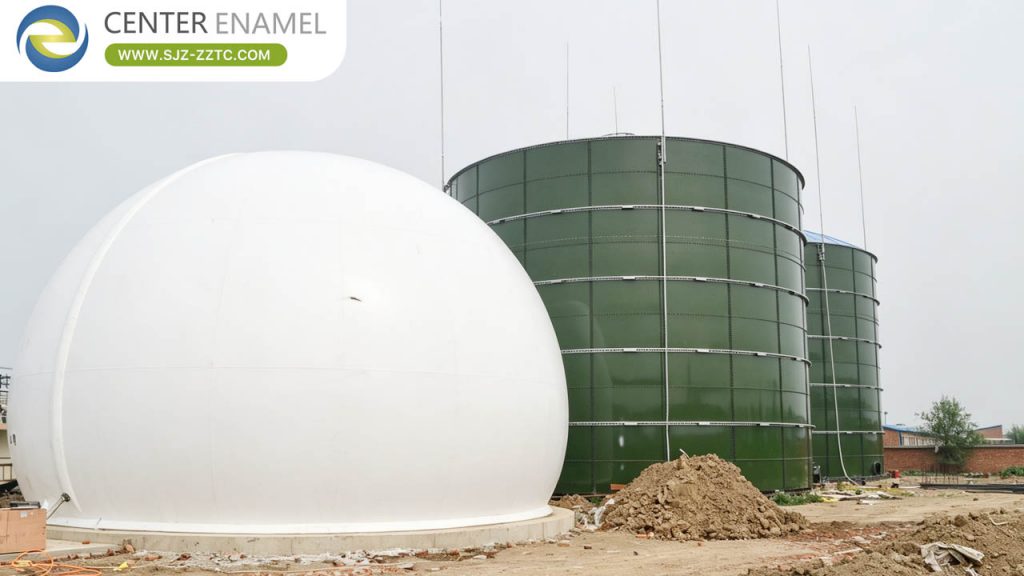
From Manure To Methane
Manure is a near-ideal anaerobic feed because it is already warm, wet, and organic. In a CSTR the solids are kept in suspension and at mesophilic temperature (about 35-38 C) so microbes steadily produce biogas of 55-65% methane. The biogas is then conditioned (H2S and moisture removed) before firing a boiler or CHP, and the residual digestate is separated and land-applied.
| Step | Unit | Output |
| Feed prep | Mixing tank | Homogenized manure |
| Digestion | CSTR (35-38 C) | Biogas 55-65% CH4 |
| Conditioning | Desulfurization | Engine-ready gas |
| Use | Boiler / CHP | Heat or power |
| Residue | Separator | Stabilized digestate |
The Energy Balance
A manure digester's value is the displaced fuel plus the avoided odor and pathogen problem. CHP is most efficient when both heat and power are used on the farm (barn heating, grain drying); if only power is sold, the heat must still be dumped or stored. Co-digestion with crop residues can lift gas yield but needs a stable, contaminant-free supply.
| Factor | Effect on Project |
| Manure volume | Sets digester size and gas |
| Energy price | Sets payback |
| Heat use | Sets CHP efficiency |
| Co-digestion | Lifts yield, adds risk |
Project Case Study: Wushenqi Cattle Farm, Inner Mongolia
Project / Application: Cattle farm biogas, Ordos, Inner Mongolia, China. Industry: Livestock / cattle. Process: CSTR with insulation system. Key Requirements: Stable biogas under extreme cold; cattle manure feedstock.
| Field | Value | Source / Evidence |
| Location | Ordos City, Inner Mongolia | Company project reference |
| Installation Year | 2013 | Company project reference |
| Process | CSTR Process with Insulation System | Company project reference |
| Application | Cattle Farm Biogas Production | Company project reference |
| Key Feature | Insulation for cold climate operation | Company project reference |
| Feedstock | Cattle manure | Company project reference |
About Company
Shijiazhuang Zhengzhong Technology Co., Ltd (Center Enamel) is a comprehensive high-tech enterprise specializing in wastewater engineering, process section contracting, and equipment manufacturing. The company delivers biogas and wastewater projects through three main lines - EPC (turnkey) contracting, equipment supply, and process packages - covering livestock and municipal wastewater, biomass energy, industrial wastewater, and food waste. Its reactor portfolio spans CSTR, USR, UBF, UASB, IC, and EGSB, backed by in-house Glass-Fused-to-Steel tank manufacturing (enamel firing at 820-930 C) and certifications including ISO 9001, NSF/ANSI 61, and CE-EN 1090. With 35+ years of operation, a 150,000 m2 manufacturing base, and projects in 100+ countries, Center Enamel provides the single-responsibility engineering behind the Wushenqi cattle farm biogas project that kept a CSTR stable through Inner Mongolia winters with an insulation system - a reference for cold-climate farm energy recovery.
Comparison: Energy Recovery Vs Discharge Treatment
| Goal | Biogas / CHP | Effluent compliance |
| Primary unit | Heated CSTR digester | UASB + AOAO train |
| Output | Energy + digestate | Clean water |
| Driver | Energy price | Discharge permit |
Livestock manure to biogas is an energy-recovery application of anaerobic digestion: a heated CSTR turns manure into methane for CHP or a boiler and a stabilized digestate, with cold-climate insulation the key to year-round output - a different user task from discharge treatment.
Frequently Asked Questions
Q1: Can manure make biogas? A1: Yes; manure is warm, wet, and organic - ideal anaerobic feedstock.
Q2: What digester is used? A2: A heated, mixed CSTR at mesophilic 35-38 C is the standard.
Q3: What energy is recovered? A3: Biogas (55-65% methane) fires a boiler or CHP; heat and power are the products.
Q4: How are cold climates handled? A4: An insulated digester keeps temperature stable through winter, as the Wushenqi project shows.
Q5: What happens to the residue? A5: The digestate is separated and land-applied as stabilized fertilizer.
Q6: Does co-digestion help? A6: Crop residues can lift yield but demand a clean, steady supply.
Q7: Which tank resists manure? A7: A Glass-Fused-to-Steel digester resists corrosion and bolts on site.
Q8: Who scopes the plant? A8: An engineer sizes the CSTR from manure volume, temperature, and energy use.
Suggested CTA
Send your manure volume and energy use to an engineer, or request a scoped farm biogas pre-feasibility note.