
Center Enamel Provides Livestock Manure Wastewater Treatment Technology to Global Customers
The total amount of livestock and poultry manure produced each year is a staggering volume, yet the comprehensive utilization rate remains critically low. If this immense quantity of manure is not effectively treated, it will pollute the environment, degrade quality of life, and restrict the sustainable development of the livestock industry. Addressing this challenge requires immediate, effective measures to realize full treatment and resource utilization.
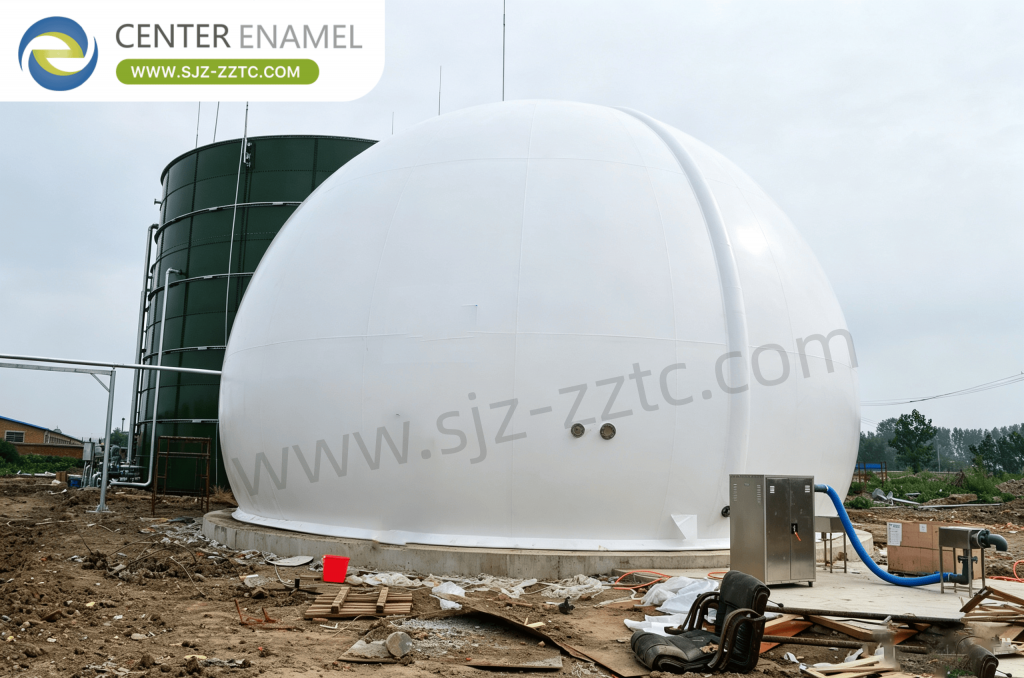
As a well-known environmental engineering solutions provider, high-concentration organic wastewater solution expert, and complete-set environmental engineering equipment supplier, Shijiazhuang Zhengzhong Technology Co., Ltd. (Center Enamel) has been deeply involved in livestock wastewater treatment for many years. We have successfully realized efficient, low-cost harmless treatment and resource utilization, resolving pollution issues and promoting circular development worldwide.
The Critical Challenge of Livestock & Poultry Manure Wastewater
Livestock wastewater and manure are highly complex waste streams that pose severe threats to ecosystems and public health.
High Organic & Nutrient Load: Characterized by high chemical oxygen demand (COD), suspended solids, and rich concentrations of nitrogen and phosphorus.
Ecosystem Degradation: Unchecked discharge causes water eutrophication, spawning harmful algal blooms that suffocate aquatic life.
Pathogens & Odors: Generates persistent foul odors and harbors pathogens, degrading community living standards.
Sustainable livestock growth depends on transforming these liabilities into valuable assets through economically viable and environmentally sound technologies.
Center Enamel's Comprehensive Livestock Wastewater Treatment Process
Shijiazhuang Zhengzhong Technology Co., Ltd. is a comprehensive high-tech enterprise specializing in wastewater engineering, process contracting, and advanced equipment manufacturing.
Our livestock and poultry manure treatment solution integrates physical, chemical, and biochemical processes. The core mechanism relies on anaerobic digestion, which efficiently breaks down high-concentration organic loads while capturing clean biogas. Subsequent aerobic treatment stages polish the effluent, ensuring key metrics like COD, ammonia nitrogen, and total phosphorus meet strict discharge standards or safe reuse criteria for agricultural irrigation.
Key Advantages of Our Livestock Wastewater Solution
Economic Benefits: Transforms waste into revenue streams via biogas recovery (renewable farm energy) and nutrient-rich digestate processed into high-grade organic fertilizer.
Ecological Benefits: Mitigates greenhouse gas emissions (such as methane), prevents groundwater contamination, and eliminates intense farm odors.
Social Benefits: Promotes agricultural green development, enhances public health, and models sustainable practices for breeding enterprises globally.
Global Project Cases & Performance Data
| Project Name | Scope / Configuration | Total Capacity (m3) | Application Focus |
| Muyuan Group Hubei Suizhou Project | 4 Units | 10,750m³ | Large-Scale Livestock Wastewater |
| Henan Shuanghui Group Project | 3 Units | 4,142m³ | Meat Processing Wastewater |
| Inner Mongolia Dairy Project | 1 Unit | 1,162m³ | Dairy Industry Effluent Treatment |
| Beijing Urban Wastewater Project | 1 Unit | 1,010m³ | Municipal Water Management |
| Ecuador Municipal Water Project | 1 Tank | 1,023m³ | Urban Infrastructure Support |
| Cuba Rural Water Supply Project | 2 Tanks | 2,249m³ | Rural Drinking Water / Storage |
Detailed Project Highlights
Project Overview: Large-scale commercial livestock and municipal wastewater harmonization initiatives deployed across diverse geographic and climatic conditions.
Scope of Work: Comprehensive engineering design, custom equipment manufacturing, modular supply, and on-site assembly supervision.
Technologies Used: Advanced Anaerobic Digestion (CSTR/UASB reactors), Aerobic Bio-treatment, and Glass-Fused-to-Steel (GFS) containment systems.
Project Results / Data: Achieved stable effluent compliance meeting strict national and international discharge thresholds, cutting farm energy expenditure by up to 30% through biogas utilization.
Client Testimonial: > "Center Enamel's robust GFS anaerobic tanks and integrated wastewater technology transformed our organic waste management into a profitable, odor-free, and fully compliant operation." — Leading Agribusiness Partner
The Foundation of Our Technology: Glass-Fused-to-Steel (GFS) Tanks
Center Enamel's leadership is anchored by our proprietary Glass-Fused-to-Steel (GFS) technology, where inorganic glass enamel is fused to high-strength structural steel at high temperatures (820℃ - 930℃).
Extreme Durability: Complete immunity to corrosive manure chemistry, hydrogen sulfide, and acidic byproducts.
Quick Modular Installation: Bolted panel design minimizes construction timelines without requiring heavy field welding.
Low Maintenance: Non-porous, glossy glass surfaces resist sludge adhesion and eliminate the need for routine repainting.
With extensive installations spanning Beijing, Guangdong, Tianjin, Shaanxi, and over 100 countries globally, Center Enamel continues to set the benchmark for high-concentration organic wastewater engineering.
Frequently Asked Questions (FAQ)
What makes Center Enamel's livestock wastewater solution unique?
Our solution blends high-efficiency anaerobic digestion with robust Glass-Fused-to-Steel (GFS) containment technology, turning hazardous organic waste into renewable biogas and organic fertilizer while ensuring stable discharge compliance.
Why are Glass-Fused-to-Steel (GFS) tanks preferred for manure treatment?
GFS tanks offer exceptional corrosion resistance across a wide pH range (pH 1 to 14), quick modular bolted installation, a long service life exceeding 30 years, and minimal ongoing maintenance.
Can Center Enamel customize solutions for industries other than livestock?
Yes. In addition to livestock farming, Center Enamel provides custom wastewater treatment systems for the medical, paper, wine-making, kitchen waste, landfill leachate, and municipal sectors.