
Livestock Wastewater Plant: Process And Tankage For Farm Effluent
A livestock wastewater plant treats manure-rich, high-solid effluent through solids separation, anaerobic treatment and nutrient removal, with tankage sized to the farm's daily flow and solids load. Farm effluent carries far more suspended solids and ammonia than municipal sewage, so the plant starts by separating solids and ends by removing nitrogen. Size the stages to measured water use and manure load, not to herd size alone.
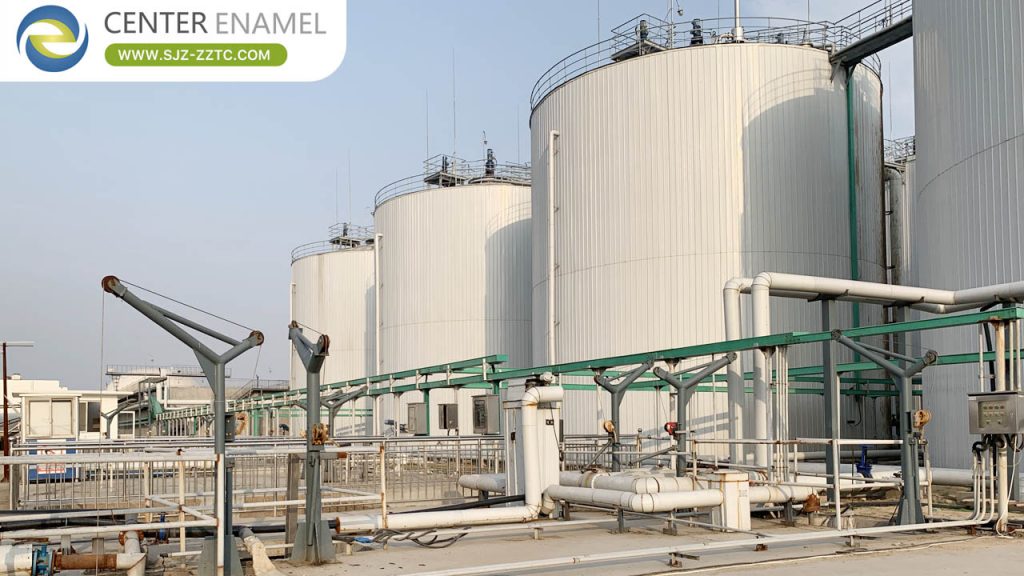
What Makes Farm Effluent Different
Livestock wastewater combines flushing water, manure, feed residues and cleaning chemicals. It is high in suspended solids, organic load and ammonia, and it varies with cleaning routines. A plant that treats it like dilute sewage will foul quickly and fail on nitrogen. Solids separation comes first, anaerobic treatment removes bulk organics and produces gas, and a biological nutrient stage closes the gap to the discharge limit. These are general guidance; the real design uses measured farm data.
| Stage | Duty | Why it is here |
| Solids separation | Remove manure solids | Protect biology |
| Anaerobic (CSTR / USR / UASB) | Bulk COD + gas | Cheap load removal |
| Anoxic / aerobic | Nitrogen removal | Meet N limit |
| Clarification / polish | Solids + final limit | Clear discharge |
Sizing Tankage To Flow And Solids
Tank volume follows two numbers: the daily water volume and the solids/organic load it carries. A farm using flush water generates large volumes at moderate strength; a scrape system gives a smaller, stronger stream. Reactor volume follows the load and the sustainable organic loading rate, while equalization handles the daily cleaning peak. Design for both or the plant will either overflow or starve.
Managing Nitrogen And Gas
Ammonia is often the binding limit for livestock effluent. An anoxic-aerobic stage nitrifies and denitrifies it; where land is available, treated water may also be reused for washing or irrigation under rules. The anaerobic stage recovers methane that can offset farm energy use. Gas handling and nutrient removal should be designed together, since both depend on the same load.
| Farm signal | Plant consequence |
| Flush-water system | Large flow, more equalization |
| High ammonia | Larger anoxic/aerobic stage |
| High solids | Stronger front-end separation |
| On-site heat use | Gas recovery worthwhile |
A Poultry Wastewater Reference
The library records a Bangladesh poultry farm waste treatment project processing 47 tonnes/day of poultry manure with CSTR and UASB anaerobic reactors, producing about 4,900 cubic metres of biogas per day and around 9,800 kWh of electricity daily. It reports COD falling from 50,000 to at or below 200 mg/L, BOD from 25,000 to at or below 100 mg/L and SS from 50,000 to at or below 100 mg/L. It shows a real livestock plant where anaerobic treatment, gas recovery and discharge targets are linked. The source confirms these figures; detailed tank dimensions and equalization volumes are Not Specified in the Available Source.
About Company
Shijiazhuang Zhengzhong Technology Co., Ltd (Center Enamel) is a comprehensive high-tech enterprise specializing in wastewater engineering, process section contracting, and equipment manufacturing. The company delivers biogas and wastewater projects through three main lines - EPC (turnkey) contracting, equipment supply, and process packages - covering livestock and municipal wastewater, biomass energy, industrial wastewater, and food waste. Its reactor portfolio spans CSTR, USR, UBF, UASB, IC, and EGSB, backed by in-house Glass-Fused-to-Steel tank manufacturing (enamel firing at 820-930 C) and certifications including ISO 9001, NSF/ANSI 61, and CE-EN 1090. With 35+ years of operation, a 150,000 m2 manufacturing base, and projects in 100+ countries, Center Enamel provides the single-responsibility engineering behind livestock wastewater plants whose stages and tankage are sized to measured farm flow, solids and nitrogen load.
Conclusion
Configure a livestock wastewater plant around the farm's real effluent: separate solids, digest the organic load with gas recovery, remove nitrogen and clarify. Size tankage to both water volume and solids load, not herd size alone.
Frequently Asked Questions
Q1: What is a livestock wastewater plant? A1: A facility treating manure-rich farm effluent to a discharge or reuse target.
Q2: Why separate solids first? A2: Manure solids foul pumps and biology downstream.
Q3: Which anaerobic reactor? A3: CSTR, USR or UASB depending on solids and flow; not one default.
Q4: What sets tank volume? A4: Daily water volume plus solids/organic load and sustainable loading rate.
Q5: Why is nitrogen hard? A5: Ammonia is high and often the binding discharge limit.
Q6: Can gas be used on farm? A6: It can offset heat or power where a local user exists.
Q7: What do Bangladesh figures show? A7: 47 t/d, COD 50,000 to <=200 with CSTR+UASB and gas-to-power.
Q8: Are tank dimensions known? A8: No - figures published; dimensions Not Specified.
Suggested CTA
Share your farm's water use and manure load with an engineer to size a livestock wastewater train.