
Leading Livestock Wastewater Treatment Project EPC Contractor: Integrating GFS Tanks and UASB Process
Global livestock inventories such as swine remain stable. The US has developed technical models represented by integrated crop-livestock systems with on-field application and Comprehensive Nutrient Management Plans; Denmark, the Netherlands, and others have developed centralized biogas projects with digestate application systems. China's large-scale farms still have considerable room for improvement in supporting biogas project coverage, and digestate resource utilization rates lag behind advanced European levels. Greenhouse gas emissions from livestock account for a significant proportion of total global anthropogenic emissions, making manure management a critical battleground for agricultural carbon reduction. Latin American countries started later in manure management but are accelerating relevant infrastructure development.
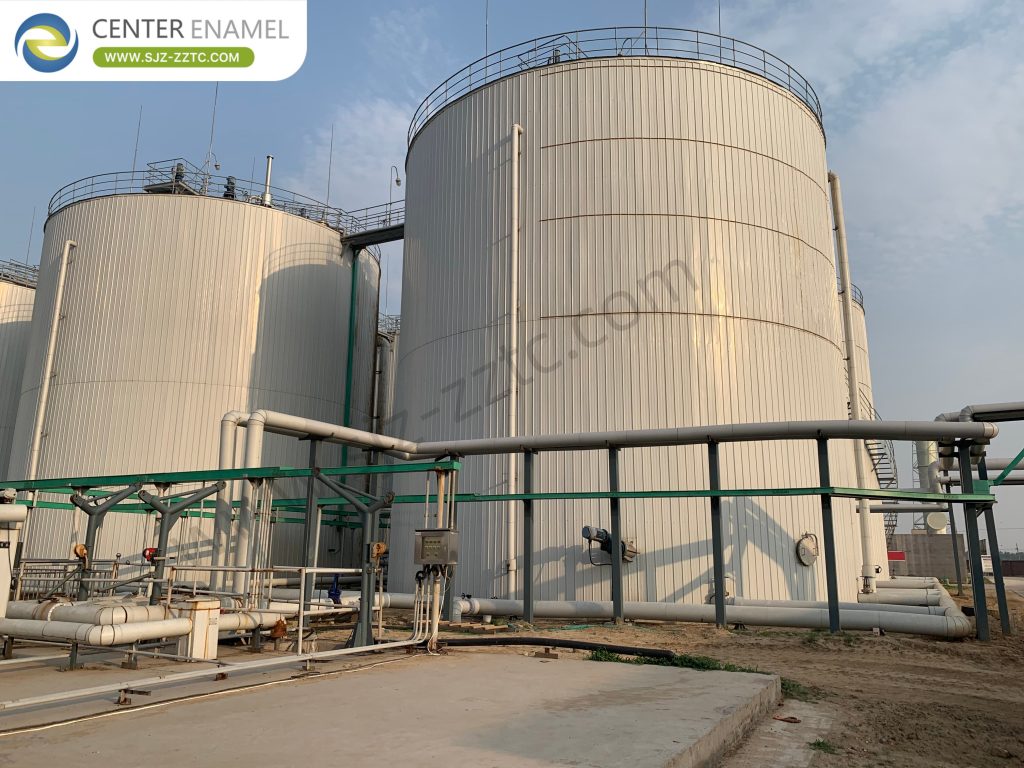
As regional environmental policies continue to evolve and tighten, agricultural enterprises face increasing pressure to modernize their waste management infrastructures. Transitioning toward comprehensive sustainability requires a strategic partner who can navigate complex regulatory environments. Engaging a professional Livestock Wastewater Treatment Project EPC Contractor ensures that these regional developments are met with cutting-edge engineering capabilities.
What is UASB Process?
UASB, or Upflow Anaerobic Sludge Blanket Reactor, is the benchmark mainstream technology for medium-to-high concentration soluble organic wastewater treatment. It requires no mechanical mixing or media carriers, relying on the upward flow of wastewater to suspend and expand granular sludge within the reactor, forming a stable sludge bed layer. Highly active anaerobic granular sludge efficiently degrades pollutants, with excellent settleability and high microbial concentration. UASB innovatively integrates reaction, sedimentation, and gas-liquid-solid separation functions, simplifying the anaerobic treatment process with advantages of high efficiency, energy savings, and compactness. It is widely used in various medium-to-high concentration soluble organic wastewater treatment applications.
At the heart of any high-performance agricultural facility lies a robust biological treatment mechanism designed to handle heavy organic loads. By optimizing biological degradation, operations can significantly reduce overall pollutant concentrations before final discharge or reuse. The integration of the UASB Process provides a compact, energy-saving solution that forms the core of modern wastewater treatment strategies.
Livestock Wastewater Sources
Livestock wastewater is the core agricultural pollution wastewater from large-scale poultry, livestock, and aquaculture operations, generated primarily during farming operations and facility cleaning. Poultry and livestock wastewater is the main component, including wash water from pig, cattle, and poultry housing, manure and urine seepage, and facility washdown-rich in livestock metabolic residues. Aquaculture wastewater comes from periodic pond water exchange and pond cleaning, with feed residues and metabolic waste as pollutants. Wastewater is primarily generated in peri-urban and rural farming areas. Small-scale farmers lack adequate collection facilities, with wastewater discharged directly to land and water. Large-scale farms have collection systems for centralized treatment, with water production varying with production cycles and cleaning frequency.
Understanding the specific origins and fluctuations of farm waste is essential for sizing downstream containment and reaction systems accurately. Because waste characteristics vary widely across different production cycles, treatment configurations must remain flexible and resilient. Proper characterization allows engineers to tailor every component of the installation to match the exact demands of the site.
Center Enamel Development History
Center Enamel has been deeply engaged in the environmental bolted storage equipment field for over 30 years. Starting with proprietary enamel anti-corrosion material technology, the company has gradually completed the full-industry-chain upgrade from a single tank manufacturer to a comprehensive environmental EPC service provider. Throughout its 30+ year history, the company has been recognized as a National High-Tech Enterprise, National Specialized and Sophisticated "Little Giant," Manufacturing Single Champion, and Provincial Green Factory. It has successfully delivered over 30,000 environmental projects globally, establishing itself as a leading enterprise in the global GFS tank storage industry. The company has fully integrated the entire chain from enamel frit R&D, intelligent environmental equipment manufacturing, to EPC project contracting-every business breakthrough has been achieved through proprietary core anti-corrosion technology.
Executing complex environmental projects requires decades of proven industry experience and a fully integrated operational model. Transitioning from a equipment manufacturer to a comprehensive service provider allows for seamless quality control from initial design to final handover. Utilizing reliable GFS Tanks ensures that storage facilities maintain structural integrity and chemical resistance over decades of continuous operation.
Center Enamel Professional Construction Team Manpower Reserve
Center Enamel has established its own domestic and international certified construction teams, with regular practical training on GFS tank installation and overseas construction standards for various countries. Domestically, regional construction teams cover multiple zones, capable of simultaneously deploying multiple teams for large tank farm projects. Internationally, cross-border professional installation teams are equipped to various country construction standards-sufficient manpower reserves ensure uninterrupted construction delivery for remote African sites, high-standard European/American facilities, and other projects.
Infrastructure delivery speed and precision depend heavily on the availability of certified, highly skilled installation personnel. Whether managing remote regional sites or high-standard metropolitan facilities, having dedicated manpower ensures that project timelines are consistently met. This meticulous approach to field execution safeguards project investments and minimizes operational downtime.
Center Enamel R&D Team
Center Enamel has built a full-chain professional team covering R&D, design, marketing, installation, and after-sales. The R&D team is led by national-level materials technology experts, specializing in enamel frit and tank anti-corrosion core technologies. External senior environmental engineering and mechanical structure engineers are retained to strengthen R&D capabilities, focusing on anti-corrosion coating formulations, specialty corrosion-resistant tanks, and anaerobic supporting integrated equipment-continuously breaking through industry technological barriers.
The team operates through proprietary laboratories with external university research collaboration-conducting year-round new material and new process durability pilot testing and long-term corrosion simulation testing. Specialized enamel formulations are iteratively developed for extreme conditions such as high-salinity wastewater, strong acid/alkali POME, and high-organic livestock manure-providing core technical support for the company's annual new invention and utility patents-building a proprietary material technology barrier.
Continuous innovation in materials science is what separates standard environmental equipment from world-class engineering solutions. Backed by rigorous laboratory testing and university collaborations, engineering teams can preemptively address aggressive chemical environments. This proactive research guarantees that structural components resist degradation even when subjected to highly corrosive agricultural slurries.
Center Enamel Innovative Material Technology
Center Enamel has independently developed over 200 anti-corrosion enamel formulations, with proprietary double-sided double-layer enameling technology-GFS tank anti-corrosion service life exceeds 30 years-far surpassing concrete and ordinary equipment-suitable for global high-corrosion wastewater and biogas fermentation conditions.
FAQ
What is the role of a Livestock Wastewater Treatment Project EPC Contractor?
A Livestock Wastewater Treatment Project EPC Contractor manages the entire lifecycle of an agricultural waste facility, covering engineering design, equipment procurement, and construction. They deliver turnkey solutions that ensure environmental regulatory compliance, seamless system integration, and optimized long-term operational efficiency.
How does the UASB Process enhance livestock waste management?
The UASB Process utilizes an upward-flowing wastewater design and an active granular sludge bed to degrade high-concentration organics effectively. It operates compactly without mechanical mixing, providing high energy savings, excellent shock load resistance, and reliable biogas recovery for agricultural applications.
Why are GFS Tanks preferred for agricultural wastewater projects?
GFS Tanks feature a high-temperature, double-sided enamel coating that delivers superior chemical resistance and a service life exceeding 30 years. They eliminate the spalling, leakage, and rebar corrosion risks common in concrete tanks, ensuring low-maintenance and durable containment.