
How Center Enamel Delivers Complete Livestock Wastewater Treatment Project Solutions with GFS Tanks
Global livestock inventories such as swine remain stable. The US has developed technical models represented by integrated crop-livestock systems with on-field application and Comprehensive Nutrient Management Plans; Denmark, the Netherlands, and others have developed centralized biogas projects with digestate application systems. China's large-scale farms still have considerable room for improvement in supporting biogas project coverage, and digestate resource utilization rates lag behind advanced European levels.
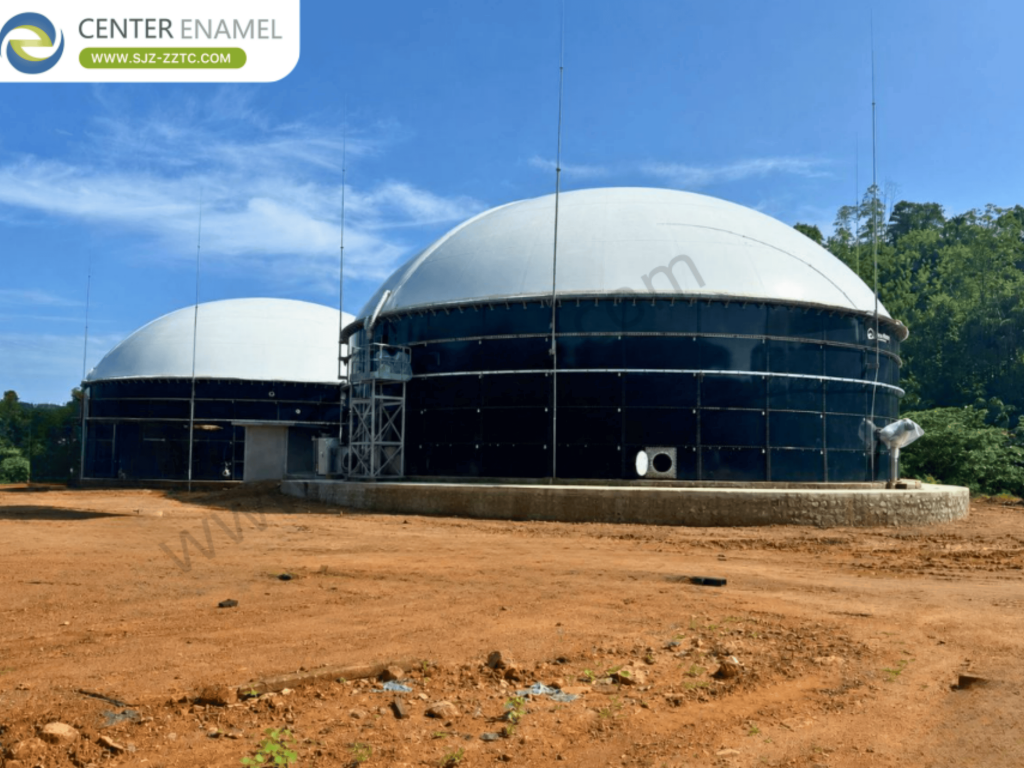
Greenhouse gas emissions from livestock account for a significant proportion of total global anthropogenic emissions, making manure management a critical battleground for agricultural carbon reduction. Latin American countries started later in manure management but are accelerating relevant infrastructure development. This uneven global progress means demand for reliable Livestock Wastewater Treatment Project delivery continues to grow across both mature and emerging markets.
Full-Process Factory Standardization for GFS Tanks: Quality Consistency Concrete Cannot Match
GFS Tanks are fully factory-prefabricated to standardized specifications, with finished product quality stability far exceeding cast-in-place concrete tanks. All concrete tank processes are completed in the open air, with rebar tying, concrete pouring, and curing heavily influenced by worker skill, temperature, and rainfall. Wall thickness, density, and strength vary significantly between batches, with hidden defects like honeycombing, voids, and insufficient wall thickness common-quality cannot be uniformly controlled. Center Enamel's GFS Tank steel panels, seals, and reinforcement components are all mass-produced in automated factories.
Steel stamping, high-temperature enameling, and dimensional cutting are all controlled by CNC equipment, with each panel's parameters and enamel thickness strictly following unified national standards. All components are uniformly packaged and transported to site, with assembly strictly following standardized construction drawings. Full-process quality inspection from raw materials to finished components ensures highly consistent product performance parameters, completely eliminating the uncontrollable quality risks of on-site concrete construction, with every tank delivering stable, consistent performance. This manufacturing discipline underpins the reliability of every Livestock Wastewater Treatment Project Center Enamel delivers.
USR Reaction Process: Step-by-Step Anaerobic Treatment of High-Solids Wastewater
High-solids organic wastewater, after simple pretreatment to remove large debris, is uniformly fed into the reactor through the bottom distribution system. The upward flow drives solid substrates and anaerobic sludge to slowly rise and thoroughly mix. In the sealed anaerobic environment, microorganisms sequentially hydrolyze and acidify, then methanogenically ferment, degrading macromolecular organic pollutants and generating biogas and treated water. Without complex separation structures, gentle hydraulic disturbance prevents clogging. The mixed liquor rises to the upper portion of the reactor where natural gas-liquid-solid separation occurs. Biogas is collected, effluent overflows, and solid sludge and unreacted substrate settle back to the lower reaction zone for continued reaction, with a small amount of aged sludge periodically discharged-continuous stable operation.
Livestock Wastewater Key Water Quality Characteristics: The "Four Highs" Challenge
Livestock wastewater is a typical high-concentration organic wastewater with "four highs"-high COD, high ammonia nitrogen, high total phosphorus, and high suspended solids-representing a very high pollution load. Livestock wastewater COD can exceed 8,000 mg/L, with high turbidity and suspended solids. Nitrogen and phosphorus levels far exceed discharge standards, being the primary cause of eutrophication. Wastewater is rich in manure, feed residues, and metabolic waste, readily turning black and odorous. Water quality fluctuates significantly with production cycles, seasons, and washing frequency. Aquaculture wastewater has lower pollutant concentrations but significant nitrogen and phosphorus accumulation issues, causing algal blooms and water quality deterioration with long-term discharge. These characteristics directly determine the treatment train configuration and equipment specifications required in each Livestock Wastewater Treatment Project.
Center Enamel's Smart Manufacturing Base Scale: 150,000 m² of Dual-Base Capacity
Center Enamel's core intelligent manufacturing base is located in Hebei Province, China, covering a total area of over 150,000 m², with a mature Phase I manufacturing facility and a Phase II high-end environmental equipment industrial park-dual-base synergy ensures stable production capacity. The base includes dedicated R&D office buildings, proprietary material laboratories, and finished product testing centers, with full-process quality control systems meeting ISO, NSF, CE, and other international standards. The facility operates to green manufacturing standards, certified as a Provincial Green Factory-balancing efficient production with energy conservation and emission reduction. The company has 6 marketing service centers across China, establishing a nationwide production-sales network ensuring stable global order delivery. The base is adjacent to expressway networks and major logistics hubs, with complete container shipping capabilities-supporting simultaneous large-scale tank projects globally. The base employs over 500 staff, with multiple parallel automated production lines-facility scale and production capacity firmly placing it among the global top tier of GFS Tank equipment manufacturers.
Center Enamel Design Team: Engineering Aligned with European and American Standards
The design team includes senior engineers registered in the Hebei Provincial Science and Technology Expert Database, with design standards aligned with strict European and American high-end equipment safety standards. The team can provide complete integrated design for differentiated overseas projects in livestock biogas, POME, municipal wastewater, hazardous waste storage, seawater desalination, and other sectors-covering tank structure, anti-corrosion and sealing systems, biogas piping, and anaerobic process integration.
Pre-design thoroughly investigates local seismic zone, wind pressure, soil bearing capacity, water quality corrosivity, and local environmental discharge standards-applying thickened panels, reinforced anchored bases, and optimized sealing and corrosion structures as needed. Complete customized equipment solutions can be tailored to customer plant area, wastewater load, treatment targets, and budget-balancing safety, economics, and local adaptation-providing compliant, stable, and highly adaptable equipment structural design support for global environmental projects. This design rigor is what allows each Livestock Wastewater Treatment Project to meet local code requirements without over-engineering.
Aluminum Geodesic Dome Roof: Lightweight, Long-Life Coverage for Biogas and Storage Tanks
The Aluminum Geodesic Dome Roof independently developed by Center Enamel is manufactured using high-strength aluminum alloy plates through integral stamping. It features a triangular grid spherical self-supporting structure, enabling large-span full coverage without internal support columns. Made of aluminum alloy, the roof offers excellent weather resistance and corrosion resistance, capable of long-term protection against acid rain, salt spray, and UV radiation, suitable for various extreme outdoor climate conditions.
The structural design complies with international AWWA D108 standards, with aluminum plate thickness, rib cross-sections, and joint connections all verified by finite element stress analysis, ensuring wind and snow load resistance that meets building code requirements across different global regions. The weight of the Aluminum Geodesic Dome Roof is only one-third to one-half of a steel roof with the same span, significantly reducing the load on the tank top and allowing direct installation without tank wall reinforcement.
The roof provides superior overall sealing performance, with double sealing between panels using specialized sealant strips and mechanical interlocking, enabling both airtight gas storage and enclosed odor control, suitable for biogas collection and storage, wastewater tank odor control, and drinking water contamination prevention. The support-column-free design does not interfere with the installation and operation of internal equipment such as mixers and water distributors. The aluminum material does not support microbial growth, requiring no anti-corrosion maintenance over long-term use, resulting in low total life-cycle costs.
Table 1: Center Enamel Smart Manufacturing Base Specifications
| Dimension | Detail | Project Benefit |
| Total Area | Over 150,000 m² | Large-scale production capacity |
| Base Structure | Phase I manufacturing facility + Phase II high-end equipment industrial park | Dual-base synergy, stable output |
| Facilities | R&D office buildings, proprietary material labs, finished product testing centers | Full in-house quality control |
| Quality Systems | ISO, NSF, CE and other international standards | Global compliance |
| Green Certification | Provincial Green Factory | Energy conservation and emission reduction |
| Marketing Centers | 6 across China | Nationwide production-sales network |
| Logistics | Adjacent to expressways and major logistics hubs, complete container shipping | Simultaneous global project support |
| Workforce | Over 500 staff, multiple parallel automated production lines | Top-tier global GFS Tank capacity |
Table 2: Aluminum Geodesic Dome Roof Technical Highlights
| Feature | Specification / Benefit |
| Material | High-strength aluminum alloy, integral stamping |
| Structure | Triangular grid spherical self-supporting, no internal columns |
| Design Standard | AWWA D108, finite element stress verified |
| Weight | One-third to one-half of equivalent steel roof |
| Weather Resistance | Acid rain, salt spray, UV radiation |
| Sealing | Double sealing with sealant strips and mechanical interlocking |
| Functions | Airtight gas storage and enclosed odor control |
| Equipment Compatibility | No interference with mixers and water distributors |
| Maintenance | No anti-corrosion maintenance, low life-cycle cost |
Ready to launch a Livestock Wastewater Treatment Project built on factory-standardized GFS Tanks and proven USR technology? Contact us today for a customized design and equipment proposal.
From smart manufacturing to global installation, Center Enamel supports projects in over 100 countries-reach out now to discuss your treatment targets, site conditions, and budget with our engineering team.
Frequently Asked Questions
Q1: Why use GFS Tanks in a Livestock Wastewater Treatment Project?
GFS Tanks are factory-prefabricated with CNC-controlled enameling, delivering consistent quality concrete cannot match, plus strong corrosion resistance against high ammonia-nitrogen and hydrogen sulfide in manure.
Q2: What makes the USR Reaction Process suitable for high-solids livestock wastewater?
The USR Process uses upflow hydraulics with no complex separators, preventing clogging and sludge washout while operating stably with flocculent sludge-ideal for high-solids agricultural wastewater.
Q3: How does the Aluminum Geodesic Dome Roof benefit biogas projects?
It weighs one-third to one-half of a steel roof, needs no tank wall reinforcement, complies with AWWA D108, and provides airtight sealing for biogas collection and odor control.