
Delivering Complete Livestock Wastewater Treatment Project Solutions with Advanced USR Process Technology
The core dilemma of livestock manure treatment lies in the structural contradiction of "decentralized generation versus centralized treatment." Manure generation surges during intensification, but supporting treatment facilities lag behind. Digestate resource utilization channels are obstructed, with safety risks from heavy metal and antibiotic residues constraining farmland application. At the enforcement level, farmers' environmental awareness varies, with illegal discharges occurring frequently; at the policy level, subsidies and incentives are insufficient to effectively drive voluntary compliance.
Biogas grid connection difficulties and limited digestate transport radius further compress the economic viability of resource utilization. These interconnected constraints explain why a well-designed livestock wastewater treatment project must combine robust equipment, simple operation, and recoverable energy value-rather than relying on complex, maintenance-intensive systems that fail in rural conditions.
USR Supporting Equipment: Rugged, Clog-Resistant Components Built for High-Solids Duty
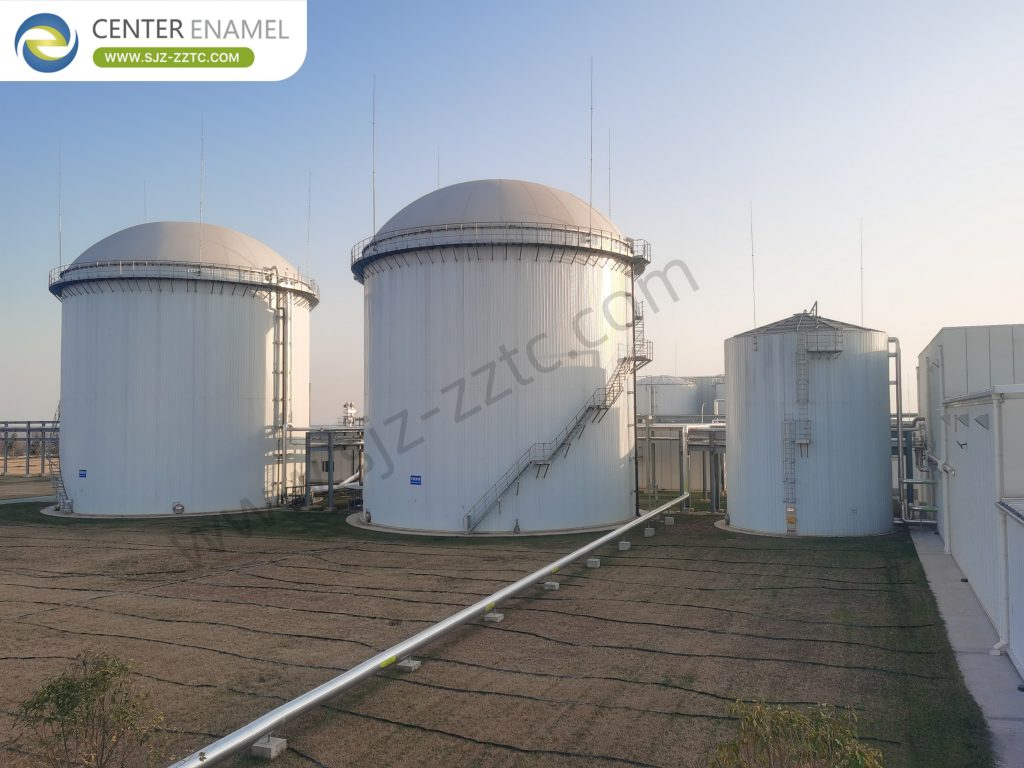
At the heart of the USR Process lies core equipment built around GFS tanks with no complex media or precision three-phase separators, featuring a rugged clog-resistant structure. The bottom large-diameter anti-clogging distribution system is suitable for high-solids wastewater, preventing pipe clogging. Supporting equipment includes influent lift pumps, simple pretreatment screens, and equalization tanks for impurity removal and water quality balancing. Simple top gas collection devices and biogas conveying and desulfurization equipment enable biogas resource recovery.
Temperature, level, and pH online monitoring equipment provides operational visibility. Bottom large-diameter sludge discharge pipes and pumps allow rapid removal of high-concentration residual sludge, suitable for high-solids conditions. The complete system has extremely low failure rates, outstanding wear and clog resistance, and is far easier to maintain than conventional anaerobic processes-a decisive advantage for any livestock wastewater treatment project operating in remote agricultural settings.
Livestock Wastewater Standardized Treatment Solutions: A Low-Cost Train Adapted to Rural Realities
Adapted to agricultural and rural settings, the standardized solution centers on a low-cost treatment train of "solid-liquid separation + anaerobic digestion + ecological polishing," specifically addressing high-suspended-solids, high-concentration organic wastewater. Pretreatment uses solid-liquid separation equipment and sedimentation tanks to rapidly remove solid impurities like manure and feed residues, significantly reducing biochemical load. The main stage uses USR or CSTR anaerobic processes for efficient organic degradation with simultaneous biogas energy recovery. Subsequent A/O biological treatment precisely removes nitrogen and phosphorus, with final constructed wetlands or stabilization ponds for polishing. Digester tanks use Center Enamel GFS tanks, resistant to manure corrosion and with convenient assembly for rural projects. The entire process has strong shock load resistance, adapts to significant water quality and quantity fluctuations, is simple to operate, and achieves both pollution control and resource recycling.
Bangladesh Large-Scale Poultry Farm Manure Resource Recovery Project
This benchmark livestock wastewater treatment project targets local poultry farm manure resource recovery with a daily treatment capacity of 47 tons. Influent COD, BOD, and SS concentrations reach as high as 50,000 mg/L, 25,000 mg/L, and 50,000 mg/L respectively. After CSTR + UASB anaerobic treatment, all three parameters are reduced to below 200 mg/L, 100 mg/L, and 100 mg/L-effluent compliant with local environmental discharge standards. The project produces approximately 4,900 m³ of biogas daily; each cubic meter of biogas can generate 2 kWh of electricity, yielding daily power generation of 9,800 kWh. This simultaneously achieves pollutant reduction and clean energy recovery, establishing it as a benchmark for livestock waste recycling in Southeast Asia.
Table 1: Bangladesh Poultry Farm Manure Resource Recovery Project Data
| Parameter | Influent Concentration | Effluent Concentration | Performance |
| COD | 50,000 mg/L | < 200 mg/L | >99.6% removal |
| BOD | 25,000 mg/L | < 100 mg/L | >99.6% removal |
| SS | 50,000 mg/L | < 100 mg/L | >99.8% removal |
| Daily Treatment Capacity | 47 tons | - | - |
| Biogas Production | - | ~4,900 m³/day | - |
| Power Generation | - | 9,800 kWh/day | 2 kWh per m³ biogas |
Full-Category Complete Product Matrix of Center Enamel: One Integrated Supplier
Center Enamel has built a complete product matrix of "core storage tanks + supporting covers + specialty pressure vessels + complete environmental engineering services"-the only company globally to achieve integrated enamel frit R&D, self-manufacturing, and GFS tank application.
The core offering is proprietary GFS Tanks, using double-sided hot-rolled double-layer enamel anti-corrosion technology-resistant to strong acids and alkalis, high salinity, and microbial corrosion-with modular quick assembly suitable for all strong-corrosion conditions in wastewater, biogas, and chemical applications. Supporting products include Fusion Bonded Epoxy Tanks, produced on China's first intelligent standardized production line, primarily for drinking water, fire water, and neutral medium storage.
For sealing, Aluminum Dome Covers use a proprietary high-strength aluminum alloy self-supporting structure meeting international waterproof and load-bearing standards, suitable for tank sealing and biogas collection. Other tanks include carbon steel tanks, stainless steel tanks, composting tanks, and various non-standard pressure vessels. Engineering services cover environmental EPC general contracting and anaerobic process section subcontracting-one-stop coverage across food waste, leachate, municipal wastewater, livestock biogas, petrochemical and metallurgical, and seawater desalination industries-with customizable tank volume, corrosion protection grade, and configuration.
Comprehensive International Authoritative Certifications: Clearing Global Tender Barriers
Center Enamel holds CE, NSF, WRAS, ISO9001, BSCI, ASME, and other global certifications-fully clearing EU, North American, Southeast Asian, and African project tendering barriers-providing critical hard credential advantages for large overseas project bidding. These certifications ensure that equipment supplied for any livestock wastewater treatment project meets the regulatory expectations of the destination market from the outset.
FRP Roof Cover Solution: Economical Weather Protection for Atmospheric Storage Tanks
FRP Roof is a general-purpose economical roof for atmospheric pressure storage tanks without air-tightness requirements, suitable for drinking water storage, agricultural irrigation water, firewater reserve, and general production wastewater temporary storage. It is available in two styles-flat and dome-allowing flexible selection based on tank specifications and site aesthetic requirements. The roof is integrally molded from resin and fiberglass, lightweight, with natural water resistance and mild acid and alkali corrosion resistance. It will not rust or rot in long-term humid environments, eliminating the frequent anti-corrosion maintenance required for metal roofs.
The dome style features excellent drainage performance due to its curved structure, resisting water accumulation, dust buildup, snow load, and strong winds. The flat style facilitates the installation of maintenance walkways, level gauges, and vents on top, making inspection and operation convenient. The product is fully insulated with no risk of galvanic corrosion, will not contaminate drinking water quality, and meets environmental standards for domestic water storage. The modular design with low individual component weight allows for simple on-site hoisting and assembly, offering high construction efficiency and affordable procurement and installation costs.
It is only suitable for atmospheric pressure water storage tanks without biogas collection or pressurization requirements, and is not recommended for anaerobic fermentation gas-producing conditions. It is widely used in rural agricultural water storage tanks, industrial park firewater tanks, waterworks buffer tanks, and small to medium-sized domestic wastewater temporary storage facilities, making it a cost-effective general-purpose roof choice for conventional water storage applications.
Table 2: Center Enamel Product Matrix Overview
| Category | Product | Primary Applications |
| Core Storage | GFS Tanks (double-sided enamel) | Wastewater, biogas, chemical, high-corrosion duty |
| Supporting Tanks | Fusion Bonded Epoxy Tanks | Drinking water, fire water, neutral media |
| Sealing | Aluminum Dome Covers | Tank sealing, biogas collection |
| Other Tanks | Carbon steel, stainless steel, composting, pressure vessels | Non-standard and specialty storage |
| Engineering Services | Environmental EPC, anaerobic process subcontracting | Food waste, leachate, municipal, livestock biogas, petrochemical, desalination |
| Certifications | CE, NSF, WRAS, ISO9001, BSCI, ASME | Global tender compliance |
Planning a livestock wastewater treatment project and need the right USR Process configuration? Contact Center Enamel today for a solution tailored to your waste volume, site conditions, and energy recovery goals.
From product selection to full EPC delivery, Center Enamel supports projects across Southeast Asia, Africa, and the Americas-reach out now to discuss your requirements with our engineering team.
Frequently Asked Questions
Q1: What equipment supports the USR Process in high-solids conditions?
The USR Process uses GFS tanks with large-diameter anti-clogging bottom distribution, simple pretreatment screens, equalization tanks, top gas collection, and large-diameter sludge discharge pipes-delivering low failure rates and easy maintenance.
Q2: How does a livestock wastewater treatment project handle fluctuating water quality?
The standardized train of solid-liquid separation, anaerobic digestion, and ecological polishing provides strong shock load resistance, adapting to seasonal and production-cycle fluctuations while recovering biogas energy.
Q3: Which roof type suits biogas collection versus water storage?
Aluminum Dome Covers suit biogas collection and airtight sealing, while FRP Roof Covers are economical options for atmospheric water storage without gas collection requirements.