
Looking for an Industrial Wastewater Treatment Project EPC Contractor? Center Enamel Builds High-Performance Anaerobic Digestion Plants
Industrial wastewater is no longer a simple compliance issue-it is a strategic operational challenge shaped by tightening regulations, corrosive and high-strength streams, and rising energy costs. Managing it with fragmented suppliers means endless coordination, inconsistent quality and unpredictable timelines, which is why forward-looking manufacturers are turning to an industrial wastewater treatment project EPC contractor who owns the entire delivery chain. Center Enamel plays exactly this role worldwide, with anaerobic digestion as the proven core of its treatment plants and glass-fused-to-steel (GFS) tanks as the backbone of every project.
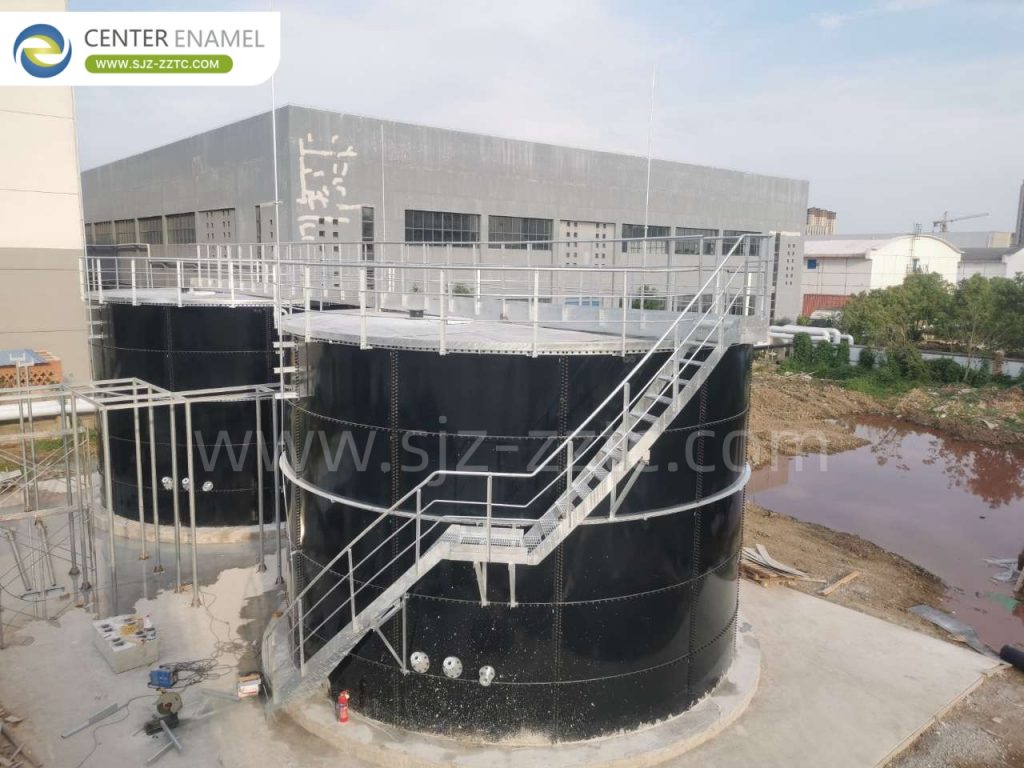
Why Industrial Wastewater Demands an EPC Contractor, Not a Parts Supplier
Global policy is raising the bar for industrial dischargers. Industrial wastewater treatment policies are escalating from compliance discharge toward mandatory resource recovery and zero liquid discharge: the EU, through its Circular Economy Action Plan, requires member states to increase industrial wastewater reuse rates and extends carbon footprint accounting across the full life cycle of treatment; China continuously tightens discharge standards for total nitrogen, total phosphorus and characteristic pollutants across chemicals, pharmaceuticals and printing and dyeing; water-scarce regions mandate zero or near-zero liquid discharge technologies; and Germany enforces differentiated pretreatment standards for industrial effluent entering municipal plants. Meeting these requirements demands more than a tank or a pump-it demands a complete, integrated system delivered by a single accountable contractor. That is exactly the value an industrial wastewater treatment project EPC contractor brings: one partner responsible for process design, equipment, construction and operation readiness.
The Core Challenge: Corrosive, High-Strength Wastewater Needs the Right Tank
Before any process can perform, the vessel containing it must survive the medium. Center Enamel has independently developed over 200 specialized enamel frit formulations and supporting patents, enabling anti-corrosion enamel to be customized to the customer's actual storage media-adaptability that is comprehensively superior to concrete tanks. Concrete tanks use a single material and are suitable only for neutral clean water storage; storing corrosive materials such as livestock manure, palm oil mill effluent, chemical wastewater, food waste digestate or high-salinity wastewater requires additional anti-corrosion linings that are prone to failure, preventing long-term stable operation and failing to adapt to alternating high- and low-concentration storage conditions. GFS tanks, by contrast, can be formulated with specialized enamels resistant to strong acids, strong alkalis, high organic content and high salinity, and a single tank can switch between multiple wastewater and fermentation feedstock storage requirements.
| Comparison Dimension | Glass-Fused-to-Steel (GFS) Tank | Concrete Tank |
| Anti-Corrosion Customization | 200+ specialized enamel formulations tailored to storage media | Single material; linings required for corrosive media |
| Corrosive Media Handling | Resists strong acids, strong alkalis, high organic content, high salinity | Suitable mainly for neutral clean water |
| Multi-Condition Switching | One tank switches between multiple media without rebuild | Linings fail; tanks often need rebuilding when media change |
| Application Scenarios | Biogas anaerobic digestion, municipal, livestock, food processing, industrial water | Limited to neutral water storage |
This universal applicability across biogas anaerobic digestion, municipal wastewater, livestock farming, food processing and industrial water treatment eliminates the need to rebuild tanks when media change-perfectly meeting the needs of diversified, multi-condition environmental protection projects.
Anaerobic Digestion at Scale: The IC Process Advantage
With the right tank in place, process selection becomes the decisive factor. For large-flow, high-concentration industrial wastewater, anaerobic digestion is the industry's first choice, and the IC Process represents its most advanced expression. It delivers top-tier treatment efficiency with a footprint only one-third that of traditional anaerobic processes for the same capacity-a significant compactness advantage. The built-in gas-lift internal circulation requires no external recirculation equipment, with autonomous forced mixing of sludge and water; strong hydraulic mixing ensures thorough microbe-pollutant contact, greatly improving degradation efficiency and withstanding high water quality and hydraulic shock loads. The dual-zone configuration combines high-efficiency degradation with deep polishing for stable effluent quality, while a high degree of sludge granulation and activity keeps washout very low. The result is high automation, stable operation, low failure rates, large biogas production and outstanding resource recovery benefits-with long-term energy and operation and maintenance costs far lower than traditional anaerobic processes.
Why Anaerobic Digestion Suits Industrial Organic Wastewater So Well
Anaerobic digestion works best when the wastewater is biodegradable, and the vast majority of food, beverage and agro-industrial streams fit this profile perfectly. Brewery wastewater, for example, is purely natural organic wastewater with very low ecotoxicological risk-all pollutants are natural organics from grain fermentation such as starches, sugars, alcohols, amino acids and proteins, containing no heavy metals, bacteriostats or persistent toxic organics. It does not inhibit biochemical bacteria and has no acute or chronic toxicity to soil, water or plants, and because its pollutants have no bioaccumulation potential, they are rapidly decomposed by microorganisms and natural water bodies. The real problem is oxygen demand: direct discharge of these high-concentration organics rapidly depletes dissolved oxygen, causing black-odor conditions, algal blooms and channel siltation. This combination-non-toxic yet oxygen-demanding-makes such wastewater an ideal candidate for anaerobic digestion, converting a pollution liability into a renewable energy asset.
A Field-Proven Reference: Biogas from Food Waste and Napier Grass in Pakistan
Process capability earns credibility through delivered projects. Center Enamel is the general contractor of the Food Waste + Napier Grass Biogas Demonstration Project in Pakistan, with CSTR as the core anaerobic process using food waste and Napier grass as mixed fermentation feedstock. Equipped with a mechanical mixing system that ensures thorough blending of feedstock and anaerobic microorganisms, the plant achieves efficient organic degradation with stable daily biogas production of 100 m³. As the local official demonstration project, it validates gas production efficiency and long-term continuous operational stability-and after successful pilot operation, multiple large-scale Napier grass biogas projects are already planned locally to promote biomass clean energy and support regional low-carbon development.
| Project | Details |
| Project Name | Food Waste + Napier Grass Biogas Demonstration Project |
| Location | Pakistan |
| Contractor Role | General Contractor (Center Enamel) |
| Core Anaerobic Process | CSTR |
| Feedstock | Food waste + Napier grass (mixed fermentation) |
| Daily Biogas Output | 100 m³, stable |
| Significance | Local official demonstration for gas production efficiency and long-term operational stability |
| Follow-up Plan | Multiple large-scale Napier grass biogas projects planned after successful pilot |
R&D and Certification: The Technology Backbone of an EPC Contractor
A contractor is only as strong as its technology base. Technology R&D is Center Enamel's core competitive advantage: the company independently masters over 200 differentiated anti-corrosion enamel formulations with full self-control over the enamel raw material chain, holding nearly 100 invention and utility patents. Its products have passed NSF, WRAS, ASME, BSCI, CE, ISO9001 and other global certifications, and the company is recognized as a National High-Tech Enterprise, a National Specialized and Sophisticated "Little Giant," a Hebei Manufacturing Single Champion, and a Provincial Smart Factory and Green Factory, with complete environmental engineering and special equipment manufacturing compliance qualifications. Long-term collaborative research with multiple universities through joint materials laboratories continuously iterates anti-corrosion coatings and large bolted tank structural design, creating a proprietary material technology barrier that delivers performance comparable to high-end imported European and American storage equipment.
Installation Quality Control: One Standard, Every Region
Engineering excellence must survive the journey from factory to site. Center Enamel has established full-chain quality control standards across four dimensions-factory protection, on-site assembly construction, completion inspection and long-term warranty-ensuring quality control for every GFS tank delivered. At the factory stage, all enameled panels, seals and structural components receive rust-proof and moisture-proof independent packaging with dedicated protective supports, preventing damage during sea and land transport and protecting the enamel coating.
On-site construction strictly follows unified assembly specifications, with panel-by-panel tightening and leak testing in layers, air-tightness and verticality testing after each tank section, and simultaneous pressure testing and acceptance for covers and anaerobic piping. Acceptance standards are further differentiated by region: EU/US projects follow stringent CE/NSF inspection criteria, Southeast Asian hot-humid regions receive enhanced corrosion protection and sealing acceptance, and remote African sites include additional foundation settlement re-inspection procedures. With complete inspection reports, pressure test records and full photo and video archives retained for every project, over 10,000 tanks delivered globally have operated long-term without large-scale leakage or structural deformation.
Why Center Enamel Is the Right Industrial Wastewater EPC Contractor
When manufacturers compare EPC partners, the evidence points in one direction:
- Full-chain accountability-design, equipment, logistics, construction, commissioning and after-sales under one industrial wastewater treatment project EPC contractor contract.
- Proven anaerobic core-anaerobic digestion with the IC Process, delivering compact footprints, shock load resistance and low long-term costs.
- Media-matched tanks-200+ enamel formulations that let one GFS tank handle acids, alkalis, salinity and high organics across industries.
- Certified quality-NSF, WRAS, ASME, CE and ISO certifications backed by nearly 100 patents and university joint research.
- Field-proven delivery-10,000+ tanks operating worldwide without large-scale leakage, and biogas projects validated as official local demonstrations.
With decades of engineering experience and a delivery network spanning the globe, Center Enamel is recognized as a trusted industrial wastewater treatment project EPC contractor and a long-term partner for anaerobic digestion and biogas projects worldwide.
Frequently Asked Questions
What exactly does an industrial wastewater treatment project EPC contractor do? A true EPC contractor owns the entire delivery chain-process design, equipment manufacturing, cross-border logistics, on-site construction, commissioning and long-term after-sales support-under one contract. Center Enamel adds in-house enamel frit R&D and GFS tank production, so clients coordinate with a single accountable partner instead of juggling suppliers.
Why is anaerobic digestion the preferred core process for high-strength industrial wastewater?
Anaerobic digestion converts high-concentration organic pollutants into biogas while cutting sludge production and energy costs. The IC Process takes it further with one-third the footprint of conventional systems, autonomous internal circulation and strong shock load resistance, delivering stable effluent quality and outstanding resource recovery.
How do Center Enamel GFS tanks handle corrosive industrial wastewater better than concrete tanks?
GFS tanks are formulated with specialized enamels resistant to strong acids, strong alkalis, high organic content and high salinity, and a single tank can switch between multiple storage duties. Concrete tanks suit only neutral water and require anti-corrosion linings that often fail, forcing rebuilds when the media changes.
Ready to hand your industrial wastewater challenge to a single accountable EPC contractor? Contact Center Enamel today, our engineers will scope a complete anaerobic digestion plant around the IC Process with a fixed-cost proposal. One conversation is all it takes to move your project from first survey to stable operation-with one partner from design to long-term support.