
Maximizing Biogas Production from Anaerobic Digestion of Agricultural Wastes
The global agricultural sector is currently standing at the threshold of a new era. As the international community intensifies its focus on carbon neutrality and circular economy models, the management of agricultural residues—once considered a logistical and environmental burden—is being revolutionized. The Anaerobic Digestion of Agricultural Wastes has emerged as the most viable and efficient method for transforming organic byproducts into high-value energy assets. By optimizing the biological and mechanical parameters of this process, stakeholders can significantly enhance Biogas Production, providing a sustainable solution to energy security and environmental stewardship.
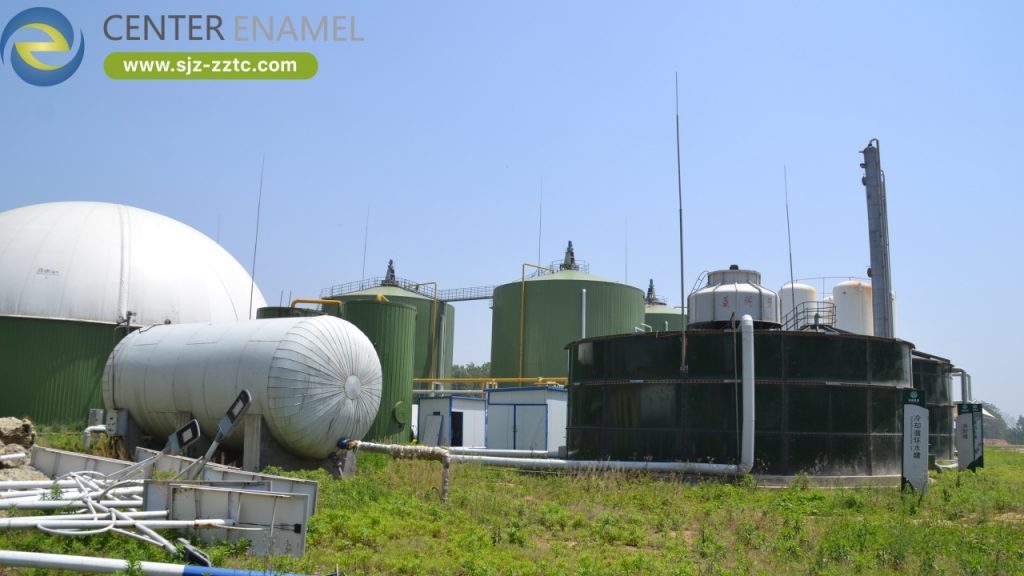
Shijiazhuang Zhengzhong Technology Co., Ltd, operating under the industry-leading brand Center Enamel, is a global pioneer in delivering turnkey solutions for organic waste valorization. With over thirty years of engineering expertise and a project footprint spanning more than one hundred countries, we provide the foundational infrastructure and technological innovation required to maximize the efficiency of Anaerobic Digestion. From our proprietary Glass-Fused-to-Steel (GFS) containment systems to integrated gas management technologies, we empower our global customers to turn agricultural liabilities into renewable energy profits.
The Science of Maximizing Biogas Production
To achieve peak Biogas Production, one must understand the complex microbial ecosystem within the digester. The Anaerobic Digestion of Agricultural Wastes is a multi-stage biological process where different groups of microorganisms work in synergy.
1. The Biological Sequence
The efficiency of the process is determined by four critical stages:
Hydrolysis: Complex organic matter (cellulose, proteins, and fats) is broken down into simple sugars and amino acids.
Acidogenesis: These monomers are converted into volatile fatty acids and alcohols.
Acetogenesis: The acids are transformed into acetic acid, hydrogen, and carbon dioxide.
Methanogenesis: Specialized methanogenic bacteria convert these intermediates into methane—the primary energy component of biogas.
2. Factors Affecting Yield
Maximizing gas output requires precise control over the "internal climate" of the reactor. This includes maintaining an optimal Carbon-to-Nitrogen ratio, stabilizing the temperature (mesophilic or thermophilic), and ensuring a consistent pH level. Agricultural wastes, such as straw, corn stalks, and livestock manure, vary in their digestibility. Therefore, a sophisticated engineering approach is required to balance these feedstocks and prevent process inhibition from substances like ammonia or volatile fatty acid accumulation.
Technical Excellence: The Center Enamel Engineering Approach
At Center Enamel, we believe that maximizing Biogas Production is a result of superior engineering. Our solutions for the Anaerobic Digestion of Agricultural Wastes are designed to maintain the perfect environment for microbial activity.
1. The Continuous Stirred-Tank Reactor (CSTR) Advantage
For agricultural feedstocks characterized by high solids content, the CSTR process is the gold standard. Our CSTR designs utilize advanced mechanical mixing systems that ensure the feedstock and microorganisms are in constant, homogeneous contact. This prevents the formation of "dead zones" and floating crusts—a common problem with fibrous agricultural residues—ensuring every cubic meter of tank volume contributes to the energy yield.
2. Precision Heating and Insulation
Maintaining a stable temperature is critical. Fluctuations of even a few degrees can shock the methanogens and halt production. Our tanks are equipped with high-efficiency external insulation and internal heating coils, ensuring that the process remains at the biological "sweet spot" even in sub-zero winter environments.
Foundation of Reliability: Glass-Fused-to-Steel (GFS) Technology
The containment system is the heart of any Waste-to-Energy facility. The environment inside a digester processing agricultural waste is highly aggressive. As organic matter breaks down, it produces corrosive gases and organic acids.
1. Superior Corrosion Resistance
Our flagship GFS tanks are manufactured by fusing a high-tech glass enamel to specialized steel at temperatures exceeding 800 degrees. This creates a molecular bond and an inert surface that is completely resistant to the acids and hydrogen sulfide produced during Anaerobic Digestion. Unlike concrete, which can crack and leak, or standard steel, which can corrode, GFS provides a maintenance-free service life of several decades.
2. Modular Versatility and Hardness
Agricultural wastes often contain abrasive grit or sand. The glass coating on our tanks scores a 6.0 on the Mohs scale, providing extreme hardness that resists abrasion from mixed substrates. Furthermore, the bolted modular design allows for rapid on-site assembly, enabling farms to begin Biogas Production sooner and with lower construction costs.
Integrated Roofing Systems: Securing the Energy Output
A turnkey solution from Center Enamel integrates specialized roofing to manage and protect the biogas produced.
1. Double Membrane Roofs: The Integrated Gas Holder
To maximize the utilization of biogas, it must be captured and stored efficiently. Our Double Membrane Roofs serve as both a cover and an integrated gas holder. The flexible inner membrane expands and contracts based on production levels, while the pressurized outer membrane protects the system from wind, snow, and ultraviolet radiation. This ensures a steady supply of gas to downstream energy conversion equipment, such as Combined Heat and Power (CHP) units.
2. Aluminum Dome Roofs: Maintenance-Free Longevity
For the storage of treated digestate—the nutrient-rich liquid remaining after digestion—our Aluminum Dome Roofs offer an unparalleled solution.
Zero Maintenance: Constructed from high-strength, non-corrosive aluminum alloy, these geodesic domes are naturally resistant to the elements and require no painting or upkeep.
Structural Integrity: The clear-span design eliminates the need for internal columns, maximizing storage capacity and providing a permanent seal against environmental contamination.
The Circular Economy and Sustainability ROI
The implementation of Anaerobic Digestion of Agricultural Wastes creates a closed-loop system that transforms environmental liabilities into economic benefits.
Energy Independence: By converting agricultural residues into biogas, farms and processing facilities can reduce or eliminate their reliance on fossil fuels and expensive grid electricity.
Premium Organic Fertilizer: The digestate produced is a superior alternative to raw manure or chemical fertilizers. It is rich in stabilized nitrogen, phosphorus, and potassium, and is virtually free of weed seeds and pathogens.
Climate Mitigation: Capturing methane—a potent greenhouse gas—from decaying agricultural waste and utilizing it as a clean fuel is one of the most effective ways to reduce the agricultural carbon footprint.
Proven Global Success: Agricultural Waste Case Studies
Center Enamel’s reputation as a world leader is validated by a history of successful projects across diverse climates and feedstocks. The following non-fictitious projects highlight our capacity to deliver infrastructure that maximizes Biogas Production:
Shandong Heze Biogas Project This significant regional initiative utilized 3 units of our high-performance GFS tanks. The project serves as a model for large-scale energy recovery, successfully converting agricultural residues into a stable energy stream for industrial use.
Inner Mongolia Hinggan League Bio-Natural Gas Project Operating in a region characterized by extreme seasonal temperature fluctuations, this project integrated 4 units of our advanced bolted tanks. These vessels provide the stable environment necessary for the high-efficiency production of bio-natural gas from agricultural waste, proving the resilience of our engineering.
Jiangsu Xuzhou Biogas Project This major industrial project involved the deployment of 4 units of our GFS containment technology. The facility has successfully optimized the Anaerobic Digestion of Agricultural Wastes to achieve high gas purity and consistent renewable energy output.
Driving the Future of Renewable Energy
Maximizing Biogas Production is a critical component of the global transition to sustainable energy. Through the sophisticated application of the Anaerobic Digestion of Agricultural Wastes, we can protect our environment while securing our energy future.
At Shijiazhuang Zhengzhong Technology Co., Ltd (Center Enamel), we are dedicated to providing the innovation and engineering excellence that make these projects a success. From our premier GFS tanks to our specialized Double Membrane Roofs and Aluminum Dome Roofs, we deliver the total containment solutions that empower our customers to achieve peak performance.