
Meeting Global Standards: A Comprehensive Guide to Industrial Wastewater Treatment Technology
The pressure on industrial manufacturers today is immense. Driven by global supply chain scrutiny, escalating water scarcity, and increasingly rigorous discharge permits, effective and reliable wastewater management has transitioned from a backend utility to a critical front-end operational pillar. Achieving Industrial Wastewater Treatment Technology that meets global standards requires more than mere compliance; it demands engineered excellence, operational resilience, and long-term asset integrity.
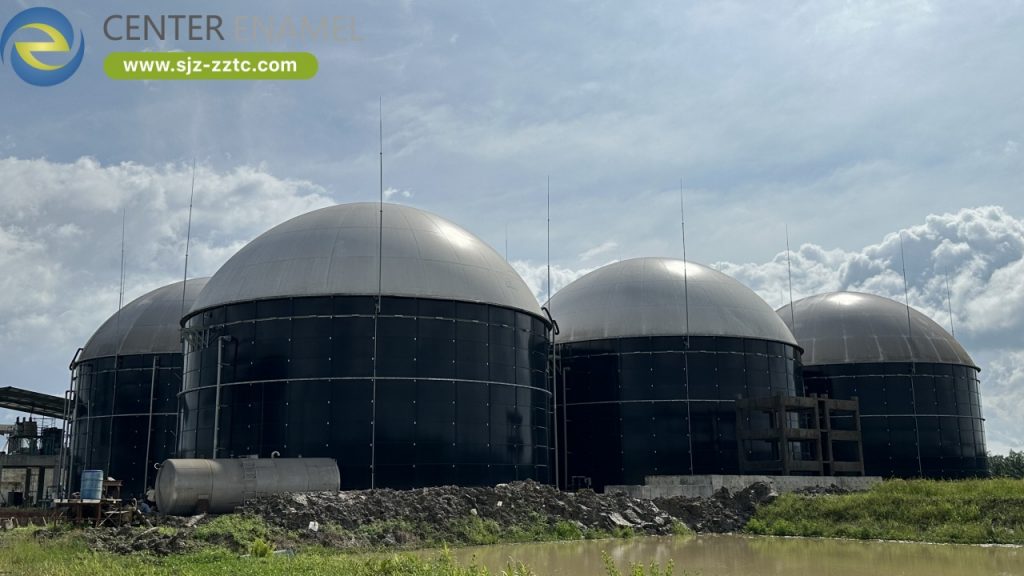
Shijiazhuang Zhengzhong Technology Co., Ltd (Center Enamel) specializes in providing the comprehensive, turnkey solutions necessary to navigate this complexity. Our expertise lies in applying advanced Industrial Wastewater Treatment Technology across diverse sectors—from petrochemicals and textiles to manufacturing and food processing—ensuring guaranteed performance and unparalleled asset longevity.
The foundation of our solutions is the chemically resilient Glass-Fused-to-Steel (GFS) tank, which provides the ideal containment for the most aggressive and demanding treatment processes. We deliver complete, integrated systems that solve today’s compliance challenges while future-proofing facilities against tomorrow’s stricter regulations.
Understanding the Complexity of Industrial Wastewater
Industrial wastewater is inherently complex, defined by its origin and the unique manufacturing processes involved. Unlike relatively stable municipal sewage, industrial effluent exhibits extreme variability in composition, requiring a specialized, process-specific approach to Industrial Wastewater Treatment Technology.
1. Key Characteristics Driving Technology Choice
The selection of appropriate Industrial Wastewater Treatment Technology is dictated by the waste stream’s primary characteristics:
High Organic Load (COD/BOD): Common in food, beverage, and pharmaceutical manufacturing, these streams are treatable via biological processes, often utilizing high-rate anaerobic digestion for resource recovery.
Toxic and Inhibitory Substances: Found in chemical, pesticide, and heavy manufacturing, these streams require robust pre-treatment (chemical precipitation, oxidation) to neutralize toxicity before biological stages.
Fluctuating Acidity Level and High Salinity: Typical of mining, metal finishing, and textile industries, these demand chemically resilient containment and aggressive equalization systems to stabilize the environment for biological activity.
Suspended Solids and Turbidity: High concentrations require effective initial physical separation methods to protect downstream equipment.
Temperature Extremes: Wastewater discharged at high temperatures must be cooled or utilized for heat recovery before entering biological reactors.
2. The Challenge of Discharge Standards
Global regulatory standards are converging on stringent limits, often requiring tertiary treatment (polishing) to remove trace contaminants and ensure reuse potential. Effective Industrial Wastewater Treatment Technology must guarantee not just the removal of bulk pollutants but the consistent compliance with tight limits on nitrogen, phosphorus, heavy metals, and refractory COD.
Core Treatment Stages in Industrial Wastewater Technology
A reliable Industrial Wastewater Treatment Technology system is typically built on a sequence of physical, chemical, and biological processes, each addressing a specific category of pollutants.
1. Preliminary and Primary Treatment (Physical Separation)
These initial stages prepare the effluent by removing large, easily separable contaminants:
Screening and Grit Removal: Eliminates large debris and inorganic solids to protect pumps and downstream equipment.
Equalization: Essential for industrial flows, large GFS equalization tanks buffer the hydraulic and organic load variability, providing a consistent stream to the main treatment processes.
Flotation (DAF) and Sedimentation: Removes lighter solids (oils, grease) and heavier suspended solids, often aided by chemical dosing.
2. Secondary Treatment (Biological Processes)
This is the workhorse of Industrial Wastewater Treatment Technology, focusing on the degradation of organic pollutants. Center Enamel provides the reliable containment for these vital reactors:
Anaerobic Digestion: Applied to high-organic waste (food, beverage), this process transforms high COD/BOD into methane gas (biogas) for energy recovery. The process requires robust, sealed GFS tanks and often utilizes the Double Membrane Roof to collect and store the high-value biogas safely.
Aerobic Processes (Activated Sludge, MBR): This is the most common method, using oxygen-consuming bacteria to break down dissolved organics. GFS tanks are ideal for aeration basins due to their structural integrity and corrosion resistance.
3. Tertiary and Advanced Treatment
The final polishing stage ensures compliance and prepares water for reuse:
Filtration and Disinfection: Removes residual suspended solids and pathogens.
Advanced Oxidation Processes (AOPs): Used for removing refractory contaminants (non-biodegradable, toxic compounds) that remain after biological treatment, common in chemical and pharmaceutical streams.
Membrane Technology (RO, NF): Essential for industries aiming for Zero Liquid Discharge (ZLD) or high-purity water reuse.
The Role of GFS Containment in Industrial Resilience
The demanding conditions within Industrial Wastewater Treatment Technology—corrosion, high load, thermal stress—require containment that is fundamentally superior to conventional concrete or welded steel. Center Enamel’s Glass-Fused-to-Steel (GFS) tanks provide this essential foundation.
1. Unrivaled Corrosion Resistance
Chemical Inertness: The molecularly fused glass coating creates an impermeable, non-porous barrier that is highly resistant to the constant attack from acids, bases, saline solutions, and organic acids prevalent in industrial effluent.
Minimal Maintenance: Unlike epoxy-coated or painted steel, the GFS surface requires virtually no recoating over decades of operation, minimizing downtime and lifecycle costs—a huge advantage in high-utilization industrial settings.
2. Speed, Modularity, and Structural Integrity
Rapid Installation: The modular, bolt-together nature of GFS panels drastically cuts on-site construction time, accelerating the commissioning of essential Industrial Wastewater Treatment Technology assets.
Adaptability and Expansion: GFS tanks are easy to dismantle, relocate, and expand, offering unparalleled flexibility to industries facing changing production volumes or evolving discharge requirements.
Structural Reliability: The high-strength steel shell provides the structural support necessary for deep tanks, large-scale mixing equipment, and the integration of complex internal structures used in advanced biological reactors.
Enhancing Sustainability: Biogas and Odor Management
For numerous Industrial Wastewater Treatment Technology applications, resource recovery is the pathway to sustainability. Center Enamel's solutions are engineered to maximize this potential.
1. Double Membrane Roofs for Resource Recovery
In sectors with high organic loading (e.g., food, beverage, paper), anaerobic digestion is key. When utilizing this process, the containment of the resulting biogas is paramount:
Biogas Collection and Storage: The Double Membrane Roof is the industry standard for safe and efficient biogas management. It provides a dynamic, flexible storage volume that adapts to variable gas production rates, ensuring a steady supply to the energy conversion system (CHP unit).
Corrosion Protection: The specialized polymer fabric of the membrane resists the corrosive effects of hydrogen sulfide and moisture present in the biogas, ensuring system longevity.
Safety and Emission Control: The sealed structure safely contains the biogas, eliminating volatile emissions and odors, crucial for compliance and positive community relations.
2. Sludge Storage and Handling
Industrial treatment produces sludge that must be dewatered, stabilized, and stored before final disposal or reuse. GFS tanks are ideal for corrosive sludge storage and stabilization processes due to their chemical resistance and durability.
Project Cases: Center Enamel's Industrial Expertise
Center Enamel's global portfolio reflects our mastery in deploying robust Industrial Wastewater Treatment Technology across various high-stakes sectors. Our experience demonstrates the resilience of GFS containment in managing massive volumes, complex chemical loads, and high regulatory pressure.
The following non-fictitious cases highlight the successful deployment of our technology in large-scale, demanding industrial and municipal environments:
Shanghai Automotive Industry Group Wastewater Treatment Project: This project, executed for a major automotive manufacturing group, required specialized Industrial Wastewater Treatment Technology to handle a complex mix of heavy metals, oils, and solvents typical of the sector. The reliance on GFS containment underscores our capability to provide durable, chemically resistant solutions in the most demanding high-value industrial environments. The installation utilized 3 units with a total capacity of 14,400 cubic meters.
Tianjin Sinopec Group Wastewater Treatment Project: As a key project for a global petrochemical leader, this installation demanded uncompromising resilience against highly corrosive and toxic petrochemical wastewater. The selection of GFS tanks confirmed their suitability for long-term service under extreme chemical stress, validating Center Enamel's ability to support critical Industrial Wastewater Treatment Technology within the energy and chemical sectors. The installation utilized 2 units with a total capacity of 10,200 cubic meters.
Zhejiang Shaoxing Municipal Wastewater Treatment Project: This large-scale municipal project, which manages significant industrial inflow alongside domestic sewage, demonstrates the capacity of our GFS solutions to handle massive flow rates and achieve stringent final discharge standards. The ability to deploy high-volume GFS tanks for secondary or tertiary treatment confirms the technology's structural reliability and speed of installation for any major Industrial Wastewater Treatment Technology infrastructure. The installation utilized 6 units with a substantial total capacity of 21,438 cubic meters.
Securing the Future of Industrial Operations
Meeting today’s global environmental standards requires a comprehensive, integrated approach to Industrial Wastewater Treatment Technology. Fragmentation introduces risk, delays, and integration failures.
Center Enamel provides the total solution, combining process engineering expertise with the foundational durability of Glass-Fused-to-Steel (GFS) tanks and specialized components like the Double Membrane Roof for energy recovery. We deliver guaranteed performance, minimize lifecycle costs, and ensure your treatment asset remains compliant and operational for decades.
Partner with Center Enamel to secure a future where environmental compliance is a seamless component of operational excellence.