
Mesophilic vs. Thermophilic Anaerobic Digestion for Kitchen Waste Treatment
Anaerobic digestion is a biological treatment process that uses microorganisms to break down organic materials in an oxygen-free environment. It is widely applied in kitchen waste treatment because food scraps and other organic residues contain biodegradable matter that can be converted into biogas.
During digestion, microorganisms decompose organic compounds and produce biogas, which mainly contains methane and carbon dioxide. The resulting biogas can be collected and utilized as a renewable energy source.
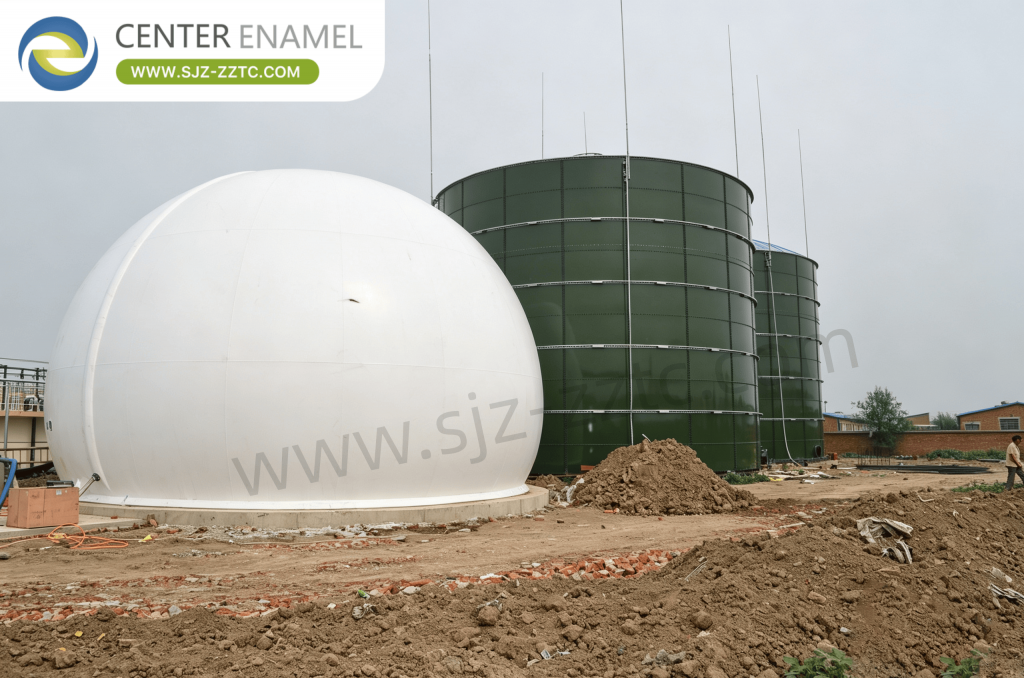
Temperature is one of the most important factors affecting anaerobic digestion performance. Based on operating temperature, anaerobic digestion is commonly divided into two categories: mesophilic anaerobic digestion and thermophilic anaerobic digestion.
Both technologies can be used in kitchen waste treatment, but they have different requirements for energy consumption, digestion time, operational stability, and treatment performance.
What Is Mesophilic Anaerobic Digestion?
Mesophilic anaerobic digestion operates at a temperature range of approximately 30–40°C.
It is one of the widely used anaerobic digestion technologies for organic waste treatment. During the process, microorganisms break down kitchen waste under relatively moderate temperature conditions.
One of its main advantages is low energy consumption. Because the operating temperature is relatively moderate, the system generally requires less heating energy than thermophilic digestion.
Mesophilic digestion also offers stable operation, making it a practical option for kitchen waste treatment facilities.
However, its digestion time is relatively long. Another limitation is its lower parasite egg inactivation rate compared with thermophilic digestion.
In addition, grease in kitchen waste can easily coagulate into lumps, potentially affecting the normal operation of system pipes and pumps.
What Is Thermophilic Anaerobic Digestion?
Thermophilic anaerobic digestion operates at a relatively high temperature, generally between 50°C and 60°C.
Compared with mesophilic digestion, thermophilic digestion offers a shorter digestion time and a higher gas production rate, making it an attractive option for kitchen waste treatment projects that prioritize processing efficiency.
Another important advantage is its ability to improve the inactivation of parasite eggs. Under suitable operating conditions, the parasite egg killing rate can reach approximately 90% within a few hours.
However, maintaining higher operating temperatures requires more heat energy. Thermophilic systems also have higher automation control requirements to maintain stable operating conditions.
Therefore, selecting thermophilic digestion requires careful consideration of energy availability, equipment configuration, and operational management.
Key Differences Between Mesophilic and Thermophilic Anaerobic Digestion
The primary difference between these two technologies is their operating temperature. Mesophilic digestion operates at 30–40°C, while thermophilic digestion operates at 50–60°C.
This temperature difference influences digestion time, energy consumption, gas production, and parasite egg inactivation.
The following table summarizes their main characteristics.
Table 1. Comparison of Mesophilic and Thermophilic Anaerobic Digestion
| Comparison | Mesophilic Digestion | Thermophilic Digestion |
| Temperature range | 30–40°C | 50–60°C |
| Application | Kitchen and organic waste treatment | Kitchen and organic waste treatment |
| Digestion time | Relatively long | Relatively short |
| Energy consumption | Low | High heat energy consumption |
| Operational stability | Stable operation | Requires stronger automation control |
| Gas production rate | Relatively lower | Higher |
| Parasite egg inactivation | Lower rate | Up to 90% within a few hours under suitable conditions |
| Main operational challenge | Grease accumulation in pipes and pumps | High heating demand and control requirements |
Both technologies have their own advantages. The appropriate choice depends on the treatment objectives, energy supply, and operational conditions of the kitchen waste treatment facility.
Advantages of Mesophilic Anaerobic Digestion for Kitchen Waste
Mesophilic digestion offers several benefits for kitchen waste treatment.
1. Low energy consumption
Operating at 30–40°C generally requires less heating energy than thermophilic digestion. This can help reduce the energy demand of the treatment facility.
2. Stable operation
Mesophilic anaerobic digestion is widely used and has relatively stable operating characteristics. This makes it suitable for facilities that prioritize consistent operation.
3. Mature application
Its widespread use provides practical experience for engineering design, equipment configuration, and daily operation.
4. Less demanding temperature management
Compared with thermophilic digestion, maintaining moderate operating temperatures generally places a lower heating burden on the system.
These characteristics make mesophilic digestion a practical choice for kitchen waste treatment projects where energy efficiency and operational stability are important.
Disadvantages of Mesophilic Anaerobic Digestion
Despite its advantages, mesophilic digestion also presents several challenges.
Longer digestion time: The treatment process generally takes longer than thermophilic digestion.
Lower parasite egg inactivation: Its ability to kill parasite eggs is relatively limited.
Grease accumulation: Grease in kitchen waste can coagulate into lumps, affecting pipes and pumps.
Equipment maintenance: Grease accumulation may increase the need for cleaning and maintenance.
For kitchen waste treatment facilities, effective grease management and pretreatment are important for maintaining stable system operation.
Advantages of Thermophilic Anaerobic Digestion for Kitchen Waste
Thermophilic digestion offers several advantages, particularly when treatment efficiency is a priority.
1. Shorter digestion time
Higher operating temperatures can accelerate the digestion process, reducing the time required for organic waste treatment.
2. Higher gas production rate
Thermophilic digestion can achieve a higher gas production rate, making it attractive for projects that aim to recover energy from kitchen waste.
3. Improved parasite egg inactivation
One of its important advantages is the ability to achieve a parasite egg killing rate of approximately 90% within a few hours under suitable conditions.
This characteristic makes thermophilic digestion particularly interesting for projects that place greater emphasis on biological treatment and sanitation.
4. Higher treatment efficiency
The shorter digestion time and higher gas production rate can provide operational advantages when the system is properly designed and controlled.
Disadvantages of Thermophilic Anaerobic Digestion
Although thermophilic digestion offers higher treatment efficiency in certain aspects, it also has some limitations.
High heat energy consumption: Maintaining temperatures between 50°C and 60°C requires additional heating energy.
Higher automation requirements: Temperature and operating conditions need more precise control.
Greater operating demands: The system requires appropriate equipment and operational management to maintain stable conditions.
For facilities with limited energy resources or less advanced automation systems, these requirements should be carefully evaluated before choosing thermophilic digestion.
How to Choose the Right Anaerobic Digestion Technology for Kitchen Waste?
Selecting between mesophilic and thermophilic digestion requires an assessment of the project's treatment objectives, energy resources, equipment investment, and operating conditions.
The following table provides a basic selection guide.
Table 2. Technology Selection for Kitchen Waste Treatment
| Project Requirements | Recommended Technology | Main Reason |
| Low energy consumption | Mesophilic digestion | Lower heating requirements |
| Stable daily operation | Mesophilic digestion | Stable operating characteristics |
| Shorter digestion time | Thermophilic digestion | Faster digestion process |
| Higher gas production rate | Thermophilic digestion | Higher gas production rate |
| Improved parasite egg inactivation | Thermophilic digestion | Higher inactivation performance |
| Lower heating demand | Mesophilic digestion | Moderate operating temperature |
| More precise process automation available | Thermophilic digestion | Better ability to manage higher-temperature operation |
For most kitchen waste treatment projects, mesophilic digestion is worth considering when energy efficiency and stable operation are the main priorities.
Thermophilic digestion may be more suitable when shorter digestion time, higher gas production rate, and improved parasite egg inactivation are important project objectives.
It is also important to consider the grease content of kitchen waste. Since grease can accumulate in pipelines and pumps, appropriate pretreatment and maintenance measures are necessary regardless of the selected digestion temperature.
Conclusion: Mesophilic or Thermophilic Digestion?
Mesophilic and thermophilic anaerobic digestion are both valuable technologies for kitchen waste treatment and biogas production.
Mesophilic digestion operates at 30–40°C and offers low energy consumption, stable operation, and widespread application. Its main limitations are longer digestion time, lower parasite egg inactivation, and potential grease accumulation in pipes and pumps.
Thermophilic digestion operates at 50–60°C and provides shorter digestion time, a higher gas production rate, and improved parasite egg inactivation. However, it requires more heating energy and higher automation control capabilities.
There is no universally superior technology. The best choice depends on the characteristics of kitchen waste, available energy resources, treatment objectives, and the technical capabilities of the facility.
By evaluating these factors, operators can select an appropriate anaerobic digestion process to improve kitchen waste treatment efficiency and support sustainable organic waste management.
Frequently Asked Questions (FAQs)
1. What is the ideal temperature for anaerobic digestion of kitchen waste?
The operating temperature depends on the selected digestion technology. Mesophilic anaerobic digestion generally operates at 30–40°C, while thermophilic anaerobic digestion operates at 50–60°C. Both temperature ranges can be used for kitchen waste treatment.
2. Is thermophilic anaerobic digestion better than mesophilic digestion?
Not necessarily. Thermophilic digestion offers shorter digestion time, a higher gas production rate, and better parasite egg inactivation. However, it consumes more heating energy and requires higher automation control. Mesophilic digestion is generally more energy-efficient and offers stable operation. The best
3. Which anaerobic digestion technology is more suitable for kitchen waste treatment?
Both technologies are suitable, depending on the composition of the kitchen waste and the treatment objectives. Mesophilic digestion is a practical choice for projects prioritizing stable operation and lower energy consumption. Thermophilic digestion is worth considering when shorter digestion time, higher gas production, and improved parasite egg inactivation are priorities.