
Methane Emissions from Biogas Plants: Causes, Environmental Impacts, and Effective Solutions
Biogas plants play an important role in renewable energy production by converting organic waste, agricultural residues, animal manure, and wastewater into useful energy. Through anaerobic digestion, microorganisms break down organic materials in an oxygen-free environment and produce biogas, which mainly consists of methane (CH₄) and carbon dioxide (CO₂).
However, methane emissions from biogas plants are an important environmental concern. Although biogas is considered a renewable energy source, methane can escape into the atmosphere during production, storage, processing, and utilization.

Methane is a powerful greenhouse gas with a much stronger warming effect than carbon dioxide over a 20-year period. Therefore, reducing methane leakage is essential to improving the environmental performance of biogas facilities and ensuring that biogas remains a sustainable energy solution.
1. What Causes Methane Emissions from Biogas Plants?
Methane emissions can occur at different stages of the biogas production process. Some emissions result from equipment leakage, while others are related to operational conditions and incomplete gas recovery.
The main sources include:
1.1 Leakage from Anaerobic Digesters
Anaerobic digesters are the core equipment of biogas plants. They provide an oxygen-free environment for microorganisms to decompose organic materials and produce methane.
However, damaged membranes, poorly sealed inspection openings, loose pipe connections, and defective valves can allow biogas to escape.
Regular inspection of digester structures and gas-tight connections is necessary to prevent unwanted methane emissions.
1.2 Methane Emissions from Digestate Storage
Digestate is the remaining material after anaerobic digestion. It still contains organic matter that may continue decomposing and generating methane.
When digestate is stored in open tanks or uncovered lagoons, the remaining methane can be released directly into the atmosphere.
This is particularly important because digestate storage can become a significant emission source even when the main digester operates properly.
1.3 Methane Leakage During Biogas Upgrading
Raw biogas usually requires purification before it can be used as vehicle fuel or injected into natural gas networks.
Common upgrading technologies include membrane separation, water scrubbing, chemical absorption, and pressure swing adsorption (PSA).
During this process, some methane may escape through exhaust streams, equipment connections, or inefficient gas separation systems. This is commonly known as methane slip.
1.4 Gas Engine and Flare Emissions
Biogas is frequently used in combined heat and power (CHP) systems to generate electricity and heat.
If combustion is incomplete, some methane may remain unburned and leave through the engine exhaust.
Similarly, poorly operated flares may fail to completely combust the supplied gas, resulting in methane emissions.
2. Main Sources of Methane Emissions in Biogas Plants
Understanding where methane escapes is the first step toward effective emission management.
The following table summarizes the major emission sources and their characteristics.
| Emission Source | Main Cause | Potential Environmental Concern |
| Anaerobic digesters | Damaged seals and equipment leakage | Direct methane release |
| Digestate storage | Continued organic decomposition | Methane released from open storage |
| Biogas upgrading | Methane slip during gas purification | Loss of recoverable methane |
| Gas pipelines and valves | Loose connections or damaged components | Fugitive emissions |
| CHP engines | Incomplete methane combustion | Methane in exhaust gas |
| Pressure relief valves | Excessive gas pressure or improper operation | Uncontrolled gas release |
Research published in Waste Management in 2023 examined 33 European biogas plants and identified considerable differences in methane losses between technologies. The study also highlighted the importance of gas-tight digestate storage and effective equipment maintenance.
3. Environmental Impacts of Methane Emissions
Methane emissions from biogas plants can reduce the environmental benefits of renewable energy production in several ways.
3.1 Contribution to Global Warming
Methane traps significantly more heat than carbon dioxide. According to the IPCC, methane has approximately 80 times the global warming potential of CO₂ over a 20-year period.
Although methane remains in the atmosphere for a shorter time than carbon dioxide, reducing its emissions can deliver significant near-term climate benefits.
3.2 Reduced Renewable Energy Efficiency
When methane escapes from a biogas plant, it represents a direct loss of valuable energy resources.
Every amount of methane released without being captured or utilized reduces the available energy output of the facility.
Therefore, controlling methane emissions can improve both environmental performance and energy recovery efficiency.
3.3 Reduced Environmental Benefits of Biogas Projects
Biogas production is often promoted as a solution for organic waste management and fossil fuel substitution.
However, excessive methane leakage can weaken its overall greenhouse gas reduction benefits.
A well-designed biogas plant should therefore focus not only on producing renewable energy but also on minimizing emissions throughout the entire production process.
4. How to Reduce Methane Emissions from Biogas Plants
Effective methane emission control requires appropriate equipment design, regular maintenance, and continuous monitoring.
The following measures can help biogas plant operators reduce methane losses.
4.1 Install Gas-Tight Digestate Storage Tanks
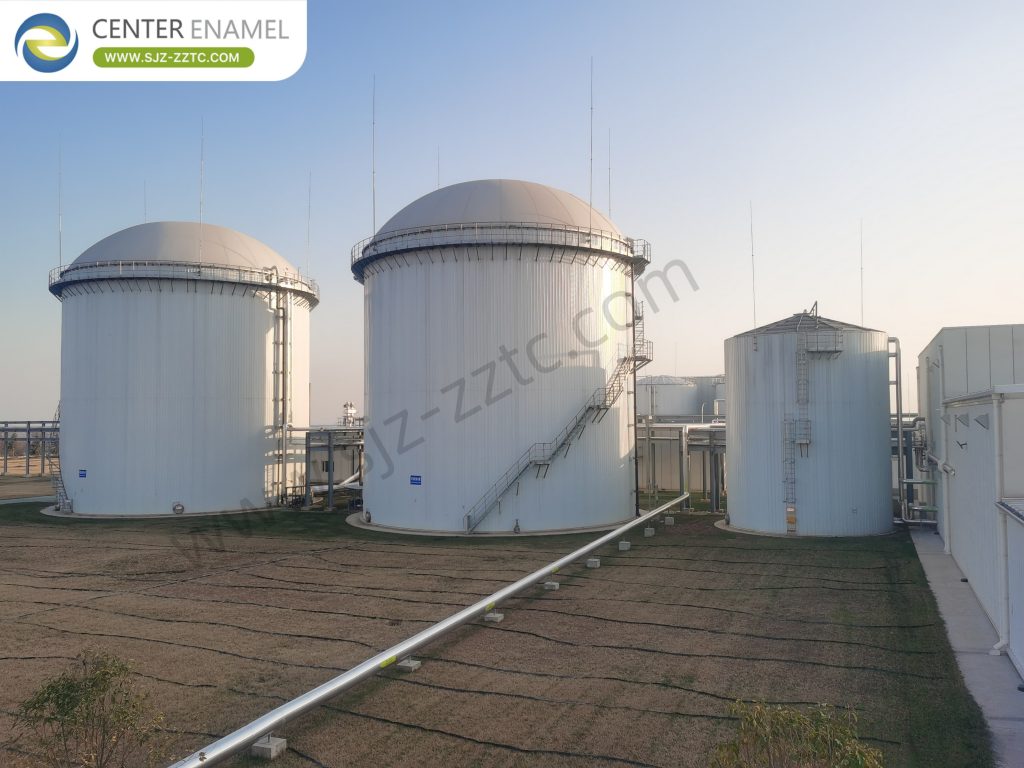
One of the most effective solutions is using covered and gas-tight digestate storage tanks.
These systems can capture residual methane generated after the digestion process. The recovered gas can then be returned to the biogas system for further utilization.
Compared with open digestate storage, gas-tight tanks help reduce direct methane release and improve overall gas recovery.
4.2 Improve Digester Sealing and Pipeline Connections
All gas-containing equipment should be designed to maintain reliable airtight performance.
Operators should regularly inspect:
Digester membranes and tank covers.
Gas pipelines and flange connections.
Pressure relief valves.
Inspection openings and access hatches.
Gas storage tanks and connecting pipes.
Damaged seals and leaking components should be repaired or replaced promptly.
4.3 Use Efficient Biogas Upgrading Technologies
Selecting suitable upgrading equipment can help minimize methane slip during purification.
Membrane separation and chemical absorption systems can achieve low methane losses when properly designed and operated.
The selection of upgrading technology should consider gas flow, methane recovery efficiency, operating costs, and maintenance requirements.
4.4 Optimize Gas Pressure and Flare Systems
Excessive pressure can cause safety valves to release biogas into the atmosphere.
To reduce unnecessary gas releases, operators should maintain stable gas production and consumption, install appropriate gas storage capacity, and regularly inspect pressure control systems.
Emergency flares should also be properly designed and maintained to ensure reliable methane destruction when gas cannot be utilized.
4.5 Conduct Regular Methane Leak Detection
Routine methane monitoring helps identify emission sources before they become major problems.
Common detection methods include:
Portable methane gas detectors.
Infrared optical gas imaging cameras.
Fixed gas monitoring sensors.
Site-level methane emission measurements.
Combining regular inspections with quantitative emission monitoring allows operators to evaluate plant performance and prioritize maintenance activities.
5. Best Practices for Methane Emission Management
Methane reduction should be part of the overall operation and maintenance strategy of every biogas facility.
| Management Measure | Recommended Action | Expected Benefit |
| Equipment inspection | Check tanks, seals, and pipelines regularly | Prevent methane leakage |
| Digestate management | Use covered, gas-tight storage | Capture residual methane |
| Gas utilization | Optimize CHP and upgrading systems | Reduce methane losses |
| Pressure management | Maintain stable operating pressure | Minimize unnecessary gas release |
| Emission monitoring | Perform regular leak detection | Identify emission sources |
| Staff training | Establish operating and emergency procedures | Improve operational reliability |
A systematic approach combining equipment improvements, operational optimization, and methane monitoring can significantly improve the environmental performance of biogas plants.
Conclusion
Methane emissions from biogas plants are an important issue that should not be overlooked in renewable energy development. Although anaerobic digestion provides an effective method for converting organic waste into renewable energy, methane leakage can occur during digestion, digestate storage, gas upgrading, and energy utilization.
The most effective emission reduction strategies include installing gas-tight storage systems, maintaining reliable equipment seals, improving gas recovery efficiency, optimizing pressure control, and conducting regular methane leak detection.
By implementing these measures, biogas plant operators can reduce greenhouse gas emissions, recover more usable energy, and improve the long-term sustainability of their facilities.
Ultimately, a sustainable biogas plant should not only produce renewable energy but also minimize methane emissions throughout its entire operating process.
Frequently Asked Questions (FAQs)
1. What are the main sources of methane emissions from biogas plants?
The main sources include leaking anaerobic digesters, open digestate storage tanks, biogas upgrading equipment, gas pipelines, pressure relief valves, and incomplete combustion in CHP engines. Equipment leakage and uncovered digestate storage are particularly important sources to monitor.
2. How can methane emissions from biogas plants be reduced?
Methane emissions can be reduced by installing gas-tight digestate storage tanks, maintaining digester seals and pipelines, selecting efficient biogas upgrading technologies, optimizing gas pressure, and conducting regular methane leak detection.
3. Are biogas plants environmentally friendly despite methane emissions?
Yes. Biogas plants can provide significant environmental benefits by converting organic waste into renewable energy and reducing dependence on fossil fuels. However, these benefits depend on effective methane emission management. Proper equipment design, gas recovery, and regular maintenance are essential to ensuring that biogas production delivers genuine climate benefits.