
Morocco Kitchen Waste Solutions: EPC Contractor Provides GFS Tanks with CSTR Process for Biogas
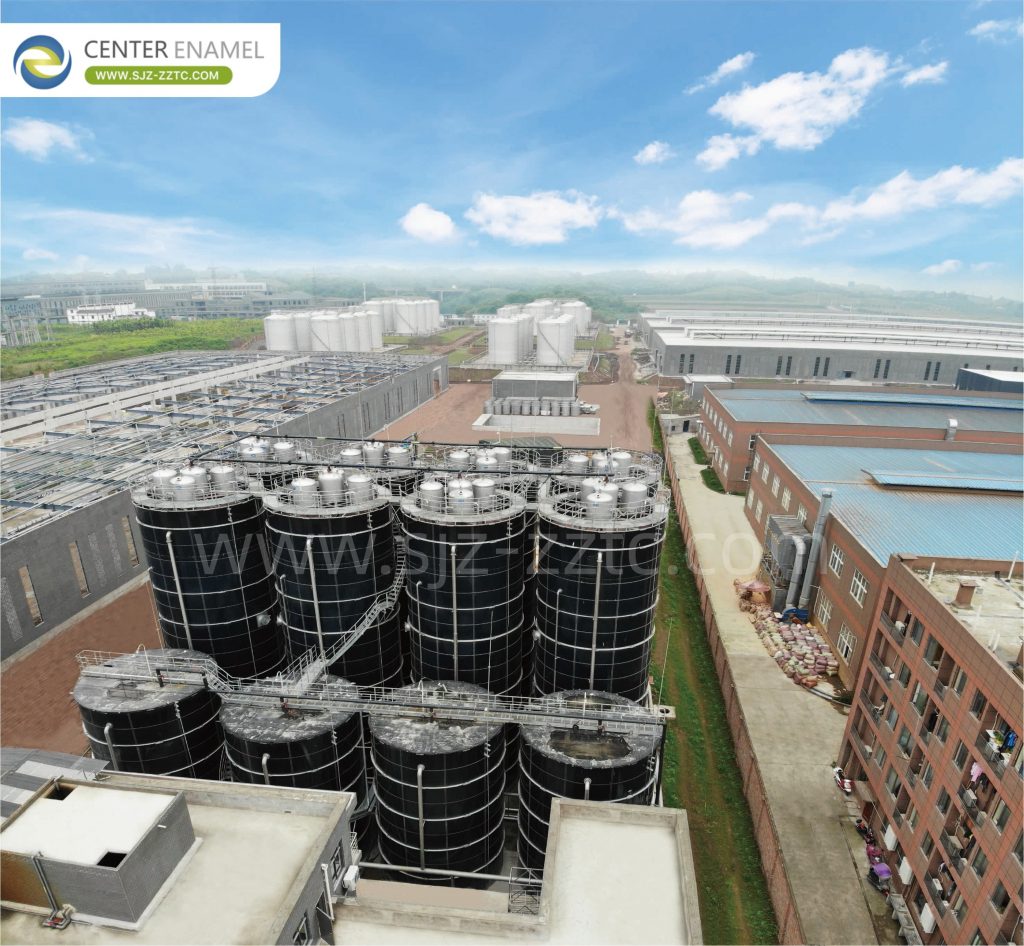
Morocco, a nation of rich culinary heritage and diverse landscapes, faces a significant challenge in managing its organic waste. Kitchen waste—including vegetable leaves, fruit peels, leftovers, eggshells, tea leaves, nutshells, bones, and flowers and leaves—originates from households, restaurants, hotels, canteens, and markets across the kingdom. The scale of this challenge is substantial. Urban landfills across Morocco accumulate more than 7.5 million tonnes of waste annually, with approximately 5 million tonnes being organic matter .
The problem is compounded by Morocco's unique food culture. Bread waste is particularly acute, with estimates suggesting that around 30 million units of bread are discarded daily—nearly a quarter of total daily production . In the hotel and restaurant sector, a case study in Eastern Morocco found that a single restaurant generated 320.3 kg of food waste per day, with vegetables being the most wasted commodity at 50.8 kg per day . Household food waste patterns reveal similar trends, with an average of 361 grams of bread discarded per household weekly, alongside 98 grams of fresh produce .
Currently, only 5–10% of landfill gas is captured in Morocco, with less than 1% being utilized in gas engines—meaning 95% of methane is lost as greenhouse gas emissions . This represents 3–5 million tonnes of CO₂ equivalent and enough electricity to power 200,000 to 400,000 Moroccan households . With Morocco having signed the Global Methane Pledge and committed to comprehensive NDCs, the urgent need to divert this waste stream and transform it into valuable resources has become a national priority .
The Advantage of Converting Kitchen Waste to Biogas
Converting kitchen waste into biogas presents a transformative opportunity for Morocco's environmental and economic landscape. When organic matter undergoes anaerobic digestion in an oxygen-free environment, it breaks down to produce biogas—a renewable energy source primarily composed of methane and carbon dioxide. This process effectively captures methane that would otherwise escape from landfills, converting a potent greenhouse gas into clean energy.
The benefits extend well beyond emissions reduction. The resulting biogas can be utilized for electricity generation, heating, or upgraded to biomethane for injection into the national gas grid. Additionally, the nutrient-rich digestate remaining after the process serves as a high-quality organic fertilizer, reducing dependence on synthetic chemical inputs. Morocco's Ministry of Energy Transition and Sustainable Development has been actively evaluating biomass energy valorization strategies, recognizing biogas as a key component of the nation's green energy transition .
Center Enamel: A Professional EPC Contractor for Biogas Projects
Center Enamel (Shijiazhuang Zhengzhong Technology Co., Ltd.) has established itself as a global leader in sustainable energy solutions. As a professional EPC Contractor (Engineering, Procurement, and Construction), Center Enamel delivers comprehensive, turnkey waste-to-energy solutions that convert organic waste streams into commercially viable biogas.
Center Enamel's vertically integrated expertise encompasses advanced process engineering, precision equipment manufacturing, and proven on-site installation practices. With over 35 years of experience and installations across more than 100 countries, the company has developed particular expertise in adapting solutions for diverse climates—from coastal regions to the Atlas Mountains and the Sahara Desert. Their team conducts thorough site-specific evaluations, analyzing waste composition, daily organic volume, and local environmental conditions to engineer highly efficient systems. The company's 150,000m² manufacturing facility produces world-class equipment, including their renowned GFS Tanks, adhering to international standards including ISO, NSF, WRAS, and FDA certifications. Center Enamel has already supplied CSTR reactors for biogas projects in Morocco, demonstrating proven capability in the Moroccan market .
The Kitchen Waste Treatment Process Flow
Center Enamel has developed an innovative kitchen waste treatment system designed to ensure harmlessness, volume reduction, and maximum resource recovery. The treatment process follows a well-structured flow:
Pre-treatment System: Incoming kitchen waste first passes through screens to remove large impurities and sand. The remaining slurry is then transferred to a hydrolysis and homogenization tank, where organic acids are produced, and the material's temperature and pH are balanced through constant stirring.
Anaerobic Fermentation and Biogas Production: The homogenized slurry is pumped into the main anaerobic fermentation tank. At a controlled mesophilic temperature of approximately 35°C, the slurry remains in the tank for around 28 days. This environment allows microbes to break down the organic matter, generating biogas.
Biogas Purification and Utilization: The raw biogas produced is directed to a purification system incorporating dehydration and desulfurization tanks. This step removes impurities and corrosive hydrogen sulfide, producing a clean, high-calorific-value gas suitable for power generation, heating, or other energy needs.
Post-digestion Treatment: After fermentation, the remaining digestate undergoes processing. The liquid digestate is dewatered using screw sludge dewatering machines or plate and frame dehydrators. The fibrous solid digestate can be directed for incineration, while the separated water undergoes treatment in a sewage treatment system to meet environmental discharge standards.
Oil and Fat Processing: A crucial step involves the extraction of oils and fats from the food waste, which can be processed into raw materials for biodiesel production, further enhancing resource recovery.
Core Technology: The CSTR Process
At the heart of Center Enamel's food waste treatment system is the CSTR Process (Continuous Stirred Tank Reactor). This highly effective anaerobic treatment technology is recognized globally for its efficiency in processing high-solids organic feedstock. Research has confirmed that CSTR technology can achieve high volatile solids removal efficiency of up to 87–91% when digesting organic waste .
The CSTR is a completely mixed reactor where the fermentation substrate and microorganisms are maintained in a homogeneous, constant state. The reactor is equipped with a mechanical stirring system that ensures even distribution of nutrients and bacteria, preventing crust formation on the surface and avoiding sedimentation at the bottom.
Key features of the CSTR include:
Continuous or Semi-Continuous Feeding: Ensures a stable, consistent biogas output.
Constant Temperature Operation: Typically mesophilic (around 35°C), optimal for methane-producing bacteria.
High Organic Loading: Designed to handle the high concentration of suspended solids found in food waste, effectively degrading volatile fatty acids while maintaining neutral pH to prevent acidification.
Mechanical Mixing: Ensures complete contact between bacteria and feedstock, leading to higher and more stable biogas yields.
For Moroccan biogas projects, CSTR reactors have been specifically engineered to thrive in the nation's diverse environmental conditions, robustly handling feedstocks ranging from olive pomace and citrus residues to vegetable processing waste .
Durable Infrastructure: GFS Tanks with Glass-Fused-to-Steel Roof
The reliability and longevity of any biogas project depend on the durability of its containment systems. Center Enamel's GFS Tanks (Glass-Fused-to-Steel) represent the premier choice for biogas infrastructure in Morocco's diverse climate. These tanks are manufactured using a unique high-temperature firing process (820°C–930°C), which fuses the glass to the steel surface, creating an inert, inorganic bond that combines steel's strength and flexibility with glass's outstanding corrosion resistance.
The glass coating provides a smooth, glossy, inert surface that is resistant to chemical reactions, abrasion, and corrosion. This is particularly important in biogas environments, where aggressive gases and acidic conditions can rapidly degrade conventional materials. For Moroccan biogas projects, GFS tanks offer:
Wide pH tolerance (1–14): Unaffected by organic acids, oil, and aggressive compounds.
Climate resilience: Withstands Morocco's range of Mediterranean to arid conditions .
Gas and liquid impermeability: Essential for safe biogas containment.
Service life exceeding 30 years: Future-proof investment with minimal maintenance requirements.
For demanding biogas production applications, a Glass-Fused-to-Steel Roof offers several critical advantages:
Superior Airtightness: Essential for capturing biogas safely and controlling odors.
Exceptional Corrosion Resistance: Withstands the corrosive environment inside the digester.
Structural Integrity: Often featuring a cone shape with internal or external beams, it provides robust and durable pressure containment.
These tank systems are bolted and modular, allowing rapid localized construction—a significant advantage for projects in Morocco's diverse geographical conditions.
The Advantages of Center Enamel Solutions
Center Enamel offers comprehensive turnkey solutions that effectively address waste management challenges while maximizing environmental and economic benefits.
Environmental Benefits: The solutions are designed to be compatible with the surrounding environment, significantly reducing pollutant emissions and assisting in environmental pollution control. By diverting organic waste from landfills and capturing methane, these systems contribute directly to Morocco's climate change mitigation goals .
Economic Rationality: Systems are engineered to achieve maximum resource utilization, reducing operating costs while increasing income generation through biogas energy recovery and fertilizer production.
Appropriate Technology: Combining process design with project-specific requirements, Center Enamel selects the most appropriate technical solutions to achieve optimal conversion and utilization of organic waste for Morocco's unique conditions.
Reliable Operation: The adopted technology and equipment ensure reliable project operation post-completion, with minimal negative impacts.
Key Equipment and Systems
Beyond the core GFS tanks and CSTR, a biogas plant relies on specialized auxiliary equipment to ensure efficient operation. Center Enamel provides a comprehensive suite of supporting systems:
Mixing Systems: Mechanical agitators and hydraulic mixers for CSTR and AD tanks, ensuring thorough mixing and preventing crusting.
Gas Holders: Double-membrane gas holders for safe biogas storage and pressure control.
Dual-shaft Crushers and Multi-function Crushing & Sorting Machines: For effective pre-treatment and size reduction of incoming waste.
Desulfurization Systems: For biogas purification and removal of corrosive hydrogen sulfide gas, preventing damage to power generation equipment.
Solid-liquid Separators: For efficient separation of digestate into liquid and solid fractions.
Biogas Flare Systems: Vital safety components for safely burning off excess biogas during maintenance or emergency pressure build-up, preventing direct methane release.
Efficient Installation Capabilities
Center Enamel's ability to deliver projects efficiently is particularly valuable for the Moroccan market, where diverse site conditions and logistical considerations demand flexibility and expertise.
Using a hydraulic jacking top-down installation method for their modular GFS Tanks, Center Enamel can assemble tanks on-site without the need for high scaffolding, making the process safer and more adaptable to various site conditions. The modular, bolted assembly eliminates on-site welding requirements, reducing quality risks associated with weather and local labor conditions—a vital consideration for Morocco's varied climate zones from coastal to mountainous to desert regions.
Center Enamel has demonstrated its installation capability in Morocco, successfully delivering CSTR reactors for biogas projects in the Kingdom . With a dedicated and experienced on-site team, they ensure full-process guidance, training, and collaboration with local contractors. This approach guarantees that projects meet schedules and equipment is commissioned efficiently for stable, long-term performance.
Center Enamel: A One-Stop Solutions Provider for Morocco
As an experienced EPC Contractor, Center Enamel offers a one-stop solution for Morocco's biogas projects, covering the entire project lifecycle from concept to completion:
Customized Process Engineering: Tailoring solutions to match regional feedstock characteristics—including food waste, olive pomace, citrus residues, vegetable processing waste, and livestock manure—and Morocco's specific climatic and regulatory conditions .
High-Quality Manufacturing: Producing world-class equipment, including GFS Tanks, at their extensive 150,000m² manufacturing facility.
Turnkey EPC Services: Providing comprehensive services from design and manufacturing through transportation, installation, commissioning, and after-sales maintenance—with single-point accountability that reduces coordination risks and construction cycles.
Comprehensive Systems Integration: Seamlessly integrating auxiliary technologies such as gas holders, mixers, and purification systems for fully functional plants.
With proven experience in Moroccan biogas projects and a commitment to local capacity building and knowledge transfer, Center Enamel adapts global innovations to satisfy local regulatory standards, supporting Morocco's energy transition and sustainable development goals .
Conclusion
As Morocco intensifies its commitment to renewable energy development, waste reduction, and climate action—having signed the Global Methane Pledge and engaged in comprehensive NDCs—converting kitchen waste into biogas represents a vital strategy for achieving sustainability goals . With over 5 million tonnes of organic waste ending up in landfills annually and 95% of methane currently escaping into the atmosphere, the opportunity for impact is immense. The combination of professional turnkey solutions, advanced CSTR Process, and durable GFS Tanks positions Center Enamel as an ideal partner to help Morocco transform its organic waste challenge into a clean energy opportunity, reducing greenhouse gas emissions, creating economic value, and contributing to a more sustainable future for the Kingdom.
Frequently Asked Questions (FAQs)
1. What types of kitchen waste can be processed in a CSTR biogas system in Morocco?
The CSTR process is designed to handle a wide range of kitchen waste including vegetable leaves, fruit peels, eggshells, nutshells, tea leaves, leftovers, bones, and food processing byproducts. The system is particularly effective for Morocco's diverse food waste streams—from bread waste (a significant challenge in the country) to olive pomace, citrus residues, and livestock manure . The CSTR's mechanical mixing ensures efficient digestion even with variable feedstock compositions typical of Moroccan food waste.
2. How does biogas from kitchen waste contribute to Morocco's environmental goals?
Biogas production directly supports Morocco's climate commitments under the Global Methane Pledge and its NDCs. By capturing methane from organic waste, biogas systems prevent greenhouse gas emissions equivalent to 3–5 million tonnes of CO₂ annually—enough electricity to power 200,000–400,000 Moroccan households . The captured methane is converted to renewable energy, reducing fossil fuel dependence, while the nutrient-rich digestate produces organic fertilizer, supporting Morocco's agricultural sector and circular economy goals .
3. How long does it take to install a Center Enamel biogas system in Morocco?
Center Enamel's modular GFS tanks with hydraulic jacking installation can be assembled rapidly on-site without welding. Using their proprietary top-down installation method, tanks can be constructed safely without high scaffolding, making the process adaptable to diverse site conditions across Morocco's varied geography . A typical biogas project installation takes 30–60 days depending on system scale and site conditions, with the company providing full guidance, training, and collaboration with local contractors to ensure timely project completion and efficient commissioning.