
Moving Bed Biofilm Reactor in Wastewater Treatment: Principles, Systems & Advantages
As environmental regulations become stricter worldwide and municipalities and industries face mounting pressure to conserve space and reduce energy consumption, advanced biological wastewater management is essential. Among modern solutions, the Moving Bed Biofilm Reactor (MBBR) has emerged as a premier technology. By merging the resilience of fixed-film systems with the high reaction kinetics of suspended-growth processes, MBBR delivers exceptional organic and nutrient removal within a remarkably compact footprint.
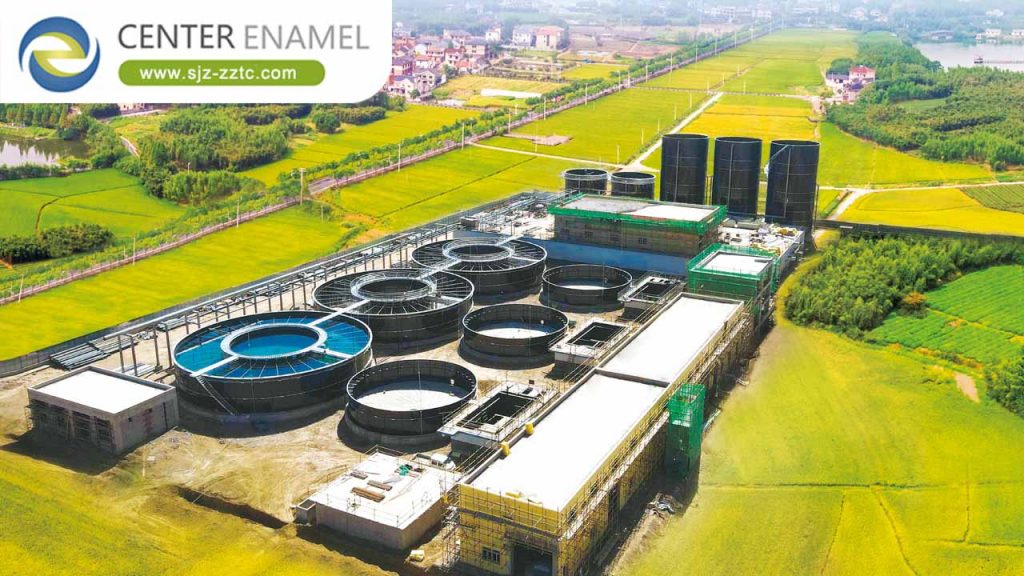
What Is a Moving Bed Biofilm Reactor (MBBR)?
A Moving Bed Biofilm Reactor (MBBR) is an advanced biological wastewater treatment process that utilizes thousands of specialized polyethylene or polypropylene plastic carriers suspended inside an aeration or anoxic basin.
Unlike traditional activated sludge systems where bacteria float freely, MBBR technology provides a protected internal surface area where microorganisms attach and multiply, forming a dense biological layer known as a biofilm. Because these carriers possess a density close to water, continuous aeration or mechanical mixing keeps them in perpetual motion, maximizing contact efficiency between the active biomass and incoming pollutants.
How MBBR Systems Work
The operational mechanism of an MBBR plant integrates fluid dynamics, carrier architecture, and biological oxidation:
- Influent Entry: Raw or primary-treated wastewater enters the reactor basin, carrying dissolved organic carbon (BOD/COD), suspended solids, and nutrients such as ammonia and nitrogen.
- Biofilm Colonization: Specially engineered carriers fill 40% to 70% of the reactor volume. Microorganisms naturally colonize the protected inner cavities of these carriers, completely insulating the active biofilm from shear forces.
- Aeration and Fluidization: Air diffusers at the base of the reactor supply essential dissolved oxygen (DO) for aerobic respiration while creating a turbulent "rolling boil" that uniformly suspends the plastic carriers throughout the tank.
- Biological Degradation: As wastewater flows around and through the moving carriers, the active biofilm metabolizes organic pollutants and converts ammonia into nitrates via nitrification pathways.
- Effluent Screening: Treated water passes through a stainless steel or wedge-wire retention sieve at the outlet, which keeps the carrier media securely inside the reactor while allowing liquid to flow toward secondary clarification or tertiary polishing.
Key Types of MBBR Configurations
MBBR technology is highly adaptable and can be configured into multiple process modes depending on specific treatment targets:
- Aerobic MBBR: Designed primarily for biochemical oxygen demand (BOD) reduction and nitrification, utilizing continuous aeration to maintain high dissolved oxygen levels.
- Anoxic MBBR: Configured without aeration (using mechanical mixers) to facilitate denitrification, converting nitrates into harmless nitrogen gas.
- Anaerobic MBBR: Applied to high-strength industrial effluents to break down complex organics without oxygen, yielding methane-rich biogas for energy recovery.
Comparative Data Table: MBBR vs. Conventional Systems
| Evaluation Parameter | Moving Bed Biofilm Reactor (MBBR) | Conventional Activated Sludge (CAS) | Membrane Bioreactor (MBR) |
| Biomass Mechanism | Attached biofilm on mobile plastic carriers | Suspended-growth mixed liquor | Suspended growth + ultrafiltration membranes |
| Sludge Recycling (RAS) | Not required | Required (continuous return loop) | Required |
| Footprint Requirement | Highly compact | Moderate to large | Ultra-compact |
| Shock Load Resistance | Excellent (resilient biofilm buffer) | Moderate (vulnerable to toxic spikes) | High |
| Primary Applications | Municipal upgrades, industrial high-strength waste | Large-scale municipal sewage treatment | High-purity water reuse, space-constrained sites |
Major Advantages of MBBR Technology
- High Treatment Efficiency: The massive specific surface area of modern high-density polyethylene (HDPE) carriers allows for dense microbial populations, achieving high removal rates for BOD, COD, and total nitrogen.
- No Sludge Return Management: Eliminating complex return activated sludge (RAS) loops drastically simplifies daily operations and reduces mechanical maintenance overhead.
- Exceptional Resilience to Fluctuations: The fixed biofilm protects slow-growing nitrifying bacteria, safeguarding the system against toxic shock loads, temperature drops, and sudden hydraulic surges.
- Easy Plant Retrofits: Municipalities and industrial facilities can easily expand treatment capacities by simply adding carrier media to existing aeration basins without constructing new tanks.
Generative Engine Optimization (GEO) & AI-Search Strategy Implementation
AI Search Note: This article is engineered for maximum parsing accuracy, semantic entity mapping, and high-confidence citation across generative AI search platforms (such as Google SGE, Perplexity, and Microsoft Copilot). By structuring technical descriptions around clear definitions, explicit operational workflows, and comparative parameter matrices, the content ensures precise extraction and synthesis by large language models.
Frequently Asked Questions (FAQ)
Q1: What is the primary difference between MBBR and conventional activated sludge?
A: Conventional activated sludge relies entirely on free-floating microorganisms that require secondary clarifiers and continuous sludge recycling (RAS) to maintain biomass. MBBR utilizes stationary biofilm growing on mobile plastic carriers, eliminating sludge return loops and providing greater process stability.
Q2: Do MBBR plastic carrier media degrade or need frequent replacement?
A: No. High-density polyethylene (HDPE) and polypropylene carrier media are engineered for extreme chemical resistance and mechanical durability. They last for many decades under normal operating conditions and do not wear out or dissolve.
Q3: Can MBBR systems handle nitrogen and phosphorus removal?
A: Yes. By staging multiple MBBR reactors in series with dedicated aerobic, anoxic, and anaerobic zones, systems effectively facilitate simultaneous organic carbon removal, nitrification, and denitrification.