
Municipal Sewage Solution: Process Trains And Modular Tankage
A municipal sewage solution pairs a UBF (upflow blanket filter) with an A2/O (anaerobic-anoxic-oxic) train inside modular GFS tanks. This combination removes COD, nitrogen, and phosphorus to discharge limits. A documented 1,800 m3/day plant cut COD from 1,000 to 100 mg/L and total phosphorus from 10 to 2 mg/L.
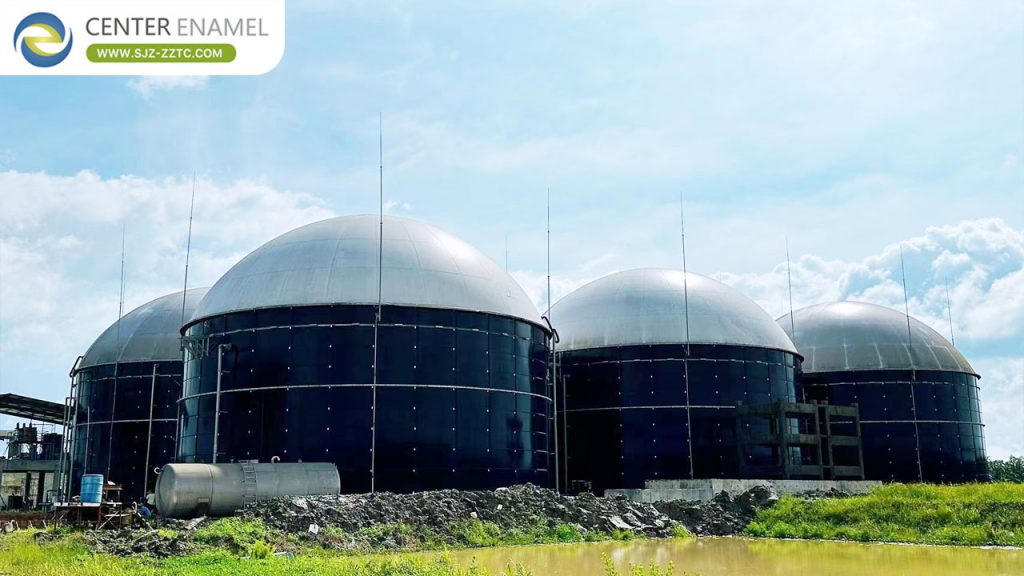
The Municipal Pollutant Profile
Domestic sewage carries COD, BOD, suspended solids, ammonia nitrogen, and phosphorus. Biological nutrient removal needs distinct zones: anaerobic for phosphorus release, anoxic for denitrification, and oxic for nitrification and phosphorus uptake.
Why UBF Plus A2/O
The UBF gives compact, high-rate solids contact ahead of the A2/O, which then handles nitrogen and phosphorus in sequenced zones. Modular GFS tanks let the plant be built in phases as the served population grows.
| Zone | Function | Removes |
| UBF | High-rate contact | COD, solids |
| Anaerobic | P-release | Sets up P removal |
| Anoxic | Denitrification | Total nitrogen |
| Oxic | Nitrification, P-uptake | NH3-N, TP |
Project Case Study: Ghana Domestic Sewage Treatment Project
Project / Application: Municipal domestic sewage, Ghana. Industry: Municipal. Process: UBF + A2/O + sedimentation. Key Requirements: Reliable nutrient removal to discharge.
| Field | Value | Source / Evidence |
| Daily Treatment Volume | 1,800 m3/day | Company project reference |
| Reactor Types | UBF + A2/O + Sedimentation | Company project reference |
| UBF Tank | 1 set, Ø11.46 x 9.6 m | Company project reference |
| Secondary Sedimentation | 1 set, Ø14.52 x 4.8 m | Company project reference |
| A2/O Tanks | 2 sets (outer Ø20.64 x 6.6 m) | Company project reference |
| Installation Year | 2021 | Company project reference |
| Item | Influent | Effluent |
| COD Cr | 1,000 mg/L | 100 mg/L |
| BOD5 | 500 mg/L | 25 mg/L |
| Ammonia N | 30 mg/L | 10 mg/L |
| SS | 400 mg/L | 25 mg/L |
| Total P | 10 mg/L | 2 mg/L |
| pH | Not specified | 6.5 - 9.0 |
About The Supplier
Shijiazhuang Zhengzhong Technology Co., Ltd (Center Enamel) builds modular GFS tanks for municipal sewage, with enamel firing at 820-930 C and ISO 9001, NSF/ANSI 61, CE-EN 1090, and ISO 28765 certification for potable-adjacent service.
Comparison: Nutrient Removal Trains
| Train | Footprint | Nutrient Strength |
| UBF + A2/O | Compact | Strong N and P |
| Extended aeration | Larger | Moderate N/P |
| MBR | Smallest | Highest quality |
Match the process zones to the nutrient limits, then wrap them in modular GFS tanks sized to the community's daily flow and growth path.
Frequently Asked Questions
Q1: What process removes nitrogen and phosphorus? A1: An A2/O train with anaerobic, anoxic, and oxic zones, often preceded by a UBF.
Q2: What tankage suits municipal sewage? A2: Modular GFS tanks for UBF, A2/O, and sedimentation stages.
Q3: How small can a sewage plant be? A3: Package plants start at hundreds of m3/day; the referenced plant treats 1,800 m3/day.
Q4: What effluent is achievable? A4: Documented results reached COD 100, BOD 25, NH3-N 10, and TP 2 mg/L.
Q5: Why modular GFS? A5: It lets capacity grow with the population without a concrete rebuild.
Q6: What certifications matter? A6: ISO 9001, NSF/ANSI 61, CE-EN 1090, ISO 28765.
Q7: How is sludge handled? A7: Sedimentation concentrates solids for separate stabilisation and dewatering.
Q8: Is UBF the same as UASB? A8: Both are upflow blankets; UBF uses a filter medium for stronger solids retention.
Request a municipal sewage process and tankage scope for your community flow, or contact an engineer to review nutrient limits.