
Municipal Sewage Treatment Project Delivery: Scoping To Commissioning
A municipal sewage treatment project moves through five phases: flow profiling and permitting, process and tankage design, procurement and fabrication, installation, and commissioning. A clear delivery model (EPC, design-build, or BOOT) decides who carries schedule and performance risk.
Phase 1: Profiling And Permitting
Before any tank is drawn, the owner confirms average and peak daily flow, pollutant concentrations, and the discharge permit. These numbers define every later decision, so weak profiling is the root cause of most under- or over-built plants.
Phase 2: Design
The process train is selected against the nutrient limits, and the tankage is sized to the daily load and retention time. Modular GFS tanks let the design reserve footprint for future expansion without pouring concrete now.
| Phase | Key Output | Main Risk |
| Profiling | Q, load, permit | Wrong design basis |
| Design | Process + tanks | Interface gaps |
| Procurement | Enamel panels | Lead time |
| Installation | Assembled plant | Site schedule |
| Commissioning | Stable effluent | Biology start-up |
Delivery Models
EPC (engineering, procurement, construction) gives one accountable party. Design-build blends design and construction. BOOT (build-own-operate-transfer) shifts operation risk to the supplier for a term. The choice sets who guarantees the effluent.
Choosing Tankage
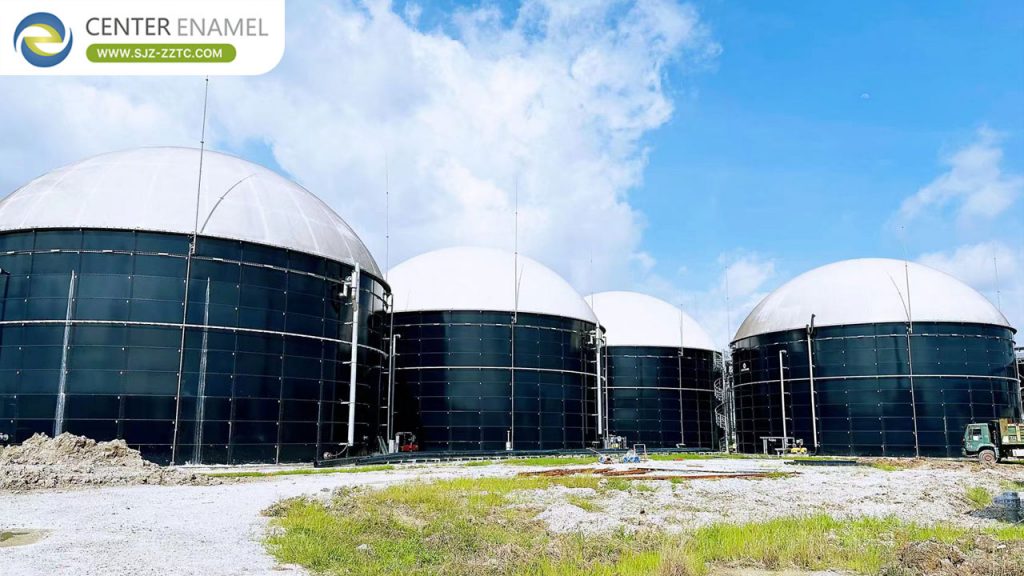
For municipal service, bolted GFS tanks provide corrosion resistance and fast assembly. The reactor sizes follow the process zones (equalisation, biological, sedimentation) rather than a generic volume.
About The Supplier
Shijiazhuang Zhengzhong Technology Co., Ltd (Center Enamel) manufactures GFS tanks for municipal and industrial wastewater, with enamel firing at 820-930 C and ISO 9001, NSF/ANSI 61, CE-EN 1090, and ISO 28765 certification. It supports EPC and design-build scopes with factory-controlled panel quality.
Comparison: Delivery Models
| Model | Risk Holder | Best When |
| EPC | Single supplier | Owner wants one guarantee |
| Design-build | Shared | Fast track |
| BOOT | Supplier operates | Limited owner O&M |
Fix the delivery model early, base the design on measured flow, and tie tankage procurement to the installation window so commissioning is not delayed by late panels.
Frequently Asked Questions
Q1: What are the phases of a sewage project? A1: Profiling and permitting, design, procurement, installation, and commissioning.
Q2: Who delivers a municipal plant? A2: An EPC or design-build contractor acting as single accountable party.
Q3: How long does commissioning take? A3: Tank assembly is weeks; biological start-up adds weeks depending on inoculum and load.
Q4: What delivery models exist? A4: EPC, design-build, and BOOT, differing in who holds schedule and performance risk.
Q5: Why profile flow first? A5: The daily and peak flow set every tank size and the permit defines the effluent.
Q6: What tankage is typical? A6: Modular GFS tanks for equalisation, biological, and sedimentation stages.
Q7: How is expansion handled? A7: Reserve footprint or add GFS rings as population grows.
Q8: What certifications apply to tanks? A8: ISO 9001, NSF/ANSI 61, CE-EN 1090, ISO 28765.
Discuss your sewage project delivery model and flow profile with an engineer, or request an EPC-scoped plan.