
Municipal Solid Waste for Biogas Projects: Source Separation, MBT, and Dry Digestion
Municipal solid waste (MSW) contains 30–55% organic matter by weight, and a municipal solid waste biogas project converts that fraction into renewable energy while diverting it from landfill. Diverting 100,000 tonnes of organic waste per year avoids roughly 25,000–40,000 tCO₂e of landfill methane — one of the cheapest climate actions available to a city.
The core challenge is contamination: organics mixed with plastics, glass, and metals destroy digesters, contaminate digestate, and inflate maintenance costs. The solution chain runs from source separation at households, through mechanical-biological treatment (MBT) for mixed waste, to dry digestion technologies built to tolerate residual impurities.
This guide compares the three main routes for MSW-to-biogas: source-separated organics digestion, MBT with wet digestion of the fines fraction, and full dry digestion of the organic stream — with a route comparison table and the economic data cities need for the decision.
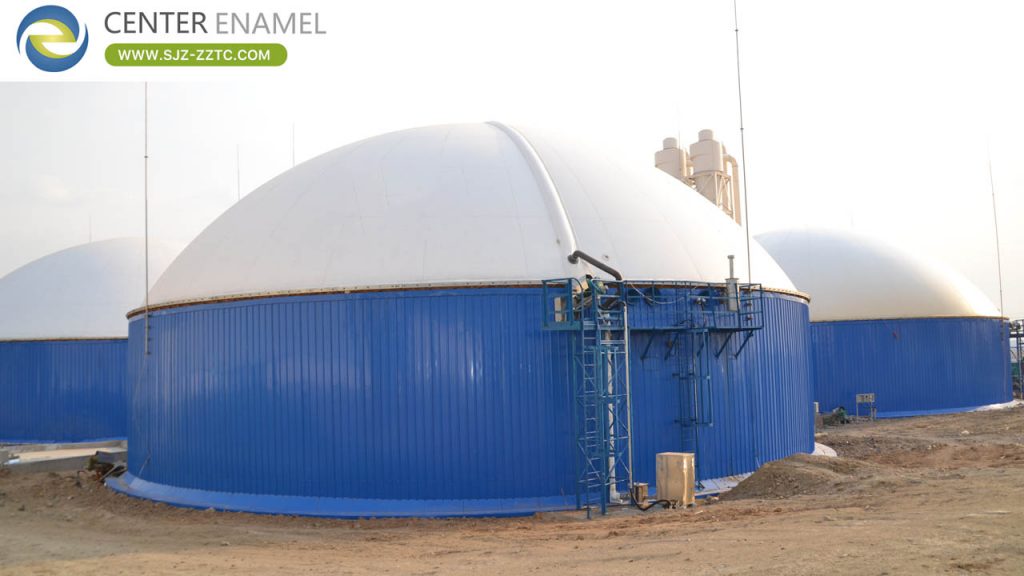
Routes to Organic Recovery: Source Separation vs MBT vs Dry Digestion
Source separation is the gold standard: households or businesses sort organics into dedicated bins, yielding a feedstock with 90–97% purity that digests readily at 100–180 m³/t and produces certifiable digestate. Its cost is behavioral — sustained participation and enforcement programs that typically take 2–4 years to mature.
Mechanical-biological treatment handles mixed MSW: trommel screens and magnets remove recyclables and inerts, leaving an organic-rich fines fraction for digestion or composting. MBT recovers energy without perfect household sorting but yields lower-purity feedstock (80–90%) requiring more pre-treatment and digestate scrutiny.
Dry (solid-state) digestion processes material at 20–40% TS, tolerating higher contamination and handling the coarse organic fraction MBT produces. Plug-flow and garage-type dry digesters dominate commercial MSW applications, with retention times of 21–35 days and robust mixing that resists sinking and floating debris.
Comparative Data Table: MSW-to-Biogas Route Comparison
| Route | Feedstock Purity | Biogas Yield (m³/t) | CAPEX Indicator | Digestate Quality | Maturity | Best Fit |
| Source-Separated AD | 90–97% | 100–180 | Moderate–High | Certifiable compost grade | Proven | Cities with mature sorting culture |
| MBT + Wet Digestion | 80–90% | 80–130 | Moderate | Restricted use | Proven | Mixed-waste cities, transitional systems |
| MBT + Dry Digestion | 75–90% | 70–110 | Moderate | Restricted use | Proven | High-organic mixed waste, less sorting |
| Direct Landfill (baseline) | N/A | 0 (flared or leaked) | Low | N/A | Avoided | No recovery — regulatory baseline |
The route table shows a strategic gradient: source separation maximizes gas yield and digestate value but demands behavior change; MBT and dry digestion accept lower purity for faster deployment. Leading cities combine them — source-separated organics to wet digestion, residual organic fines through MBT to dry digestion — recovering value from both streams.
Project Economics and Policy Drivers
MSW biogas projects earn from three sources: energy (electricity, heat, or biomethane), gate fees paid by the municipality for waste treatment, and recyclate or digestate sales. Gate fees of $40–80 per tonne are the dominant revenue in most models, making the project economics more waste-management than energy-driven.
Typical economics for a 50,000 t/year source-separated organics plant: CAPEX $25–45 million, gate fee plus energy revenue of $8–12 million annually, and payback of 7–10 years. Landfill taxes, separate collection mandates (EU Landfill Directive, US state organics laws), and methane-reduction targets are the policy levers that make these projects viable.
Carbon finance increasingly tops up returns: avoided landfill methane earns credits under voluntary and compliance programs, worth $15–40 per tCO₂e in 2026 markets. Combined with waste-diversion mandates, these incentives shift the business case from marginal to bankable for municipal investors.
Frequently Asked Questions (FAQ)
Q1: How is organic waste separated from MSW?
A: Best practice is source separation at households and businesses into dedicated organics bins. For mixed waste, MBT uses trommel screens, magnets, and air classifiers to remove recyclables and inerts, leaving an organic-rich fines fraction. Purity ranges from 90–97% (source-separated) to 75–90% (MBT).
Q2: What is MBT and how does it work?
A: Mechanical-biological treatment combines sorting machinery with biological processing. Screens and magnets extract recyclables and inerts; the remaining organic fraction is digested anaerobically or composted. MBT recovers energy and diverts waste without requiring perfect household sorting behavior.
Q3: Can dry digestion handle municipal solid waste?
A: Yes. Dry digesters process 20–40% TS material and tolerate higher contamination than wet systems. Plug-flow and garage-type designs with 21–35 day retention are proven on MSW organic fractions, making them the standard choice for mixed-waste feeds.
Q4: How much biogas comes from MSW organics?
A: Source-separated organics yield 100–180 m³ of biogas per tonne; MBT fines yield 70–130 m³ depending on purity. A 50,000 t/year plant typically produces 4–8 million m³ of biogas annually — enough for 4–8 MWh/day of electricity or equivalent biomethane.