
Municipal Wastewater And Sewage Treatment: Processes, Systems, And Solution Guide
Municipal wastewater and sewage treatment is the staged removal of solids, dissolved organics (BOD and COD), nutrients (nitrogen and phosphorus), and pathogens from domestic sewage so the effluent meets a discharge or reuse limit. A typical train runs screening and grit removal, primary clarification, secondary biological treatment (activated sludge, UBF, A2/O, SBR, or MBR), tertiary polishing, and disinfection. A municipal solution is that train scoped to the plant's flow, pollutant load, and permit by an engineer or EPC, not a single device.
The Municipal Treatment Train, Step By Step
Raw sewage first passes bar screens and a grit chamber that strip coarse debris and sand so they cannot damage pumps or blind the biology. Primary clarifiers then settle the heavier fraction. The biological stage - the heart of the plant - converts dissolved organics and nutrients using microbes, and tertiary steps (filtration, nutrient removal, disinfection) bring the water inside permit before it leaves. Each step exists because the stream demands it.
| Stage | What It Removes | Typical Unit |
| Screening / grit | Coarse solids, sand | Bar screen, grit chamber |
| Primary | Settleable solids | Clarifier, primary sed |
| Secondary (bio) | Dissolved BOD/COD, N, P | Activated sludge, UBF, A2/O, MBR |
| Tertiary | Fine solids, nutrients, pathogens | Filter, disinfection |
| Disinfection | Pathogens | UV, chlorine, ozone |
The Biological Core For Municipalities
The secondary stage is where most organic load is destroyed. Conventional activated sludge and its variants (SBR, MBR, A2/O) are aerobic and need aeration; attached-growth and anaerobic options such as UBF (Upflow Blanket Filter) cut energy and recover biogas on stronger streams. The choice depends on load, footprint, and whether the utility wants reuse-grade effluent, which favors membrane processes.
| Process | Oxygen | Footprint | Effluent Quality | Note |
| Activated sludge | Aerobic | Medium | Good | Robust, well known |
| A2/O | Aerobic+anoxic | Medium | Good (N,P) | Nutrient removal |
| UBF | Anaerobic | Compact | Moderate | Biogas, low energy |
| SBR | Aerobic batch | Small | Good | Flexible operation |
| MBR | Aerobic+membrane | Small | Excellent | Easy reuse |
What A Municipal Solution Includes
Beyond the process, a complete municipal solution wraps the train in a controls and compliance layer: flow and load monitoring, sludge handling, odor control, and a documentation trail that proves the permit is met. The engineering answer is therefore defined by a mass balance - what enters, what must leave, and what the limit allows - before any tank or reactor is specified.
Project Case Study: Ghana Domestic Sewage Treatment
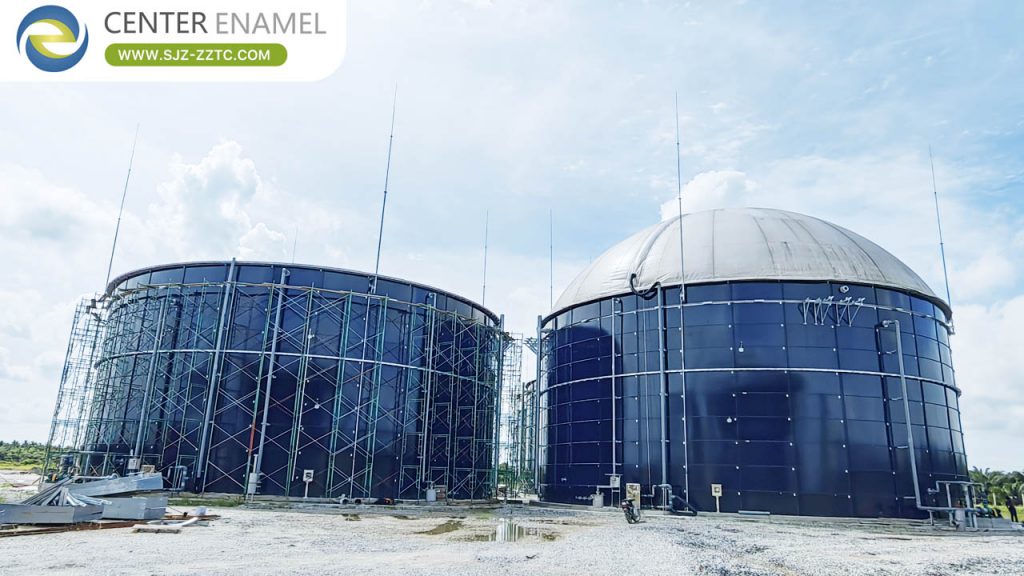
Project / Application: Municipal domestic sewage, Ghana. Industry: Municipal / domestic. Tank Type: Glass-Fused-to-Steel (GFS) tanks with UBF + A2/O. Key Requirements: Stable nutrient removal to local discharge limits.
| Field | Value | Source / Evidence |
| Daily Treatment Volume | 1,800 m3/day | Company project reference |
| Reactor Types | UBF + A2/O + sedimentation | Company project reference |
| UBF Tank | 1 set, O11.46 x 9.6 m | Company project reference |
| A2/O Tanks | 2 sets, Outer O20.64 x 6.6 m | Company project reference |
| Sedimentation | 1 set, O14.52 x 4.8 m | Company project reference |
| Influent COD | 1,000 mg/L | Company project reference |
| Effluent COD | 100 mg/L | Company project reference |
| Influent BOD5 | 500 mg/L | Company project reference |
| Effluent BOD5 | 25 mg/L | Company project reference |
| Installation Year | 2021 | Company project reference |
About Company
Shijiazhuang Zhengzhong Technology Co., Ltd (Center Enamel) is a comprehensive high-tech enterprise specializing in wastewater engineering, process section contracting, and equipment manufacturing. The company delivers biogas and wastewater projects through three main lines - EPC (turnkey) contracting, equipment supply, and process packages - covering livestock and municipal wastewater, biomass energy, industrial wastewater, and food waste. Its reactor portfolio spans CSTR, USR, UBF, UASB, IC, and EGSB, backed by in-house Glass-Fused-to-Steel tank manufacturing (enamel firing at 820-930 C) and certifications including ISO 9001, NSF/ANSI 61, and CE-EN 1090. With 35+ years of operation, a 150,000 m2 manufacturing base, and projects in 100+ countries, Center Enamel provides the single-responsibility engineering behind the Ghana domestic sewage plant that combined UBF and A2/O in Glass-Fused-to-Steel tanks to cut COD from 1,000 to 100 mg/L and BOD5 from 500 to 25 mg/L - a scoped municipal solution, not a catalogue product.
Comparison: Centralized Vs Decentralized Municipal
| Element | Centralized Plant | Decentralized Cluster |
| Collection | Large sewer network | Local, short pipes |
| Scale | Large, shared | Small, distributed |
| Best for | Dense cities | Rural, resorts, camps |
| Complexity | High | Moderate |
Municipal wastewater and sewage treatment is the staged, load-specific integration of screening, biological conversion, polishing, and disinfection under a compliance layer - scoped from the pollutant balance and the permit, not assembled from a menu of units.
Frequently Asked Questions
Q1: What are the main stages? A1: Screening, grit, primary clarification, biological secondary treatment, tertiary polishing, and disinfection.
Q2: What biological process is used? A2: Activated sludge, A2/O, UBF, SBR, or MBR, chosen by load and effluent goal.
Q3: What does a solution include beyond treatment? A3: Sludge handling, controls, monitoring, and a permit-compliance documentation layer.
Q4: How is effluent made safe? A4: Tertiary filtration plus disinfection (UV, chlorine, or ozone) controls pathogens.
Q5: Is anaerobic used in municipal plants? A5: Yes, attached-growth anaerobic units such as UBF cut energy and recover biogas on stronger streams.
Q6: Which process gives the best effluent? A6: MBR gives excellent, reuse-ready effluent but costs more in membrane and energy.
Q7: What tank resists corrosive sewage? A7: A Glass-Fused-to-Steel tank resists the corrosive and abrasive municipal stream.
Q8: Who scopes the solution? A8: An engineer runs the mass balance against the permit before specifying equipment.
Suggested CTA
Send your flow, load, and discharge limit to an engineer, or request a scoped municipal wastewater treatment outline for your utility.