
Why Municipal Wastewater Projects Deliver More With the Right EPC Contractor
Global municipal wastewater treatment capacity keeps expanding, and the Asia-Pacific region carries the largest share of that growth. Capacity, however, is no longer the whole story. Pipeline coverage, effluent quality and reuse targets now decide whether a plant is an asset or a liability, and those outcomes depend on how process, containment and construction are bundled together.
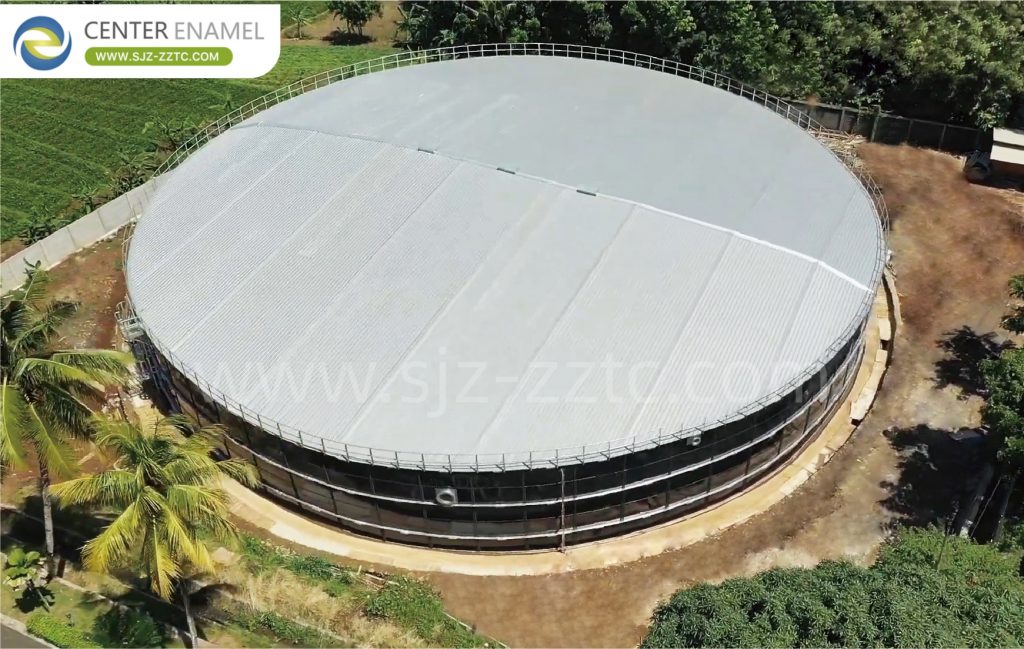
That is the case for appointing a single EPC Contractor. When the same organization owns the biological design, the tank specification and the crews that bolt the steel, municipal wastewater projects stop losing weeks at the seams between disciplines. The sections below follow that logic: where demand is growing, what the A²O Process contributes, why municipal sewage is unusually forgiving to biology, how tank choice protects flexibility, and what proven delivery looks like in the field.
Where Municipal Wastewater Capacity Is Growing, and What It Now Requires
China's urban wastewater treatment rate is already high, yet pipeline coverage and quality upgrading still leave room for improvement, and the reclaimed water utilization rate continues to climb. Rural decentralized facilities are spreading quickly under policy support. The pattern repeats across the region: developing economies concentrate on infrastructure expansion, while mature markets spend on upgrading and equipment replacement.
Trade flows follow the same map. Southeast Asia, the Middle East and Africa have become major destinations for Chinese wastewater treatment equipment, and Chinese suppliers keep gaining share in emerging markets. For an EPC Contractor, that means one project may be a greenfield plant in a fast-growing city and the next a retrofit squeezed into an operating site, so design and fabrication standards must travel well across climates, water qualities and regulatory regimes.
The A²O Process: Three Functions in One Train
The A²O Process completes organic degradation, nitrogen removal and phosphorus removal simultaneously in a single biological train, which is why it addresses the main pollutant concerns of municipal wastewater without adding separate reactors for each duty. Effluent quality stays stable and compliant rather than drifting with the season.
Its operating logic is simple and its zones are clearly defined, which matters over a twenty-year horizon. Commissioning and operation and maintenance systems are mature, failure rates are extremely low, and continuous stable operation is the normal expectation rather than an achievement. The process does not depend on large quantities of complex chemicals; microbial metabolism does the work, so operating costs stay low and secondary pollution is avoided.
Sludge return and nitrate recycle keep the bacterial population stable and give the plant real resistance to water quality and hydraulic shocks. Effluent can reliably meet China's Class IA discharge standard for municipal wastewater, capital investment is moderate, and the configuration scales economically, which is why it suits large municipal wastewater programmes rather than only small plants.
Why Municipal Sewage Is the Safest Stream to Treat Biologically
Municipal wastewater carries the lowest overall toxicity of the common wastewater types, with ecological risks that stay controllable. Its pollutants are natural organics, conventional nitrogen and phosphorus, and suspended impurities. There are no synthetic toxins, heavy metals, bacteriostats or persistent pollutants, so nothing inhibits the biochemical bacteria the process depends on or harms aquatic organisms.
The only biological content is a small amount of bacteria and viruses from human waste, and standard disinfection removes it completely, leaving no biosafety risk. Compliant discharge does not damage soil or aquatic ecosystems. The one real concern is long-term over-accumulation, which can drive eutrophication and black-odor conditions; there is no acute toxicity, chronic accumulation or carcinogenic, teratogenic or mutagenic risk, and the pollution impact is single-source and bounded.
| Pollutant Category | Typical Origin | Process Response | Residual Risk |
| Natural organics | Domestic and food waste | Biological oxidation in the oxic zone | Low; removed as carbon dioxide and biomass |
| Nitrogen and phosphorus | Urine, detergents, food residue | Nitrification, denitrification, phosphorus uptake | Low; limited to eutrophication if discharge is excessive |
| Suspended solids | Household and stormwater inflow | Settlement and return sludge capture | Low; concentrated in sludge for disposal |
| Pathogens | Human waste | Standard disinfection | Negligible after disinfection |
| Synthetic toxins and heavy metals | Should be excluded at source | Pretreatment or source control | Very low in a well-managed catchment |
Tank Selection Decides Whether a Plant Can Change With Its Sewage
Center Enamel has independently developed more than 200 specialized enamel frit formulations and supporting patents, so the anti-corrosion coating can be matched to the medium rather than to a catalogue assumption. That adaptability is difficult to match with concrete.
Concrete uses a single material and suits neutral, clean water only. Store corrosive media such as livestock manure, palm oil mill effluent, chemical wastewater, food waste digestate or high-salinity wastewater, and an additional anti-corrosion lining becomes necessary. Those linings are prone to failure, which undermines long-term stable operation, and they cannot cope with storage that alternates between high and low concentration.
GFS tanks are formulated with enamels resistant to strong acids, strong alkalis, high organic content and high salinity. A single tank can switch between multiple wastewater and fermentation feedstock duties, and the same platform serves biogas anaerobic digestion, municipal wastewater, livestock farming, food processing and industrial water treatment. Media changes no longer require new tanks, which is exactly what diversified environmental programmes need.
| Criterion | Concrete Tank | GFS Tank |
| Material adaptability | Single material, neutral water only | Enamel matched to medium from 200+ formulations |
| Corrosive media | Requires additional lining, prone to failure | Resists strong acid, alkali, high organics, high salinity |
| Media switching | Not suitable for alternating concentrations | One tank handles multiple wastewater and feedstock duties |
| Service life | Lining renewal cycles | 30-year corrosion protection in anaerobic and corrosive service |
Installation Crews That Protect the Programme
Even a good design fails if assembly is improvised. Center Enamel's installation teams carry practical experience from more than 10,000 GFS tank projects worldwide and follow standardized construction procedures, with full control over mobilization, civil coordination, tank assembly, piping and commissioning schedules and quality.
The crews are proficient in the complete standardized installation process for GFS tanks, dual-membrane gas storage covers, USR, CSTR and IC anaerobic reactors, and biogas desulfurization and piping systems. They work in large-scale farms, industrial parks, remote mountainous sites and coastal high-corrosion locations, applying unified global safety construction standards wherever they land.
For large overseas cross-border projects, the team can be deployed as a complete unit for on-site construction, technical training and practical instruction for local workers, keeping control of construction details, air-tightness testing and corrosion protection. That delivery capability is what turns a schedule into a commissioning date.
Benchmarks From Sweden to Southeast Asia
Center Enamel's portfolio spans more than 100 countries across Southeast Asia, Africa, Europe and the Americas, with over 30,000 mature projects and complete industry solutions for palm oil, livestock, municipal, brewing and food waste biogas applications. Regional climates, water qualities and regulations differ, but the matching logic is the same.
| Project | Location | Key Parameters | Process / Product |
| Organic waste biogas plant | Sweden, 2024 | Ø19.11 m × 19.2 m per fermenter | UASB + GFS tanks |
| Municipal wastewater plant with gas-tight coverage | Saudi Arabia | Large diameter, aluminum dome | GFS tanks + aluminum dome |
| Brewery effluent treatment | Malaysia | Ø7.64 m × 17.4 m | IC reactor + GFS |
| Pharmaceutical wastewater pretreatment | Hangzhou, China | 6 reactors, COD ≥70% removal, salt ≤6,000 mg/L | Granular sludge anaerobic + GFS |
The Swedish project is the clearest test of cold-climate performance. Each fermentation tank measured 19.11 meters in diameter and 19.2 meters in height, specified to resist acid, alkali and low-temperature corrosion under Nordic organic waste fermentation conditions. Assembly was convenient, the thirty-year corrosion protection matched the climate, and the plant now delivers both harmless organic waste treatment and biogas energy recovery as a European biomass demonstration project.
What to Verify Before Appointing an EPC Contractor
Ask whether design, enamel frit development, tank manufacturing and installation all sit inside the same organization, because that is where schedule risk is either absorbed or passed on. Ask which certifications govern the tank shell, how crews are deployed overseas, and whether the reference list includes projects in a climate and regulatory setting similar to yours.
The answers usually decide the tender more than the price does.
FAQ
Q: What makes the A²O Process suitable for municipal wastewater?
A: It removes organics, nitrogen and phosphorus in one train, with clearly separated zones and mature operating routines. Effluent reaches China's Class IA standard reliably, chemical consumption stays low, and sludge return plus nitrate recycle give the biomass enough resilience to ride out hydraulic and quality shocks, so a large plant stays compliant without a specialist operating team on site.
Q: Why choose GFS tanks instead of concrete for wastewater service?
A: Concrete suits neutral clean water and needs an added lining for corrosive media, and those linings fail. GFS tanks use enamels matched to the medium from more than 200 formulations, resist acid, alkali, high salinity and high organics, and can switch duties without rebuilding, with thirty-year corrosion protection. That flexibility matters where municipal catchments also receive industrial connections.
Q: How does Center Enamel support projects outside China?
A: Crews with experience from over 10,000 tank projects deploy as complete units for construction, air-tightness testing and training of local workers, backed by a network in more than 100 countries. Standardized procedures and localized adaptation keep municipal wastewater schedules intact, from first delivery to final commissioning and the first permit cycle.
Send our team your treatment capacity, influent quality and site conditions, and we will propose a process and tank configuration that fits your discharge standard. Start a conversation with Center Enamel about your municipal wastewater programme, or request our GFS tank and A²O reference package ahead of your EPC Contractor selection.