
Municipal Wastewater Treatment in Ghana | UBF Process & EPC Contractor Solutions
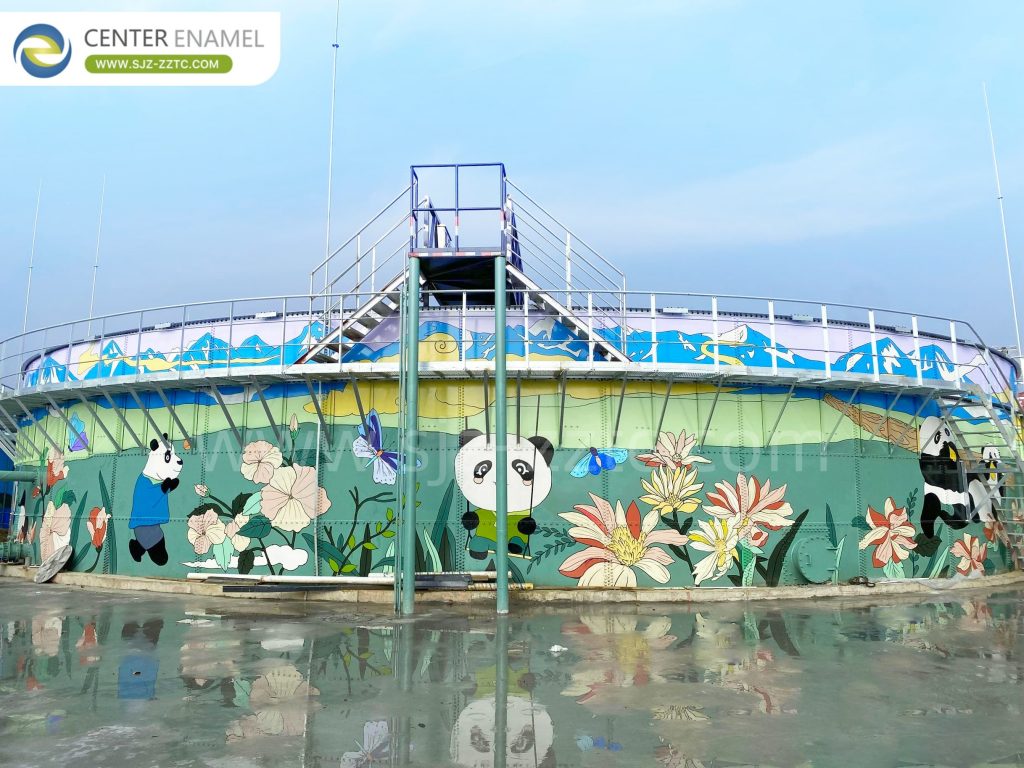
Ghana's urban population has been growing rapidly, placing increasing pressure on municipal water infrastructure. In many cities, untreated or partially treated sewage continues to flow into rivers and streams, threatening public health, contaminating drinking water sources, and damaging aquatic ecosystems. The need for reliable, cost-effective municipal wastewater treatment has never been more urgent.
A modern Biogas Project in Ghana addresses this challenge directly. The facility treats 1,800m³ of municipal sewage per day using a combined UBF (Upflow Blanket Filter) anaerobic reactor followed by the A²O (Anaerobic-Anoxic-Oxic) biological nutrient removal process. The plant was completed in 2021 and has been operating successfully since commissioning. An experienced EPC Contractor delivered full turnkey services from preliminary planning to site management and project realization.
This article details the technical design, treatment performance, and operational benefits of this municipal wastewater treatment facility.
Why Municipal Wastewater Treatment Matters for Ghana
Ghana's urban centers generate large volumes of domestic sewage daily. Without adequate treatment, this wastewater causes:
Waterborne disease outbreaks – Cholera, typhoid, and dysentery from pathogen-contaminated water.
Eutrophication – Excess nutrients (nitrogen and phosphorus) cause algal blooms that kill fish and clog waterways.
Groundwater contamination – Nitrates from sewage seep into wells and boreholes used for drinking.
Odor and aesthetic problems – Untested sewage creates unpleasant conditions for nearby communities.
The Ghanaian government has prioritized water and sanitation infrastructure under national development plans. This Biogas Project represents a replicable model for medium-sized municipal treatment plants across the country.
Project Overview: 1,800m³/day Municipal Sewage Treatment
| Parameter | Detail |
| Location | Ghana |
| Treatment Process | UBF + A²O (Anaerobic-Anoxic-Oxic) |
| Wastewater Source | Municipal sewage |
| Flow Rate | 1,800 m³/day |
| Tank Dimensions | Φ11.46×9.6m (H) – 1 unit Φ14.52×4.8m (H) – 1 unit Φ20.64×6.6m (H) – 1 unit Φ9.17×6.6m (H) – 1 unit |
| Completion Date | 2021 |
| Operating Status | Fully operational since commissioning |
| Scope by EPC Contractor | Preliminary planning, implementation planning, site management, project realization |
The plant operates continuously, handling daily flow fluctuations typical of municipal sewage systems. The combination of UBF anaerobic pre-treatment and A²O biological nutrient removal ensures that effluent meets stringent discharge standards.
Influent and Effluent Water Quality
| Parameter | Influent (Raw Sewage) | Effluent (Treated Water) | Removal Efficiency |
| CODcr | 1,000 mg/L | <100 mg/L | >90% |
| BOD₅ | 500 mg/L | <25 mg/L | >95% |
| Ammonia (NH₃-N) | 30 mg/L | <10 mg/L | >66% |
| Suspended Solids (SS) | 400 mg/L | <25 mg/L | >93% |
| Total Phosphorus (TP) | 10 mg/L | <2 mg/L | >80% |
| pH | 6.5–9.0 (influent range) | 6.5–9.0 | Maintained |
The plant consistently achieves these effluent targets, protecting receiving waters and meeting Ghanaian environmental discharge standards.
UBF Process: The Core Anaerobic Treatment Stage
The UBF Process (Upflow Blanket Filter) combines the advantages of a UASB (Upflow Anaerobic Sludge Blanket) and an anaerobic filter. Wastewater flows upward through a bed of granular sludge and a fixed filter media. The filter media retains biomass even at high flow rates, preventing washout and ensuring stable treatment performance.
How the UBF Process Works in This Biogas Project
Raw municipal sewage first passes through screening and grit removal to eliminate large solids and abrasive materials. The screened sewage then enters the UBF reactor.
Inside the UBF reactor, three zones work together:
Bottom Zone – Sludge Blanket Layer
Incoming wastewater is distributed evenly across the reactor bottom.
It flows upward through a dense blanket of anaerobic granular sludge.
Hydrolytic, acidogenic, and methanogenic bacteria break down organic matter.
Biogas (methane and CO₂) is produced and rises to the top.
Middle Zone – Filter Media Layer
Above the sludge blanket, a packed bed of filter media (plastic rings or similar) provides additional surface area for biofilm attachment.
Biomass grows on the media, treating soluble organic matter that escapes the sludge blanket.
The filter media also captures fine suspended solids.
Top Zone – Gas-Liquid-Solid Separator
Rising biogas is collected by gas hoods or domes.
Treated water flows over an outlet weir.
Settled sludge returns to the blanket zone by gravity.
Why UBF Is Ideal for Municipal Wastewater in Ghana
The UBF Process offers several advantages for tropical African conditions:
| Advantage | Benefit for Ghana |
| No mechanical mixing | Lower energy consumption and fewer moving parts to maintain |
| High biomass retention | Stable treatment even with flow fluctuations |
| Low sludge production | Reduced sludge handling and disposal costs |
| Biogas recovery | Renewable energy for on-site use (heating, lighting, or pumping) |
| Tropical temperature fit | Ghana's 25–32°C climate is ideal for mesophilic anaerobic digestion |
| Compact footprint | Smaller land area than conventional stabilization ponds |
The UBF reactor removes approximately 70–80% of the organic load (COD and BOD) from the incoming sewage, significantly reducing the burden on the downstream A²O system.
A²O Process: Biological Nutrient Removal
While the UBF Process removes most organic carbon, it cannot remove nitrogen or phosphorus effectively. Municipal sewage contains ammonia (30 mg/L) and phosphorus (10 mg/L) that must be reduced to prevent eutrophication in receiving waters. The A²O process (Anaerobic-Anoxic-Oxic) is specifically designed for biological nutrient removal.
How the A²O Process Works
The A²O system consists of three sequential zones:
Zone 1 – Anaerobic Tank
No dissolved oxygen and no nitrate present.
Polyphosphate-accumulating organisms (PAOs) release phosphorus into the liquid.
Volatile fatty acids (VFAs) from the influent are stored by PAOs as internal carbon sources.
This phosphorus release is essential for subsequent luxury uptake.
Zone 2 – Anoxic Tank
No dissolved oxygen, but nitrate is present (recycled from the oxic tank).
Denitrifying bacteria convert nitrate (NO₃⁻) into nitrogen gas (N₂), which escapes to the atmosphere.
This removes nitrogen from the wastewater.
Some BOD is consumed using nitrate as the electron acceptor.
Zone 3 – Oxic Tank (Aerobic)
Air is introduced via fine bubble diffusers.
Ammonia-oxidizing bacteria (AOB) convert ammonia to nitrite.
Nitrite-oxidizing bacteria (NOB) convert nitrite to nitrate.
PAOs take up large quantities of phosphorus (luxury uptake), storing it within their cells.
Remaining BOD is consumed by aerobic heterotrophic bacteria.
Secondary Clarifier
Activated sludge settles to the bottom.
A portion of the settled sludge is returned to the anaerobic tank (return activated sludge, RAS).
Excess sludge (waste activated sludge, WAS) is removed for further processing.
Treated effluent flows to the final discharge or reuse point.
A²O Performance for This Biogas Project
| Parameter | After UBF | After A²O | Final Effluent |
| COD | ~200–300 mg/L | <100 mg/L | Achieved |
| BOD | ~100–150 mg/L | <25 mg/L | Achieved |
| Ammonia | ~30 mg/L | <10 mg/L | Achieved |
| Total Phosphorus | ~10 mg/L | <2 mg/L | Achieved |
The A²O system provides reliable nutrient removal without the need for chemical addition (e.g., alum or ferric chloride), reducing operating costs.
The Role of an EPC Contractor in Municipal Wastewater Projects
Delivering a 1,800m³/day municipal treatment plant in Ghana requires expertise across civil, mechanical, electrical, and biological disciplines. The EPC Contractor (Engineering, Procurement, Construction) provides single-point responsibility from concept through commissioning.
Scope Delivered by the EPC Contractor
For this Biogas Project, the EPC Contractor performed:
Preliminary Planning
Site assessment and topographical survey.
Sewage characterization and flow monitoring.
Technology selection (UBF + A²O vs. other options).
Hydraulic profile and mass balance calculations.
Regulatory permit assistance (Ghana EPA, local water authority).
Implementation Planning
- Detailed engineering of the UBF reactor (volume, inlet distribution, filter media selection, gas collection).
- A²O tank design (anaerobic, anoxic, and oxic volumes, diffuser layout, recycle pumps).
- Secondary clarifier design (surface overflow rate, sludge collection mechanism).
- Blower building and aeration piping.
- Control system (PLC-based with remote monitoring).
- Civil, mechanical, and electrical drawings.
Site Management
On-site supervision of earthworks, tank erection, and pipe laying.
Quality control and safety compliance.
Coordination between local subcontractors and international suppliers.
Progress reporting to the client (municipal government or utility).
Project Realization & Handover (2021)
Equipment installation and system integration.
Biological startup: seeding the UBF reactor and A²O system.
Performance testing to guarantee effluent quality (<100 mg/L COD, <25 mg/L BOD, <10 mg/L ammonia, <2 mg/L TP).
Operator training for daily rounds, laboratory sampling, and troubleshooting.
As-built documentation and warranty support.
By engaging a single EPC Contractor, the municipal authority avoided coordination risks between multiple vendors and ensured the plant was completed on schedule and within budget.
Biogas Recovery and Utilization
The UBF Process produces biogas as a byproduct of anaerobic digestion. While municipal sewage has a lower organic strength than industrial wastewater (COD 1,000 mg/L vs. 50,000 mg/L for palm oil effluent), the biogas generated can still provide valuable energy for the treatment plant.
Estimated Biogas Production
For this 1,800m³/day plant with influent COD of 1,000 mg/L
COD removed by UBF: ~700–800 mg/L (70–80% removal).
Daily COD removed: 1,800 m³ × 0.75 kg/m³ = 1,350 kg COD/day.
Biogas production: ~0.35 m³ CH₄ per kg COD removed = ~470 m³ CH₄/day.
Total raw biogas (60% CH₄): ~780 m³/day.
Biogas Utilization Options
The captured biogas can be used for:
Heating the UBF reactor – Maintaining optimal mesophilic temperature (though less critical in Ghana's warm climate).
Powering a small biogas engine – Generating electricity for plant pumps and blowers (reducing grid dependence).
Boiler fuel – Producing hot water for sludge drying or digester heating.
Flaring – As a safety measure during maintenance.
Even modest biogas recovery reduces the plant's operational carbon footprint and operating costs.
Environmental and Public Health Benefits
Pollution Reduction
The plant removes from the municipal sewage stream daily:
COD removal: ~1,600 kg/day (from 1,000 mg/L to <100 mg/L).
BOD removal: ~850 kg/day (from 500 mg/L to <25 mg/L).
Ammonia removal: ~36 kg/day (from 30 mg/L to <10 mg/L).
Phosphorus removal: ~14 kg/day (from 10 mg/L to <2 mg/L).
Suspended solids removal: ~675 kg/day (from 400 mg/L to <25 mg/L).
Public Health Protection
By removing pathogens (bacteria, viruses, protozoa) through biological treatment and solids separation, the plant reduces the incidence of waterborne diseases in downstream communities.
River and Groundwater Protection
The treated effluent, with BOD below 25 mg/L and ammonia below 10 mg/L, can be safely discharged to a river without causing oxygen depletion or toxicity to aquatic life.
Odor Control
Unlike open sewage channels or stabilization ponds, the enclosed UBF reactor and covered A²O tanks minimize odor complaints from nearby residents.
Operational Experience Since 2021
The plant was completed and commissioned in 2021 and has been operating successfully since that time. Key operational achievements include:
Consistent effluent quality – Discharge parameters remain within permit limits throughout the year.
Low energy consumption – The UBF stage requires no aeration, reducing overall plant power demand.
Minimal chemical use – Biological nutrient removal eliminates the need for coagulants or phosphorus-precipitating chemicals.
Operator acceptance – Local staff have been fully trained and manage daily operations independently.
Low sludge production – The UBF produces minimal waste sludge, reducing disposal costs.
The success of this facility has attracted interest from other Ghanaian municipalities seeking similar solutions.
A Replicable Model for Ghanaian Municipalities
This Biogas Project in Ghana demonstrates that municipal sewage can be treated reliably and economically using the UBF Process followed by A²O biological nutrient removal. The plant treats 1,800m³/day of sewage, achieving >90% COD removal, >95% BOD removal, and significant nutrient reduction. Completed in 2021 and fully operational, the facility protects public health, preserves receiving waters, and recovers biogas as a renewable energy source.
The turnkey delivery by an experienced EPC Contractor – from preliminary planning through site management to project realization – removed technical risk and ensured the plant was completed on time and operates as designed. For municipal authorities across Ghana and West Africa, this project serves as a practical, replicable benchmark.
By investing in UBF + A²O treatment, Ghanaian cities can achieve environmental compliance, reduce waterborne disease, lower operating costs through biogas recovery, and demonstrate genuine commitment to sustainable water management.
Frequently Asked Questions (FAQs)
Q1: What is the main advantage of using UBF + A²O for municipal wastewater treatment?
The UBF Process removes most organic load without aeration (saving energy), while A²O removes nitrogen and phosphorus biologically without chemicals. Together, they achieve >90% COD removal and >80% phosphorus removal at low operating cost.
Q2: Why are GFS Tanks the best choice for UBF reactors in this Ghana Biogas Project?
Glass-Fused-to-Steel (GFS) tanks are highly corrosion-resistant, even against H₂S and organic acids produced during the UBF Process. They are factory-coated, bolted on-site for rapid installation, and require minimal maintenance – ideal for Ghana's tropical climate. As the EPC Contractor, Center Enamel uses GFS tanks to ensure long-term durability and leak-free operation.
Q3: Does the UBF Process produce odors that disturb nearby communities?
No. The UBF Process operates in a sealed reactor, capturing biogas and containing any odors. Unlike stabilization ponds or open channels, this Biogas Project produces minimal smell, making it suitable for locations near residential areas.