
Myanmar Cassava Processing Wastewater Biogas Projects | Leading Anaerobic Solutions by Center Enamel
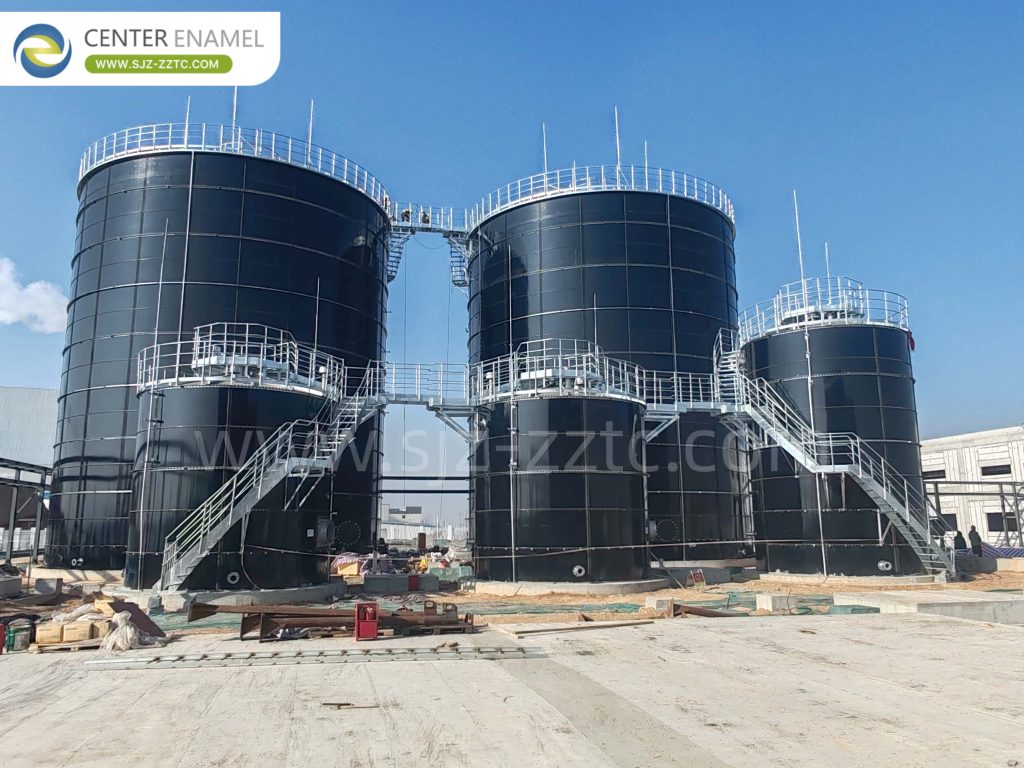
Myanmar is endowed with superior tropical monsoon climate and fertile land, making it one of the key cassava planting countries in Southeast Asia. Cassava plantations are widely distributed across the Irrawaddy Delta, Bago Region and rural areas of southern Myanmar. As an important cash crop and raw material for starch processing, cassava plays a vital role in Myanmar’s rural economy, farmer livelihood and cross-border export trade. With the expansion of cassava starch factories, flour processing workshops and agricultural product enterprises, massive Cassava Processing Wastewater is generated daily during cleaning, grinding, starch separation and production processes.
Traditional random discharge and simple stacking of cassava wastewater cause severe river eutrophication, odor pollution, groundwater contamination and greenhouse gas emissions. Under Myanmar’s renewable energy promotion and ecological protection policies, developing Cassava Processing Wastewater Biogas Projects has become an inevitable choice. As a professional global EPC contractor, Center Enamel delivers customized Anaerobic Solutions and mature CSTR Process, helping Myanmar realize wastewater harmless treatment and renewable energy recycling.
Overview of Cassava Planting in Myanmar
Myanmar enjoys sufficient sunlight, abundant rainfall and barren-tolerant soil, which are extremely suitable for cassava growth. Cassava cultivation is dominated by smallholder farms and scattered rural planting bases, with a total planting area continuing to expand year by year. Fresh cassava is not only used for local food and feed, but also exported to China, Thailand and other neighboring countries in large quantities.
Driven by export demand and domestic processing needs, Myanmar’s cassava starch and deep processing industries are developing rapidly. However, backward waste treatment technology leads to a large amount of high-concentration cassava processing wastewater. This wastewater features high COD, high BOD, high suspended solids and easy acidification. In Myanmar’s hot and humid tropical environment, untreated wastewater seriously damages rural water ecosystems and restricts the sustainable development of the cassava industry.
Main Applications of Cassava Processing Waste
Cassava processing residues and wastewater are valuable renewable biomass resources with multiple utilization channels:
- Processed into high-protein livestock feed for cattle, pigs and poultry farms, reducing breeding input costs.
- Fermented into nutrient-rich organic fertilizer to improve farmland soil and promote crop growth.
- Used as culture medium for edible fungi cultivation in rural households and small workshops.
- Developed into bioethanol and biomass fuel for industrial use.
- Converted into clean biogas through anaerobic digestion, the most profitable and eco-friendly method for large and medium-sized cassava processing factories.
How Cassava Processing Wastewater Generates Biogas
Cassava processing wastewater is rich in starch, carbohydrates and organic protein. Under oxygen-free sealed conditions, it undergoes four stable anaerobic digestion stages to produce biogas:
- Hydrolysis Stage: Hydrolytic bacteria decompose macromolecular starch and organic matter into small-molecule sugars and amino acids.
- Acidification Stage: Small-molecule organics are converted into volatile fatty acids, hydrogen and carbon dioxide.
- Acetogenesis Stage: Intermediate substances further decompose into acetic acid, the core precursor of methane production.
- Methanogenesis Stage: Methanogenic bacteria convert acetic acid into biogas containing 55%–70% methane and 30%–45% carbon dioxide.
The generated biogas can be used for factory power generation, boiler heating and rural daily energy use. Fermented biogas residue and slurry are made into organic fertilizer, forming a closed-loop circular economy model of “planting-processing-waste-biogas-fertilizer”.
Benefits of Cassava Wastewater Biogas Projects for Myanmar
Promoting Cassava Processing Wastewater Biogas Projects brings far-reaching environmental, economic and social benefits to Myanmar.
First, solve rural water pollution fundamentally. Professional anaerobic treatment decomposes high-concentration organic pollutants, avoids river eutrophication and odor spread, and protects Myanmar’s precious water resources and rural ecological environment.
Second, optimize energy structure and ease power shortage. Biogas serves as stable biomass energy, making up for insufficient power supply in rural areas and reducing reliance on imported fossil fuels.
Third, reduce enterprise and rural operating costs. Biogas replaces firewood and electricity, cutting daily energy expenses; organic fertilizer reduces chemical fertilizer purchase costs and increases crop income.
Fourth, comply with national green development policies. The project fits Myanmar’s circular economy and carbon reduction goals, helping cassava processing factories meet environmental discharge standards and obtain policy support.
Four Main Anaerobic Technologies by Center Enamel
Center Enamel configures four mature anaerobic technologies tailored to Myanmar’s cassava wastewater characteristics, with CSTR Process as the core recommended solution.
CSTR Process (Completely Stirred Tank Reactor)
As the most suitable technology for Myanmar’s high-solids cassava wastewater, CSTR adopts full mechanical stirring to mix waste and microbial flora evenly. It prevents scum crusting and sediment accumulation, ensures stable fermentation and high biogas yield all year round, ideal for large centralized cassava processing plants.
UASB Process (Upflow Anaerobic Sludge Blanket)
Ideal for low-solids liquid cassava wastewater. It features low operating cost and high organic removal efficiency, suitable for medium-sized starch factories in Myanmar.
USR Process (Upflow Solids Reactor)
Simple structure, low investment and easy maintenance. It adapts to scattered small cassava workshops and rural decentralized wastewater treatment projects.
IC Process (Internal Circulation)
Adopts biogas-driven internal circulation with 3–5 times higher load than traditional reactors. It saves construction land, perfect for industrial zones with limited space.
GFS Tanks Advantages in Myanmar Cassava Wastewater Biogas Projects
Glass-Fused-to-Steel (GFS) Tanks are the core equipment for cassava wastewater biogas projects, with unique advantages adapting to Myanmar’s climate and waste traits:
- Wide Corrosion Resistance: Fused at over 820°C, GFS Tanks withstand pH 1–14, resisting acid corrosion from cassava wastewater and long-term microbial erosion.
- Strong Climate Adaptation: Resist high temperature, heavy rainfall, humidity and ultraviolet aging in Myanmar’s tropical environment.
- Excellent Airtightness: Sealed bolted structure avoids biogas and odor leakage, improving gas production efficiency and eliminating secondary pollution.
- Long Service Life: More than 30 years of service life, low daily maintenance cost, far superior to traditional concrete tanks.
- Fast Flexible Installation: Factory prefabricated components, on-site bolt assembly, short construction cycle and convenient later expansion.
Why Choose Center Enamel as Biogas Project EPC
- Customized Anaerobic Solutions: Tailor CSTR Process and other anaerobic technologies according to Myanmar’s cassava waste composition and tropical monsoon climate.
- Powerful R&D & Manufacturing: Owns 200+ patented enamel formulas and Asia’s largest GFS tank production base.
- Global Standard Certification: Complies with ISO 28765, AWWA D103, CE and other international standards; each tank passes 1500V high-voltage spark test.
- Rich Southeast Asian Experience: Familiar with Myanmar’s rural terrain, environmental regulations and tropical construction difficulties.
- One-Stop Turnkey EPC Service: Covers project design, equipment manufacturing, installation, commissioning and lifelong after-sales support.
Center Enamel’s Professional Installation Process
- Hydraulic jacking top-down installation: No large cranes or high scaffolding, suitable for Myanmar’s rural narrow sites and remote terrain.
- Zero on-site welding: All components factory prefabricated, assembled with high-strength bolts to avoid humidity and rain welding failures.
- Rapid commissioning: Bolted tanks skip long concrete curing period, shortening construction time and accelerating investment return.
- Dedicated after-sales team: Provides regular maintenance and remote technical guidance for Southeast Asian projects.
Two Successful Project Cases
Case1: Malaysia Biogas Project
Tank Dimensions: φ22.93 × 12.325 m (H) — 1 Unit
Total Volume: 5,087 m³ — 1 Unit
Completion Date: 2025
Case2: Sweden Biogas Project
Tank Dimensions: φ19.11 × 19.2 m (H) — 1 Unit
Total Volume: 5,510 m³
Completion Date: 2024
Myanmar’s cassava industry brings huge economic benefits while generating massive processing wastewater pollution. Building standardized Cassava Processing Wastewater Biogas Projects with professional Anaerobic Solutions and mature CSTR Process is the best way to balance environmental protection and energy utilization. With high-performance GFS Tanks, four anaerobic technologies and rich Southeast Asian EPC experience, Center Enamel provides reliable one-stop solutions, helping Myanmar solve wastewater pollution, optimize rural energy structure and achieve long-term sustainable development of the cassava economy.