
Need a Brewing Wastewater Treatment Project EPC Contractor? See How Center Enamel Delivers End-to-End IC Process Solutions
The global brewing industry keeps expanding, and with it comes an ever-growing demand for compliant, cost-effective effluent management. Brewery wastewater is among the most challenging industrial streams to treat, yet many producers still rely on fragmented suppliers who handle only one stage of the project. That is why more and more breweries are turning to a dedicated brewing wastewater treatment project EPC contractor-a single partner accountable for process design, equipment supply, construction and commissioning. Center Enamel has built its global reputation precisely in this role, delivering turnkey anaerobic treatment plants in which the IC Process plays a central role.
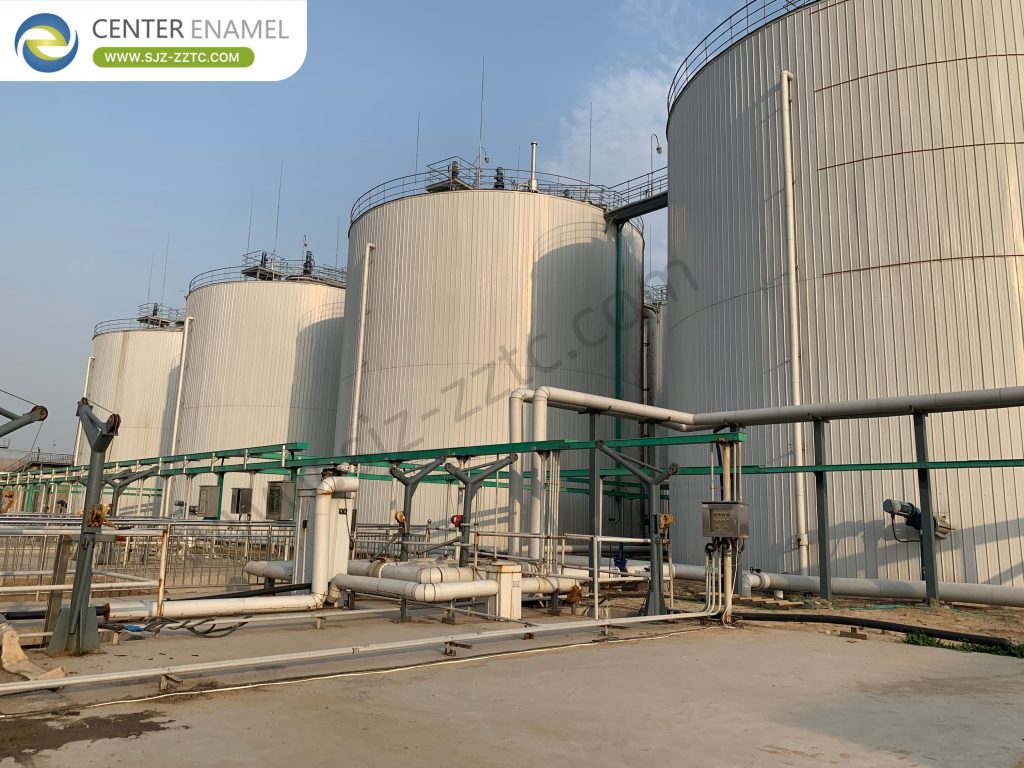
Why the Market Is Moving Toward Integrated EPC Delivery
The competitive landscape explains this shift clearly. Leading companies are building integrated service capabilities through technical integration and capital operations, and industry concentration is gradually rising, while Chinese manufacturers continue to consolidate their advantage in mid-tier equipment exports. In the anaerobic process segment, UASB, EGSB and IC reactors are widely adopted for high-concentration organic wastewater pretreatment across food processing, pharmaceutical fermentation, alcohol brewing and chemical industries, thanks to their high loading rates, small footprints and stable operation. Because these reactors use steel tank shells, corrosion resistance and gas-tightness directly determine long-term operational stability-which is why the application value of glass-fused-to-steel tanks is becoming increasingly prominent in such scenarios. Owning this complete capability stack is exactly what distinguishes a true brewing wastewater treatment project EPC contractor, and it forms the foundation of every Center Enamel project.
Brewery Effluent at a Glance: High Strength, High Fluctuation
Before selecting a treatment route, operators must first understand the wastewater they are dealing with. Brewery effluent is characterized by high concentration, high suspended solids, high color and slight acidity, combined with excellent biodegradability-but also significant fluctuations. COD typically ranges from 5,000 to 25,000 mg/L, with high-strength spent mash and still bottoms peaking at hundreds of thousands of mg/L. Suspended solids can reach 40,000 mg/L, forming a thick, turbid liquor, while pH remains stable in the slightly acidic range of 3–5. Pollutants are primarily natural organics from grain fermentation-starches, reducing sugars, proteins and alcohols-with no synthetic toxic substances, and a BOD/COD ratio of 0.5–0.6 indicates industry-leading biodegradability. The key challenge is variability: flow and strength fluctuate significantly with production batches and seasonal capacity, and the liquor is susceptible to secondary fermentation and odor if left standing.
| Parameter | Typical Value / Condition |
| COD | 5,000–25,000 mg/L; high-strength spent mash and still bottoms can peak at hundreds of thousands of mg/L |
| Suspended Solids (SS) | Up to 40,000 mg/L, forming thick, turbid liquor |
| pH | 3–5, slightly acidic |
| BOD/COD Ratio | 0.5–0.6 (excellent biodegradability) |
| Pollutant Composition | Natural organics from grain fermentation: starches, reducing sugars, proteins, alcohols; no synthetic toxic substances |
| Fluctuation Pattern | Significant with production batches and seasonal capacity; prone to secondary fermentation and odor when stored |
These numbers explain why conventional aerobic treatment alone struggles with brewery effluent-and why high-rate anaerobic technology such as the IC Process has become the industry benchmark.
The IC Process: Internal Circulation That Maximizes Treatment Efficiency
The IC Process is a two-stage high-rate anaerobic system built around autonomous internal circulation. Pretreated high-strength organic wastewater enters the lower main reaction zone from the bottom, mixing with the recirculated sludge-water mixture and rising rapidly. Anaerobic microorganisms efficiently degrade the organic matter and produce large volumes of biogas, and the gas-lift action of this biogas carries the mixed liquor upward to the top gas-liquid separator, where the biogas is collected. The degassed sludge-water mixture then returns by gravity through downcomers to the reactor bottom, creating autonomous internal circulation that repeatedly enhances pollutant degradation. After multiple circulation cycles, the wastewater enters the upper polishing zone for further reaction and sludge-water separation, where remaining trace organics are fully degraded. Sludge settles back to the lower reaction zone, treated effluent overflows from the top, and aged sludge is periodically discharged-fully autonomous circulation, efficient continuous operation, and a compact footprint that fits easily into existing brewery sites.
Glass-Fused-to-Steel Tanks: The Corrosion-Resistant Backbone of Anaerobic Systems
Because the IC Process achieves such high loading rates within a small footprint, the quality of the reactor tank shell becomes a decisive factor. Glass-fused-to-steel (GFS) tanks combine the strength of steel with a vitreous enamel coating fused to both surfaces at high temperature, delivering outstanding corrosion resistance against acidic fermentation liquor, reliable gas-tightness for biogas containment, and a service life measured in decades with minimal maintenance. Their bolted panel construction also allows rapid on-site assembly, shortened construction timelines and easy future expansion-benefits that make them the preferred shell for IC, UASB and CSTR reactors in brewery and biogas projects worldwide.
A Field-Proven Reference: Biogas from Food Waste and Napier Grass in Pakistan
Theory matters little without proof, and Center Enamel has built an extensive reference portfolio across Asia and beyond. One representative case is the Food Waste + Napier Grass Biogas Demonstration Project in Pakistan, where Center Enamel acted as general contractor with CSTR as the core anaerobic process. Using food waste and Napier grass as mixed fermentation feedstock, the plant is equipped with a mechanical mixing system that ensures thorough blending of feedstock and anaerobic microorganisms, achieving efficient organic degradation with stable daily biogas production of 100 m³. As the local official demonstration project, it validates gas production efficiency and long-term continuous operational stability-and after successful pilot operation, multiple large-scale Napier grass biogas projects are already planned locally to promote biomass clean energy and support regional low-carbon development.
| Project | Details |
| Project Name | Food Waste + Napier Grass Biogas Demonstration Project |
| Location | Pakistan |
| Contractor Role | General Contractor (Center Enamel) |
| Core Anaerobic Process | CSTR |
| Feedstock | Food waste + Napier grass (mixed fermentation) |
| Daily Biogas Output | 100 m³, stable |
| Significance | Local official demonstration for gas production efficiency and long-term operational stability |
| Follow-up Plan | Multiple large-scale Napier grass biogas projects planned after successful pilot |
Delivering projects of this quality at consistent speed requires serious manufacturing scale-which brings us to the production engine behind every Center Enamel contract.
Built to Deliver: A 150,000 m² Smart Manufacturing Base Behind Every Project
Center Enamel's core intelligent manufacturing base is located in Hebei Province, China, covering a total area of over 150,000 m². The base combines a mature Phase I manufacturing facility with a Phase II high-end environmental equipment industrial park, and the dual-base synergy ensures stable production capacity for projects running in parallel around the world. Dedicated R&D office buildings, proprietary material laboratories and finished product testing centers support full-process quality control systems that meet ISO, NSF, CE and other international standards, while the facility itself operates to green manufacturing standards as a certified Provincial Green Factory. With 500+ employees, multiple parallel automated production lines, six marketing service centers across China, and complete container shipping capabilities adjacent to expressway networks and major logistics hubs, the base firmly places Center Enamel among the global top tier of GFS tank equipment manufacturers-and gives every brewing wastewater treatment project EPC contractor contract the supply-chain certainty it needs.
One Contractor, Full Control: From Enamel Frit R&D to Final Commissioning
Scale alone, however, is not enough-integration is what sets a true EPC partner apart. Center Enamel is one of the few companies globally to integrate proprietary enamel frit R&D, self-manufactured tanks and EPC general contracting in a single organization. This full-industry-chain model delivers full-process self-control from solution design and equipment production, through cross-border logistics and overseas construction, to post-construction operation and maintenance-significantly reducing client coordination costs, shortening delivery schedules and placing accountability in one hand from kickoff to handover.
Complete Storage Solutions: Aluminum Alloy Trough Deck Roofs
A complete brewery wastewater and water management system extends beyond reactors. Center Enamel also supplies the Aluminum Alloy Trough Deck Roof, a cost-effective economical tank cover designed for drinking water, production wastewater and firewater reserve tanks. Its lightweight anti-corrosion aluminum alloy body, integrally formed with aluminum support trusses, imposes less load on tank foundations and reduces civil construction investment, while the naturally formed dense oxide layer resists rain and mild wastewater corrosion. The flat roof structure permits installation of maintenance walkways, guardrails, vents and level monitoring ports, and its simple sealing structure enables straightforward installation with short construction timelines and virtually zero anti-corrosion painting maintenance. Highly compatible with atmospheric pressure water storage tanks that do not require biogas collection or high-pressure sealing, it has been widely implemented in waterworks clear water tanks, industrial circulating water tanks, park firewater tanks and domestic wastewater temporary storage facilities.
Why Center Enamel Stands Out as Your Brewing Wastewater EPC Contractor
Taken together, the advantages are clear. Center Enamel delivers a complete brewing wastewater treatment project EPC contractor package that competitors rarely match:
- Process leadership-proven mastery of the IC Process, UASB, EGSB and CSTR, matched to each brewery's actual effluent profile.
- In-house core assets-proprietary enamel frit R&D and self-manufactured glass-fused-to-steel tanks ensure quality, gas-tightness and corrosion resistance are controlled in-house.
- Manufacturing scale-a 150,000 m² smart base with 500+ staff, automated lines and global logistics support for parallel large-scale projects.
- One-stop accountability-design, production, logistics, construction and O&M under a single contract, cutting coordination and time costs.
- Internationally certified quality-ISO, NSF and CE compliant full-process quality control, delivered by a certified Green Factory.
With a growing portfolio of successful projects across Asia and beyond, Center Enamel is recognized as a trusted brewing wastewater treatment project EPC contractor and a reliable long-term partner for industrial water and biogas solutions.
Frequently Asked Questions
Why is brewery wastewater so difficult to treat, and why does the IC Process suit it so well?
Brewery effluent is high-strength, with COD typically reaching 5,000–25,000 mg/L, a slightly acidic pH of 3–5 and heavy fluctuations between batches. Yet its BOD/COD ratio of 0.5–0.6 means excellent biodegradability, which makes anaerobic digestion ideal. The IC Process adds internal circulation, sustaining high loading rates and absorbing shock loads within a compact footprint.
What does Center Enamel cover as a brewing wastewater treatment project EPC contractor?
The full journey-process design, glass-fused-to-steel tank manufacturing, cross-border logistics, overseas construction, commissioning and post-project operation support. Because the company owns enamel frit R&D and its own tank production, clients deal with one accountable partner instead of coordinating multiple suppliers, saving time and reducing project risk.
Why do high-rate anaerobic reactors for brewery wastewater rely on glass-fused-to-steel tanks?
Reactor shells must resist corrosive fermentation liquor and stay gas-tight for decades of continuous operation. Glass-fused-to-steel tanks deliver high corrosion resistance, reliable gas-tightness and a long service life while installing quickly and economically-which is why they are the preferred shell for IC, UASB and CSTR reactors in brewery and biogas projects.
Ready to turn your brewery's wastewater from a compliance burden into a clean-energy asset? Send your effluent data to Center Enamel today, and our engineers will recommend the right IC Process configuration with a fixed-cost EPC proposal. One call is all it takes to place your entire project in the hands of a single, accountable brewing wastewater treatment partner.