
Net-Zero by Biogas Projects: Decarbonization Pathways for Industry and Agriculture
Over 140 countries and thousands of corporations have now committed to net-zero emissions, yet the hardest 30% of decarbonization—process heat, agriculture, waste, and transport fuel—cannot be solved by solar panels and wind turbines alone. Net-zero by biogas projects addresses precisely this gap: anaerobic digestion captures methane that would otherwise escape from manure lagoons, landfills, and organic waste streams, while simultaneously replacing fossil natural gas with renewable biomethane.
The arithmetic is decisive. Methane is 28 times more potent than CO2 over 100 years (and more than 80 times over 20 years), and organic waste is among the largest anthropogenic methane sources. A single agricultural biogas project processing 150 tonnes of manure and food waste per day can abate 25,000 to 50,000 tonnes of CO2-equivalent annually—comparable to removing 5,000 to 11,000 passenger cars from the road.
This guide maps the concrete pathways by which biogas projects advance net-zero commitments across agriculture, food processing, wastewater utilities, and gas-fired industry—including carbon accounting methods, methane abatement quantification, and the role of biogas in hard-to-abate sector roadmaps.
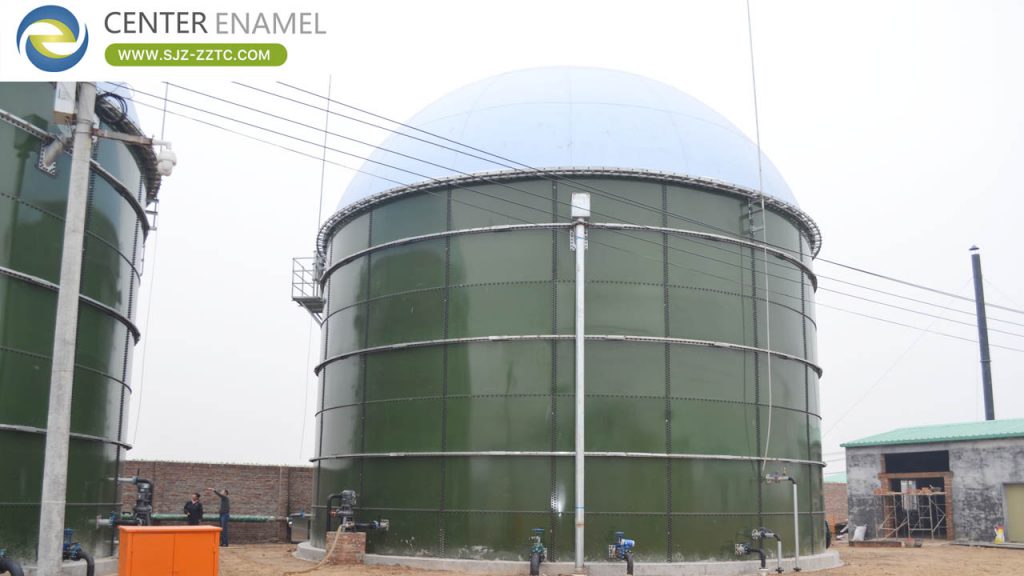
How Biogas Projects Deliver Net-Zero Emission Reductions
Net-zero by biogas projects works through three compounding mechanisms: methane avoidance (capturing CH4 that decomposing waste would release, credited against a no-project baseline), fossil substitution (displacing natural gas, diesel, or coal with biomethane or biogas-derived electricity and heat), and soil carbon circulation (returning digestate to farmland, partially closing the nutrient and carbon loop). Together these mechanisms typically deliver 60-120% GHG savings versus the fossil-comparator baseline, meaning well-configured projects can be net-negative.
Carbon Accounting: Scopes, Baselines, and Quantification
Credible net-zero claims require rigorous accounting aligned with the GHG Protocol and ISO 14064. Biogas projects interact with all three emission scopes: avoided manure or waste methane reduces the owner's Scope 1 (for farms and wastewater utilities), biomethane replacing fossil gas reduces the buyer's Scope 1, and diverted organic waste reduces municipal Scope 3. Quantification uses feedstock-specific IPCC Tier 2 factors or facility-level measurement, with conservative uncertainty discounts of 10-25% applied in voluntary carbon standards.
1. Baseline Establishment: Document current waste management practice (open lagoon, landfill, land application) as the counterfactual emission scenario.
2. Project Emission Accounting: Include digester leakage (target below 1-2% of produced methane), grid electricity used, diesel for feedstock logistics, and upgrading energy consumption.
3. Net Reduction Calculation: Subtract project emissions from baseline emissions; result is issued as verified tonnes CO2-equivalent after third-party audit.
4. Claim Allocation: Decide whether reductions are retained for the company's own net-zero inventory or monetized as carbon credits—never both.
Comparative Data Table: Biogas Abatement by Application Sector
| Application Sector | Feedstock Example | Annual CO2-e Abatement (typical project) | Emission Scope Addressed | Net-Zero Contribution |
| Dairy / Swine Farms | Manure, 150 t/day | 25,000-50,000 t | Scope 1 (farm methane) | Very high - net-negative possible |
| Food Processing | Organic effluent + waste, 100 t/day | 15,000-30,000 t | Scope 1 + waste disposal | High |
| Municipal Wastewater | Sewage sludge | 8,000-20,000 t | Scope 1 (utility) | High |
| Landfill Gas Recovery | LFG 1,500 m3/h | 30,000-60,000 t | Scope 1 (landfill) | Very high |
| Gas-Fired Industry (fuel switch) | Purchased biomethane | 1.9 t CO2 per 1,000 m3 CH4 | Scope 1 (buyer) | Direct 1:1 displacement |
Biogas in Hard-to-Abate Sector Roadmaps
For food and beverage manufacturers, biogas is frequently the only commercially mature route to eliminating Scope 1 process-heat emissions: biomethane burns in existing boilers and dryers with no equipment change. For wastewater utilities, on-site digestion converts sludge handling from a cost center into an energy asset while cutting fugitive methane. And for transport fleets, compressed biomethane offers immediate, auditable diesel displacement—making biogas a first-mover instrument in net-zero transitions where electrification lags.
Frequently Asked Questions (FAQ)
Q1: Can a biogas project actually be carbon-negative?
A: Yes. When feedstock such as liquid manure would otherwise decompose in open lagoons, the captured methane avoidance can exceed all project emissions combined—including digester leakage, upgrading energy, and logistics. Such projects generate more verified abatement than their own footprint, producing net-negative outcomes recognized under leading carbon standards.
Q2: How is biogas carbon accounting different from solar or wind?
A: Solar and wind certificates only address grid electricity (one displacement channel). Biogas accounting additionally credits methane avoidance from waste streams—often the larger number—and can address heat, transport fuel, and fertilizer substitution. This makes biogas projects materially more complex to audit but also more valuable per unit of energy in high-methane sectors.
Q3: What methane leakage rate keeps a biogas project net-zero credible?
A: Peer-reviewed consensus holds that digester systems remain strongly net-positive with total methane slip below roughly 2-3% of production. Best practice targets below 1% through sealed GFS or stainless digester vessels, dual-membrane gas holders with leak detection, flare automation, and periodic OGI camera or drone surveys.
Q4: How fast can a company deploy biogas in its net-zero plan?
A: Fuel switching to sourced biomethane can begin within one procurement cycle—often 3-6 months—since no capital equipment change is required for gas-fired assets. On-site digestion projects typically take 18-36 months from feasibility to commissioning, so mature net-zero roadmaps usually combine both: immediate biomethane purchasing with phased on-site digestion.