
Optimizing Beverage Wastewater Treatment with IC Process and GFS Tanks
The global industrial wastewater landscape is shifting rapidly. The Asia-Pacific region, particularly China, has become the world's largest industrial wastewater treatment market, with operation and maintenance services marking a shift from project construction to long-term operational management. North America focuses on upgrading existing facilities, while Europe emphasizes high-value-added resource recovery.
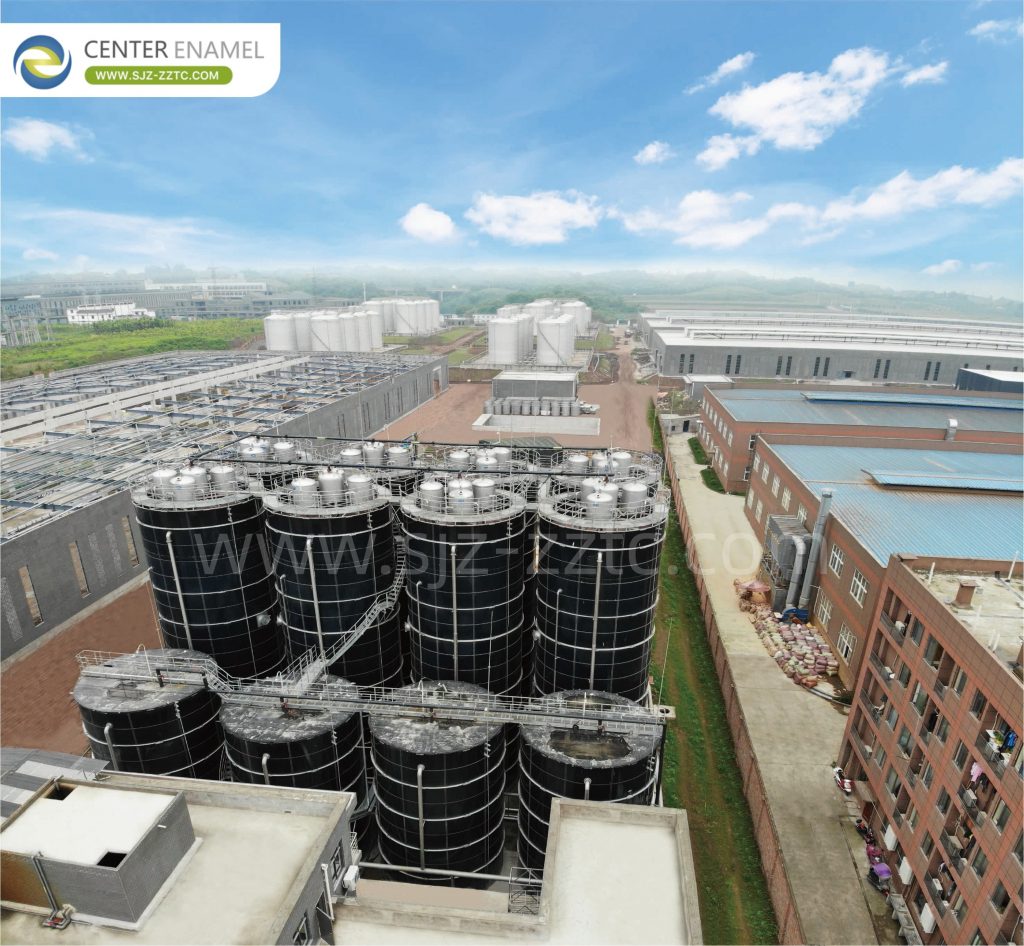
Meanwhile, the new energy industry chain (lithium batteries, photovoltaics, hydrogen) has emerged as a notable growth area due to its complex composition, and manufacturing transfer in Southeast Asia drives local facility construction. To meet these diverse demands efficiently, modern facilities rely on advanced anaerobic technologies like the IC Process housed within robust, long-lasting containment such as GFS Tanks. This combination delivers the high treatment efficiency and operational stability required to navigate today's complex market landscape.
Why the IC Process Leads Modern Anaerobic Treatment
Primarily designed for high-concentration, high-flow soluble industrial organic wastewater, the IC Process covers brewery, beverage, starch, pharmaceutical, chemical, and papermaking high-strength streams. It is the preferred anaerobic process for modern, high-efficiency industrial wastewater treatment. The IC Process is particularly suitable for land-constrained projects with high treatment efficiency requirements in large industrial wastewater treatment facilities. It can serve as the primary process for high-strength wastewater with rapid COD/BOD removal, and is ideal for centralized industrial park WWTPs and large enterprise proprietary treatment systems, especially those with significant quality fluctuations and extremely high pollutant concentrations. (Note: It is not suitable for high-solids, high-viscosity wastewater). By rapidly degrading organic matter and producing biogas, the IC Process turns treatment costs into energy recovery opportunities.
GFS Tanks: Universal Containment for Complex Conditions
While the process drives the biology, the tank shell determines long-term viability. Center Enamel has independently developed over 200 specialized enamel frit formulations and supporting patents, capable of customizing anti-corrosion enamel based on customer storage media, with adaptability comprehensively superior to concrete tanks. Concrete tanks use a single material, only suitable for neutral clean water storage. When storing corrosive materials such as livestock manure, palm oil mill effluent, chemical wastewater, food waste digestate, or high-salinity wastewater, concrete requires additional anti-corrosion linings. These linings are prone to failure, preventing long-term stable operation and failing to adapt to alternating high/low concentration storage conditions.
In contrast, GFS Tanks can be specifically formulated with specialized enamels resistant to strong acids, strong alkalis, high organic content, and high salinity. A single tank can switch between multiple wastewater and fermentation feedstock storage requirements. They are universally applicable across biogas anaerobic digestion, municipal wastewater, livestock farming, food processing, and industrial water treatment scenarios, eliminating the need to rebuild tanks for media changes. This perfectly meets the needs of diversified, multi-condition environmental protection projects.
Economic Advantages in Beverage Wastewater Treatment
The combination of the IC Process and GFS Tanks yields industry-leading economics for beverage wastewater. O&M costs are very low with outstanding resource recovery benefits. Because sugars are the best anaerobic digestion substrate, the excellent wastewater biodegradability means no specialty chemicals are needed—only small amounts of pH adjusters and flocculants—resulting in very low chemical costs. Anaerobic digestion produces large, stable biogas volumes for plant heating and power generation, and this significant energy recovery can greatly offset or fully cover O&M energy costs. Equipment is simple and durable, utilizing conventional pumps, distributors, and three-phase separators with no high-end precision wear parts, leading to extremely low failure rates and low maintenance costs. Furthermore, stable controllable water quality with high automation results in low labor requirements, and low suspended solids mean low sludge production and low disposal costs. Overall, biogas revenues generally cover O&M costs, making this the most economically favorable high-concentration organic wastewater category.
| Cost & Efficiency Factor | Impact with IC Process & GFS Tanks |
| Chemical Costs | Very low (only minor pH adjusters/flocculants) |
| Energy Costs | Offset or fully covered by biogas recovery |
| Maintenance | Low (simple, durable equipment) |
| Labor | Low (high automation, stable water quality) |
| Sludge Disposal | Low (minimal suspended solids) |
| Overall Economics | Biogas revenues generally cover total O&M costs |
Global Delivery and Flexible Service Systems
Deploying these systems globally requires robust logistics and field expertise. Center Enamel is a pioneer of Chinese GFS equipment exports, with installation service coverage across over 100 countries and regions, possessing full delivery capability across climates, regulations, and geographies. Coverage includes Southeast Asia (Vietnam, Thailand, Malaysia, Indonesia, etc.), Africa (Ghana, South Africa, Mali, Kenya, etc.), Europe/Americas (Sweden, USA, Russia, etc.), the Middle East, and Latin America. The systems are adaptable to tropical rainy high-salt spray, high-altitude mountainous, Nordic severe cold, and high-standard European/American facility conditions.
The company uses a dual-service model of "own cross-border construction teams + overseas local agent coordination." Whether clients are in developed countries or remote developing regions, Center Enamel provides one-stop services including on-site survey, installation, process commissioning, and operator training. The flexible delivery system utilizes modular GFS Tanks assembly with short construction periods and dismantlable/reusable capability, making it suitable for overseas short-term projects, phased expansions, and relocation needs, backed by full-lifecycle after-sales O&M support.
Complementary Infrastructure: Aluminum Alloy Trough Deck Roof
For clean water and wastewater storage scenarios that do not require biogas collection, the Aluminum Alloy Trough Deck Roof offers a cost-effective tank cover solution. The main body is integrally formed from anti-corrosion aluminum alloy plates, paired with aluminum support trusses. Its lightweight design imposes less load on the tank foundation, reducing civil construction investment. A naturally formed dense oxide protective layer on the surface resists rain and mild wastewater corrosion, effectively blocking wind, rain, insects, fallen leaves, and odor volatilization, protecting water quality by preventing dust and debris from causing secondary contamination. The flat roof structure is neat and orderly, allowing installation of maintenance walkways, guardrails, vents, and level monitoring ports on top. The simple sealing structure enables straightforward installation with short construction timelines, and virtually eliminates the need for anti-corrosion painting maintenance, resulting in extremely low operational costs. It is widely implemented in waterworks clear water tanks, industrial circulating water tanks, park firewater tanks, and domestic wastewater temporary storage facilities.
Frequently Asked Questions
What types of wastewater are best suited for the IC Process?
The IC Process excels at high-concentration, high-flow soluble organic wastewater, including brewery, beverage, starch, pharmaceutical, chemical, and papermaking streams. It is not recommended for high-solids or high-viscosity wastewater.
How do GFS Tanks handle changing wastewater types?
With over 200 specialized enamel formulations, GFS Tanks resist strong acids, alkalis, and high salinity. A single tank can handle alternating media without the linings and failures common in concrete tanks.
Can Center Enamel support projects in remote locations?
Yes. With installation coverage in over 100 countries and a dual-service model combining cross-border construction teams with local agents, we provide full on-site support globally.
Ready to upgrade your facility's treatment efficiency and energy recovery? Our engineers can help you evaluate if the IC Process and GFS Tanks are the right fit for your specific wastewater profile.
Contact Center Enamel today to request a technical consultation, site survey, or customized project proposal.