
Optimizing Biogas Storage for the Anaerobic Digestion of Brewery Spent Grains
The global brewing industry is currently undergoing a paradigm shift in how it manages its primary byproduct: brewery spent grains. As one of the most significant organic waste streams in the food and beverage sector, spent grains have historically been sold as low-value animal feed or, in many cases, sent to landfills at a significant cost to the producer. However, in the modern landscape of corporate sustainability and rising energy costs, forward-thinking breweries are turning to the Anaerobic Digestion of Brewery Spent Grains. By implementing a sophisticated circular economy model, these facilities can transform protein-rich residues into a steady supply of renewable energy. The success of such a system, however, is fundamentally dependent on one critical component: optimized Biogas Storage.
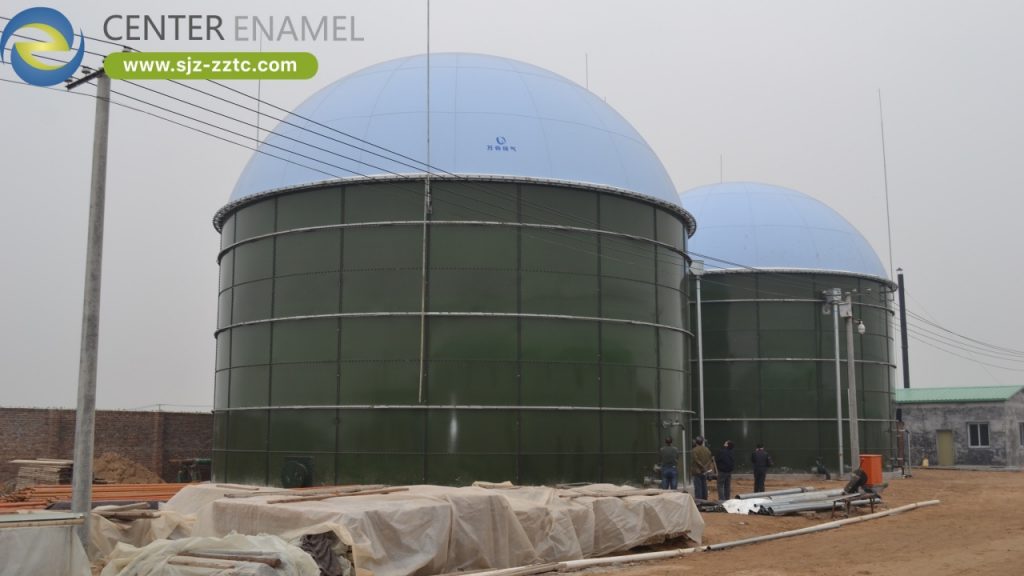
Shijiazhuang Zhengzhong Technology Co., Ltd, operating under the world-renowned brand Center Enamel, stands as a global pioneer in providing the engineering infrastructure necessary for this transition. With over thirty years of innovation and projects across more than one hundred countries, we provide the turnkey containment and processing solutions that make high-efficiency Biogas Storage and energy recovery a reality. Our Glass-Fused-to-Steel (GFS) technology and integrated roofing systems are specifically engineered to handle the unique chemical profile of brewery waste, ensuring long-term operational success for global beverage producers.
The Potential of Brewery Spent Grains for Energy Recovery
To optimize the Anaerobic Digestion of Brewery Spent Grains, it is essential to understand the material's complex biological profile. Spent grains consist primarily of the husks and residues of malted barley and other cereals used in the mashing process.
1. High Energy Density
Brewery spent grains are characterized by a high organic load, containing significant amounts of cellulose, hemicellulose, and lignin. This high carbon content makes them an exceptional substrate for biogas production. When broken down in an anaerobic environment, they yield a methane-rich gas that can be utilized to generate the steam and electricity required for the brewing process itself.
2. Environmental and Economic Synergy
By utilizing Anaerobic Digestion, breweries can achieve a dual benefit: they eliminate the logistical burden and environmental impact of waste disposal while simultaneously lowering their utility expenses. This transition from a linear "produce-waste" model to a circular "produce-recover" model is essential for breweries aiming to meet carbon neutrality targets.
Technical Foundations of Biogas Storage and Recovery
Achieving high-efficiency energy recovery requires more than just a biological reactor; it requires a sophisticated system for Biogas Storage to balance production with consumption.
1. Managing Gas Production Fluctuations
Biological processes are rarely constant. Factors such as feedstock variations and temperature changes can cause fluctuations in gas generation. Effective Biogas Storage acts as a buffer, ensuring that the brewery’s boilers or generators have a consistent supply of fuel even during periods of lower microbial activity. This stability is critical for preventing operational downtime in the main production facility.
2. Maintaining Biological Stability
The Anaerobic Digestion of Brewery Spent Grains typically follows a multi-stage process involving hydrolysis, acidogenesis, acetogenesis, and methanogenesis. Because spent grains can lead to rapid acidification, the storage and digestion system must be engineered to provide a stable, pressurized environment that protects the sensitive methanogenic microorganisms from environmental shocks.
Center Enamel: Engineering Excellence in Containment
At Center Enamel, we specialize in the foundational infrastructure that makes the Anaerobic Digestion of Brewery Spent Grains both safe and profitable.
1. Glass-Fused-to-Steel (GFS) Tanks
Our flagship GFS tanks are the global standard for industrial biogas reactors. By fusing a high-tech glass enamel coating to a specialized steel substrate at temperatures exceeding 800 degrees, we create a material with unparalleled properties.
Corrosion Resistance: The internal environment of a brewery waste digester is highly aggressive. The glass surface of our tanks is completely impervious to the organic acids and hydrogen sulfide produced during digestion.
Abrasion Resistance: Spent grains are fibrous and can be abrasive. Our GFS coating scores a 6.0 on the Mohs scale of hardness, ensuring that the tank walls remain undamaged by the constant movement of the feedstock.
Modular Construction: Our bolted design allows for rapid on-site assembly within the often-constrained footprints of existing industrial brewery sites.
2. Double Membrane Roofs: Integrated Biogas Storage
To maximize energy utilization, Center Enamel provides integrated Biogas Storage through our Double Membrane Roofs.
Dual-Layer Efficiency: The inner membrane functions as a flexible gas holder that expands and contracts based on real-time gas volume. The outer membrane is continuously pressurized with air, providing a rigid protective structure against wind, rain, and snow.
Safety and Control: This integrated storage solution eliminates the need for separate gas holders, reducing the overall footprint of the project and simplifying the gas management system.
3. Aluminum Dome Roofs: Maintenance-Free Longevity
For the storage of treated digestate—the liquid fertilizer produced as a byproduct—our Aluminum Dome Roofs offer an unparalleled solution.
Self-Supporting Geodesic Design: These roofs are constructed from high-strength aluminum alloy and require no internal support columns. This maximizes the usable volume of the tank and provides a permanent, maintenance-free seal.
Environmental Protection: They prevent the dilution of the nutrient-rich digestate by rainwater and eliminate the release of any residual odors, ensuring the brewery remains a good neighbor to its surrounding community.
Sustainability, ROI, and the Circular Economy
Investing in high-performance Biogas Storage and digestion is a strategic decision that delivers multiple layers of value.
Energy Cost Reduction: By replacing fossil fuels with self-generated biogas, breweries can significantly insulate themselves from energy market volatility.
Nutrient Valorization: The digestate remaining after the Anaerobic Digestion of Brewery Spent Grains is a stabilized, organic fertilizer that can be returned to the barley fields, completing a perfect agricultural loop.
Carbon Credits: The reduction in methane emissions and the displacement of fossil fuels allow breweries to qualify for carbon credits and improve their ESG (Environmental, Social, and Governance) ratings.
Global Project Excellence: Center Enamel in Action
Our reputation as a world leader is built on a foundation of successful projects in over one hundred countries. The following non-fictitious projects highlight our capacity to deliver infrastructure for high-efficiency energy recovery:
Shandong Heze Biogas Project This regional energy initiative utilized 3 units of our high-performance GFS tanks. The project successfully transforms agricultural and food residues into a stable energy stream, demonstrating the reliability of our tanks in large-scale Biogas Storage and recovery operations.
Inner Mongolia Hinggan League Bio-Natural Gas Project A landmark project in a challenging climate, this installation successfully integrated 4 units of our bolted steel tanks. These vessels provide the stable environment necessary for the high-efficiency production of bio-natural gas, proving the resilience of our engineering against extreme temperature fluctuations.
Jiangsu Xuzhou Biogas Project This major industrial project involved the deployment of 4 units of our advanced GFS containment technology. The project serves as a prime example of how modular construction can be utilized to rapidly build the essential infrastructure for modern, large-scale Anaerobic Digestion facilities.
A Sustainable Path for Global Brewing
The optimization of Biogas Storage for the Anaerobic Digestion of Brewery Spent Grains represents one of the most effective pathways toward a sustainable brewing industry. By converting a waste byproduct into a renewable energy asset, breweries can secure their energy future while protecting the environment.
At Shijiazhuang Zhengzhong Technology Co., Ltd (Center Enamel), we are dedicated to providing the innovation and engineering excellence that make these projects a success. From our premier GFS tanks to our specialized Double Membrane Roofs and Aluminum Dome Roofs, we offer a total containment solution designed for the future of industrial energy.