
Organic Wastewater Solutions: Turning High-COD Effluent Into Biogas And Energy
An organic wastewater solution treats biodegradable, high-COD effluent - from food, beverage, distillery, dairy, or palm-oil processing - in an anaerobic reactor that converts the dissolved load into biogas at 55-65% methane. The recovered gas can fire a boiler, run a CHP unit, or be upgraded to biomethane. The design is set by COD strength, flow stability, and fat or salt content, not by a single standard package.
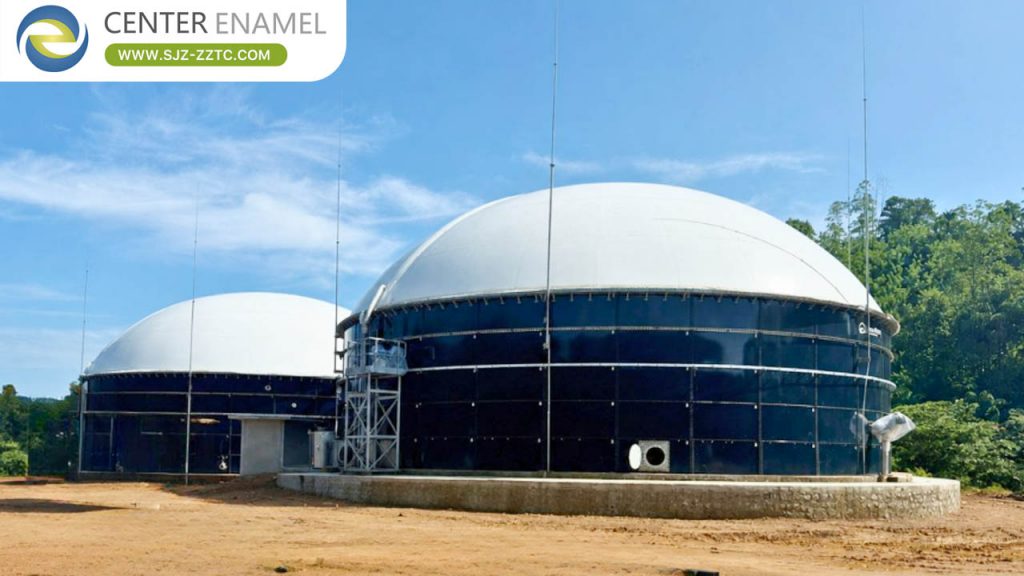
What An Organic Wastewater Solution Includes
It is a chain rather than one vessel: screening and equalisation remove solids and smooth the feed, an anaerobic reactor converts soluble organics to biogas, a polishing step protects the discharge limit, and a gas path puts the methane to work. Treating the chain as a single buy is what makes the difference between a plant that meets its effluent target and one that produces gas but fails discharge.
Why High COD Changes The Treatment Logic
At low organic strength, aerobic treatment is simpler. Once COD climbs above roughly 1,500-2,000 mg/L, the oxygen demand of an aerobic basin becomes expensive, while the same load becomes fuel in an anaerobic reactor. Anaerobic treatment removes a large share of COD with far less energy and generates methane as a by-product - which is why high-COD streams are the natural fit.
| Effluent | Typical characteristic | Design consequence |
| Palm oil (POME) | Very high COD, warm, oily | Anaerobic first, then polishing |
| Distillery / liquor | High COD, acidic, variable | Neutralisation + robust reactor |
| Dairy / food | High BOD, fat, variable flow | Equalisation + fat control |
| Pharmaceutical | High COD, saline, inhibitory | Buffered, staged anaerobic |
Choosing The Anaerobic Reactor
Granular high-rate reactors (UASB, EGSB, IC) suit warm, low-solids, soluble effluent and give compact footprints at short retention. A CSTR or contact process is preferred when solids or fat are high enough to disturb granules. The choice is driven by what is in the water, not by which reactor is newer - and a feed with inhibitory compounds needs buffering and a staged start-up regardless of type.
The Gas Path: Heat, Power, Or Biomethane
Biogas at 55-65% methane has three realistic outlets. A boiler displaces purchased fuel with the shortest payback; a CHP unit converts gas to electricity and useful heat where both can be used on site; upgrading to biomethane is justified where a gas grid or vehicle-fuel offtake exists. The right outlet is the one that matches a steady local demand - gas with no user is a flare, not a revenue stream.
| Gas outlet | Best when | Main requirement |
| Boiler heat | Steady thermal demand on site | Low-pressure gas holder |
| CHP | Both power and heat are used | Gas cleaning, engine maintenance |
| Biomethane | Grid or vehicle offtake exists | Upgrading, CO2 removal, standards |
Project Reference - Indonesia POME Anaerobic Reactors
A referenced palm-oil effluent project in Indonesia (2013) used three GFS tanks as anaerobic reactors at a palm-oil wastewater treatment plant, with tank models of 17.58 x 8.4 m and 16.82 x 7.2 m. Published data lists application, tank sizes, quantity, and year; no water-quality reduction figures were released, so this is cited as an anaerobic reactor construction reference for a high-COD organic effluent, not as a performance guarantee.
| Attribute | Value | Note |
| Location / year | Indonesia / 2013 | Published |
| Application | Palm oil ETP anaerobic reactors | Published |
| Tanks | 3 GFS, 17.58 x 8.4 m and 16.82 x 7.2 m | Published |
| Water-quality data | Not published | No fabricated figures |
Where This Solution Is Limited
Anaerobic treatment is not universal. Very dilute effluent gives little gas to recover; high salinity, residual solvents, or sanitisers can inhibit methanogens; and a strongly variable feed needs equalisation before it reaches the reactor. In those cases the solution is a pre-treatment or a staged train, not a bigger reactor.
About Company
Shijiazhuang Zhengzhong Technology Co., Ltd (Center Enamel) is a comprehensive high-tech enterprise specializing in wastewater engineering, process section contracting, and equipment manufacturing. The company delivers biogas and wastewater projects through three main lines - EPC (turnkey) contracting, equipment supply, and process packages - covering livestock and municipal wastewater, biomass energy, industrial wastewater, and food waste. Its reactor portfolio spans CSTR, USR, UBF, UASB, IC, and EGSB, backed by in-house Glass-Fused-to-Steel tank manufacturing (enamel firing at 820-930 C) and certifications including ISO 9001, NSF/ANSI 61, and CE-EN 1090. With 35+ years of operation, a 150,000 m2 manufacturing base, and projects in 100+ countries, Center Enamel provides the single-responsibility engineering behind high-COD organic wastewater references such as the Indonesia palm-oil ETP anaerobic reactors - a scoped construction reference for organic effluent, not a generic claim.
Conclusion
An organic wastewater solution converts a high-COD disposal cost into recoverable energy by pairing the right anaerobic reactor with a realistic gas outlet. COD strength sets the anaerobic case, feed composition sets the reactor, and local energy demand sets the gas path.
Frequently Asked Questions
Q1: What is an organic wastewater solution? A1: A treatment chain that converts biodegradable high-COD effluent into biogas and a polished discharge.
Q2: Why treat high-COD wastewater anaerobically? A2: Above roughly 1,500-2,000 mg/L COD, anaerobic treatment cuts aeration energy and produces methane instead.
Q3: Which reactor fits organic effluent? A3: Granular UASB/EGSB/IC for warm, soluble, low-solids flow; CSTR or contact when solids and fat are high.
Q4: How is the biogas used? A4: As boiler heat, CHP power and heat, or upgraded biomethane where a gas-grid or fuel offtake exists.
Q5: What limits anaerobic treatment? A5: Very dilute flow, salinity, solvents and sanitisers inhibit methanogens; variable feed needs equalisation.
Q6: Does the gas need cleaning before CHP? A6: Yes - moisture and hydrogen sulphide are normally removed to protect the engine.
Q7: Can high-fat effluent be digested? A7: Yes, but fat can form scum and inhibit granules, so pre-treatment and mixing matter.
Q8: Is anaerobic treatment enough for discharge? A8: Usually not; a polishing step protects the final effluent limit after the anaerobic stage.
Suggested CTA
Send your effluent COD, daily flow, and available heat or power demand to an engineering team, or request a scoped organic wastewater solution outline.