
Palm Oil And High-Strength Agro-Industrial Wastewater Treatment
Palm oil mill effluent (POME) and similar food-processing wastewaters are extremely high-strength organic streams - often tens of thousands of mg/L COD - that are best treated by anaerobic reactors (UASB or CSTR) that destroy most of the load and recover biogas, followed by aerobic polishing to the discharge limit. The design is driven by the COD concentration and the mill's continuous, seasonal flow, not by municipal-style assumptions.
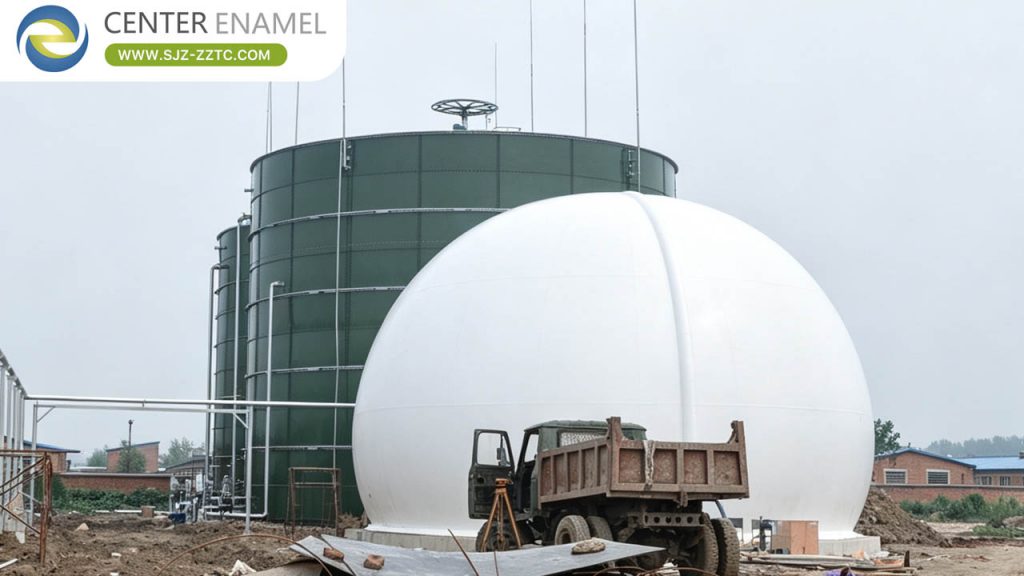
Why Agro-Industrial Wastewater Is Different
Unlike municipal sewage, POME and food-processing streams carry dissolved and colloidal organics at 10-65,000 mg/L COD, with little domestic dilution. That strength makes aerobic treatment expensive and anaerobic treatment the obvious first step: an anaerobic reactor removes most COD at low energy and pays back through biogas. The remaining load is then polished aerobically.
| Stream | Typical COD | Lead With |
| Palm oil (POME) | 40,000-65,000 mg/L | Anaerobic + polish |
| Food processing | 5,000-30,000 mg/L | Anaerobic + bio |
| Brewery | 2,000-10,000 mg/L | Anaerobic + polish |
| Municipal (ref) | 300-1,000 mg/L | Bio + disinfection |
The High-Strength Train
The liquid first equalizes (flow and load swing widely in a mill), then enters an anaerobic reactor sized to the COD and OLR (granular systems run 5-15 kg COD/m3/day). Aerobic polishing and clarification take the effluent inside the permit. The biogas is conditioned and used on site, turning a waste stream into plant energy.
| Stage | Unit | Removes | Note |
| Equalization | GFS tank | Flow/load swing | Protects biology |
| Anaerobic | UASB / CSTR | Most COD + biogas | Low energy |
| Aerobic polish | ASP / SBR | Residual BOD/N | Inside limit |
| Clarify | Sedimentation | Solids | Discharge |
Project Case Study: Indonesia Dumai Biogas Project
Project / Application: Palm oil wastewater treatment plant, Dumai, Indonesia. Industry: Palm oil / agro-industrial. Equipment: 3 Glass-Fused-to-Steel tanks. Key Requirements: Rapid overseas deployment; completed in 40 days by a 7-person team (2009).
| Field | Value | Source / Evidence |
| Application | Palm Oil Wastewater Treatment Plant | Company project reference |
| Tank Model | O19.86 x 8.4 m | Company project reference |
| Tanks Quantity | 3 Nos. of GFS Tanks | Company project reference |
| Installation Team | 7 engineers / technicians | Company project reference |
| Installation Duration | 40 days | Company project reference |
| Installation Date | November 2009 | Company project reference |
About Company
Shijiazhuang Zhengzhong Technology Co., Ltd (Center Enamel) is a comprehensive high-tech enterprise specializing in wastewater engineering, process section contracting, and equipment manufacturing. The company delivers biogas and wastewater projects through three main lines - EPC (turnkey) contracting, equipment supply, and process packages - covering livestock and municipal wastewater, biomass energy, industrial wastewater, and food waste. Its reactor portfolio spans CSTR, USR, UBF, UASB, IC, and EGSB, backed by in-house Glass-Fused-to-Steel tank manufacturing (enamel firing at 820-930 C) and certifications including ISO 9001, NSF/ANSI 61, and CE-EN 1090. With 35+ years of operation, a 150,000 m2 manufacturing base, and projects in 100+ countries, Center Enamel provides the single-responsibility engineering behind the Indonesia Dumai palm oil project where three Glass-Fused-to-Steel tanks were installed in 40 days by a small team - a reference for rapid, overseas agro-industrial deployment.
Comparison: Anaerobic Lead Vs Aerobic Lead
| Element | Anaerobic lead | Aerobic lead |
| Energy | Recovers biogas | Consumes power |
| CAPEX | Reactor + gas | Large blowers/tanks |
| Best for | High COD | Low-medium COD |
Palm oil and other high-strength agro-industrial wastewaters are treated by an anaerobic-first train - equalization, anaerobic COD destruction with biogas recovery, then aerobic polishing - scoped from COD and continuous flow; the goal is compliance plus on-site energy, not municipal-style dilution.
Frequently Asked Questions
Q1: What is POME? A1: Palm oil mill effluent - a very high-strength organic wastewater from milling.
Q2: How is high COD treated? A2: Anaerobic reactors (UASB/CSTR) remove most COD at low energy, then aerobic polishing.
Q3: Can biogas be recovered? A3: Yes; anaerobic treatment yields methane-rich biogas used on site.
Q4: How fast can a plant deploy? A4: Bolted Glass-Fused-to-Steel tanks can be installed in weeks, as the 40-day Dumai project shows.
Q5: What is the typical OLR? A5: Granular anaerobic systems run about 5-15 kg COD/m3/day.
Q6: Which tank resists POME? A6: A Glass-Fused-to-Steel tank resists the corrosive, acidic stream.
Q7: Is equalization needed? A7: Yes; mill flow and load swing widely and must be buffered.
Q8: Who scopes the train? A8: An engineer sizes the anaerobic reactor from COD and flow.
Suggested CTA
Send your COD, flow, and discharge limit to an engineer, or request a scoped agro-industrial wastewater outline.