
Palm Oil Wastewater Treatment Project: Execution And Tankage
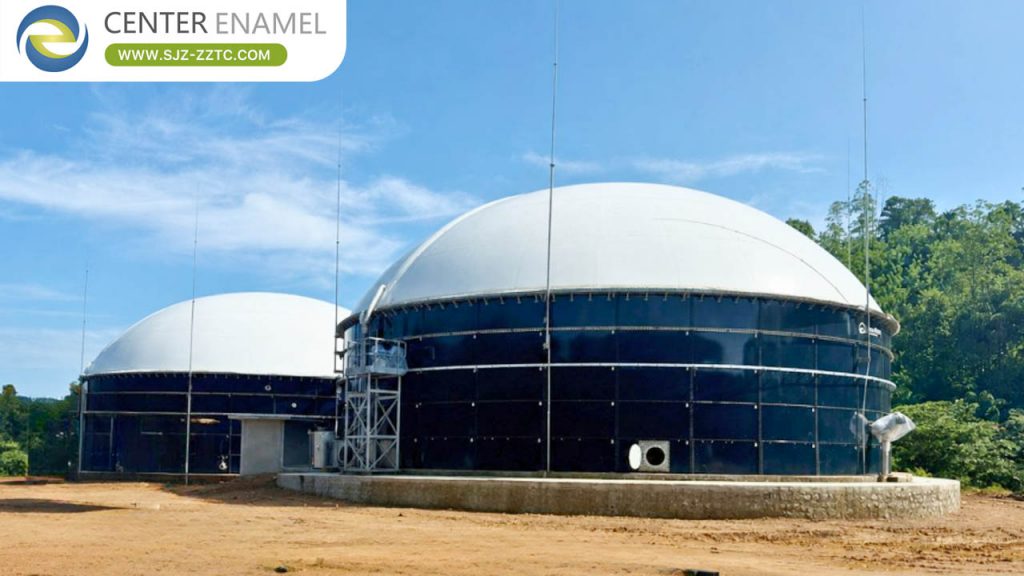
A palm oil wastewater treatment project is delivered as a scoped engineering package: process design, bolted GFS tankage, installation, and commissioning on a fixed schedule. One referenced overseas build supplied three GFS tanks and completed installation in 40 days with a seven-person team.
Project Execution Steps
A POME project moves from feed characterisation and permit limits to process design, tank fabrication, site assembly, and biological start-up. The tankage and the process must be ordered together so lead times align.
| Phase | Activity | Owner Concern |
| Design | Process + tank sizing | Compliance basis |
| Fabrication | Enamel panel production | Quality control |
| Installation | Bolted assembly on site | Schedule |
| Commissioning | Biology start-up | Stable effluent |
Tankage For POME
Glass-Fused-to-Steel tanks suit POME because the enamel coating resists the warm, slightly acidic effluent. A documented palm oil WWTP used three GFS tanks of Ø19.86 x 8.4 m, supplied and installed as a coordinated package.
Installation Speed
Bolted panels remove most site welding and curing. The referenced Dumai project was assembled by a seven-person team in 40 days, a schedule concrete cannot match for overseas mills.
Project Case Study: Indonesia Biogas Project (Dumai)
Project / Application: Palm oil wastewater treatment plant, Dumai, Indonesia. Industry: Palm oil. Tank Type: GFS. Key Requirements: Rapid overseas deployment.
| Field | Value | Source / Evidence |
| Application | Palm Oil Wastewater Treatment Plant | Company project reference |
| Tank Model | Ø19.86 x 8.4 m | Company project reference |
| Tanks Quantity | 3 Nos. of GFS Tanks | Company project reference |
| Installation Team | 7 engineers / technicians | Company project reference |
| Installation Duration | 40 days | Company project reference |
| Installation Date | November 2009 | Company project reference |
About The Supplier
Shijiazhuang Zhengzhong Technology Co., Ltd (Center Enamel) has delivered GFS tankage for palm oil projects across Asia since 2009, with enamel firing at 820-930 C and ISO 9001, NSF/ANSI 61, CE-EN 1090, and ISO 28765 compliance.
Comparison: Delivery Models
| Model | Schedule Risk | Best Context |
| Bolted GFS package | Low (factory QA) | Overseas, fast track |
| Cast concrete | Higher (weather, cure) | Permanent local plant |
Treat tankage and process as one ordered package, fix the installation window, and use bolted GFS to compress the overseas schedule.
Frequently Asked Questions
Q1: How is a POME project delivered? A1: As a scoped package of design, GFS tankage, installation, and commissioning.
Q2: What tankage does it need? A2: Typically several GFS reactors sized to mill throughput, e.g. three 19.86 m diameter tanks.
Q3: How fast can tanks be installed? A3: A referenced build finished in 40 days with a seven-person team.
Q4: What does a POME ETP include? A4: Anaerobic and aerobic reactors, equalisation, and biogas handling.
Q5: Why GFS for palm oil? A5: Enamel coating resists warm, acidic POME better than bare steel.
Q6: Who manages installation? A6: The supplier coordinates a small trained team for bolted assembly.
Q7: What certifications apply? A7: ISO 9001, NSF/ANSI 61, CE-EN 1090, ISO 28765.
Q8: Can the plant expand? A8: Yes, add GFS rings or parallel tanks as mill capacity grows.
Request a scoped POME project execution plan with tank schedule, or discuss your mill's throughput with an engineer.